Farming organisations weigh in on the 'self destructing' US butter row
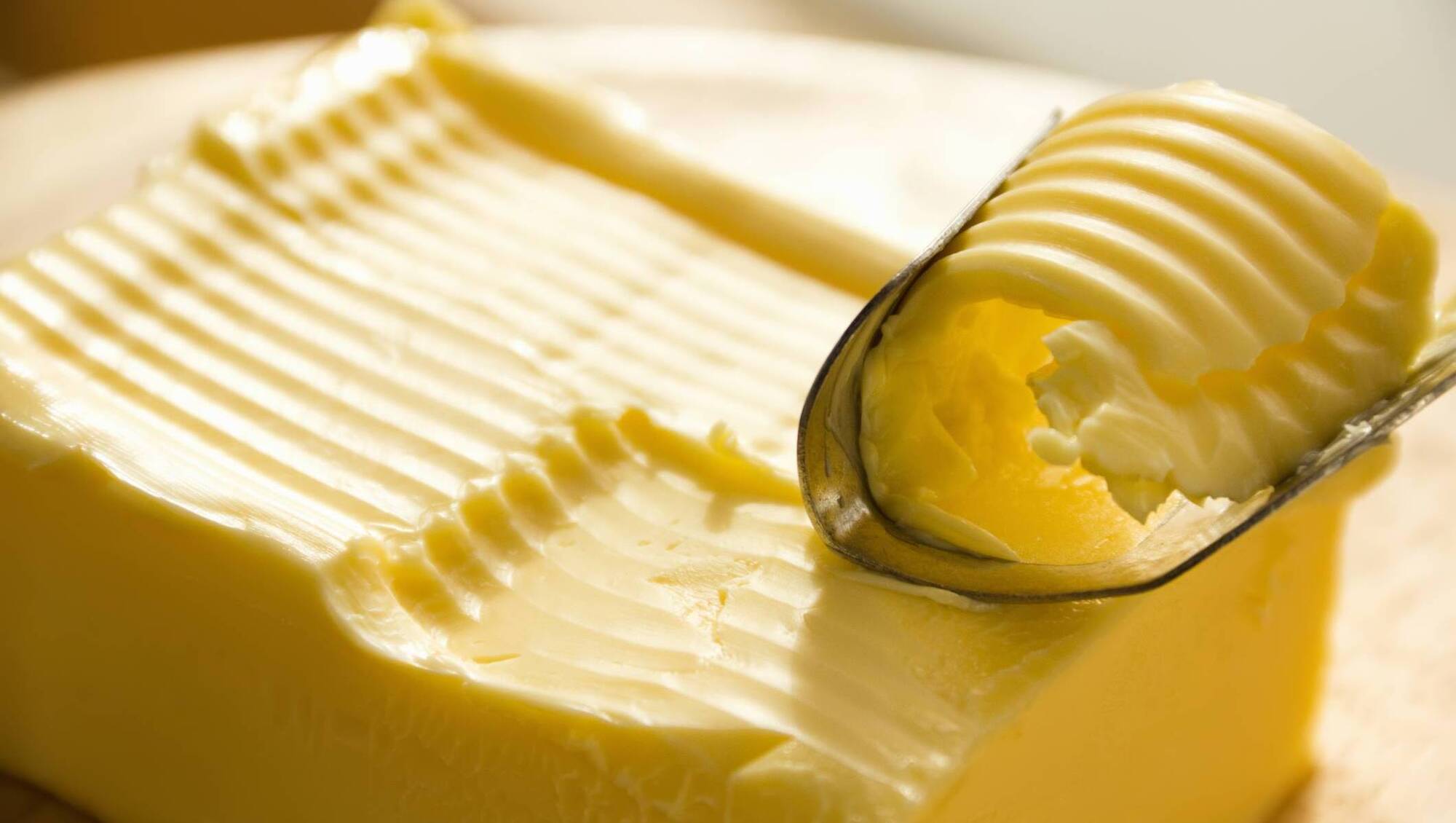
Farming orgs have called for co-ops to cooperate and work together instead of in competition for the benefit of Irish dairy farmers. File picture
The ongoing butter row between Tirlán and Ornua over the sale of butter in the US has been described as “self-destruction.”
Tensions have risen in recent weeks following the news that Tirlán hopes to supply butter to a major US retailer.
“To put it mildly, the potential self-destruction that is developing at marketing level in the Irish dairy sector is ridiculous, and it won’t be the executives concerned who suffer: it’ll be the dairy farmer,” Irish Creamery Milk Suppliers Association (ICMSA) president Denis Drennan said.
Mr Drennan went on to say that both Tirlán and Ornua have “lectured farmers” on sustainability and schemes but “due to the inability or unwillingness of both companies to develop a joint strategy — along with other Irish co-operatives – for butter in the US market,” farmers have fallen back down the value chain.
Read More
“So what we have here is Co-ops that are actually owned by farmers engaged in a marketing ‘war that’s highly like to drop the already inadequate milk price being paid to the self-same farmers who own both of the competing Co-ops.
There might be another planet where all this makes sense, but it’s not one that ICMSA lives on”, said Mr Drennan.
Mr Drennan said that the price Irish farmers are receiving for their milk today is similar to that of commodity producers like New Zealand, and that questions needed to be asked in relation to the processing and marketing of Irish dairy produce.
Continuing, he said that demand after demand is being placed on dairy farmers by their milk processors to no obvious benefit in terms of price for the farmers.
Mr Drennan suggested that both Dairy Industry Ireland and ICOS to ‘look inside their own doors’ and fix processes that are patently no longer working as originally intended.
“This is a perfect example of a situation where farmers are taking a hit for the failure of our milk processors to work strategically on global markets, and we think that competing against each other — and undercutting at our expense — simply has to stop.
Mr Drennan said that the lack of co-operative thinking is undermining the ability to secure a sustainable price in both the short and long term and that companies selling Irish dairy produce should get their “house in order.” The Irish Farmers’ Association (IFA) president Francie Gorman has met with senior management of both Ornua and Tirlán over the past week and has emphasised the importance of ensuring that the Kerrygold brand is not weakened by other Irish butter suppliers on international markets.
“Kerrygold is the number one Irish food brand and has delivered handsomely for Irish dairy farmers since its establishment in the early 1960’s,” he said.
Continuing, Mr Gorman said: “The priority here has to be Irish dairy farmers. The vast majority of Irish farmers supply Ornua, both Tirlán and non-Tirlán suppliers. The return to these farmers cannot be undermined. We cannot allow a race to the bottom that ultimately destroys the margin being returned in farmers' milk cheques.” IFA National Dairy Chair Martin McElearney also highlighted the current margin pressure that the sector is currently experiencing.
“Irish dairy farmers are grappling with a depressed milk price, escalating costs and severe drought conditions in many parts of the country. There is an onus on all stakeholders in the dairy sector to work together to maximise the financial return from dairy markets for these farmers, particularly given that many dairy farmers are now likely to be operating below the cost of production in 2026.”