Ireland's UK beef trade at risk as 80,000 tonnes of Brazilian beef seek new home
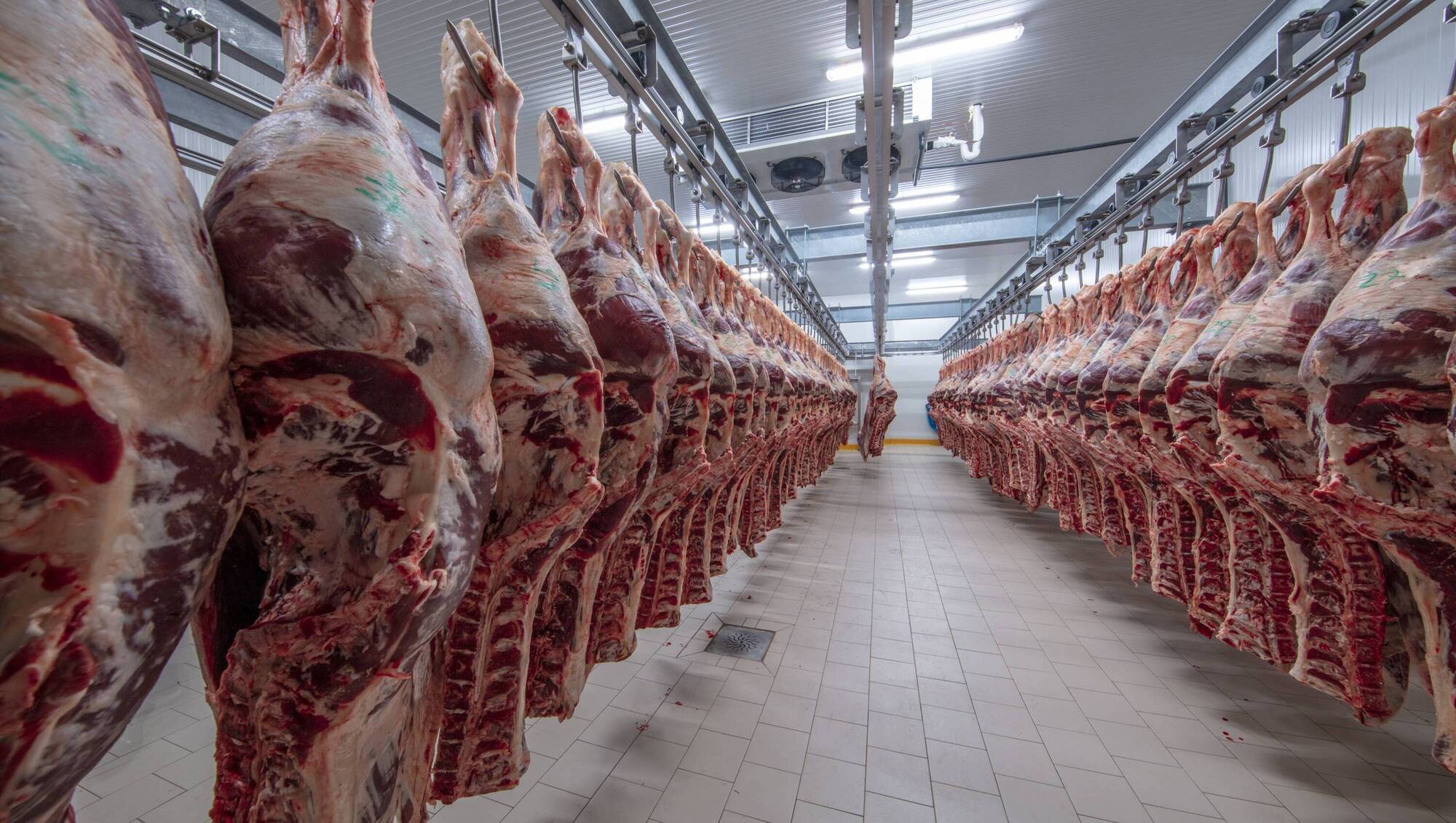
Ireland sends nearly half its beef to the UK. A looming EU ban on Brazilian imports could see that lucrative market flooded with cheaper product
If more Brazilian beef lands in the UK, the big loser will be Ireland, which depends on the UK to take nearly half of its beef production.

If more Brazilian beef lands in the UK, the big loser will be Ireland, which depends on the UK to take nearly half of its beef production.

EU restrictions on Brazilian beef exports in September could backfire badly for the Irish beef industry, if the meat rejected by Europe finds its way into the UK instead.

The EU has removed Brazil from the list of approved exporters for products including beef and poultry, effective from September 3, less than five weeks away.


About a quarter of the EU’s chicken and beef imports come from Brazil, but the door will be shut on it from September 3, unless Brazil proves compliance with EU antimicrobial resistance rules.

Brazil may be faced with finding new markets for the 83,000 tonnes of fresh and frozen beef it sends each year to the EU, and Brazilian exporters may view the UK as one of the more attractive alternative outlets available for its beef diverted from the EU, according to the UK’s Agriculture and Horticulture Development Board.

AHDB analysts said the UK would likely be considered an attractive option for beef diverted from the EU, because UK market access arrangements are already in place for Brazilian beef, existing tariff levels are relatively competitive compared with alternative destinations, and supply chains and importer relationships are already established.

If more Brazilian beef lands in the UK, the big loser will be Ireland, which depends on the UK to take nearly half of its beef production.

Ireland is the dominant supplier to the UK, although its share of that import market fell in 2025 to about 62%, as Brazil, Poland, Australia and New Zealand gained market share.

These sources can offer more competitively priced product, and have more beef available to export than Ireland, where environmental constraints and strong live exports have reduced the beef supply.

Ireland's import share in the UK would be cut even more if that market is targeted by Brazilian exporters shut out of the EU market in September.

AHDB analysts said, “At present, the evidence suggests that Brazilian exporters could economically redirect at least some product to the UK if access to the EU were restricted”.

They noted UK and EU tariff barriers were broadly similar, and Brazilian exporters already appeared willing to supply high-value markets outside quota arrangements, despite tariffs.

In 2025, Brazil sent 83,273 tonnes of beef to the EU, and only 11,866 tonnes to the UK.

The big Brazil tonnage going to the EU would not be expected to divert exclusively to the UK, with China, the Middle East and Southeast Asia among the alternative destinations.

However, China's new safeguard measures may limit its capacity to absorb additional volumes of Brazilian beef. These measures include an additional 55% tariff on imports above a Chinese quota of about 1.1 million tonnes. That compares with the UK and EU’s similar tariffs of less than 13%, and the USA’s 26.4%.

The EU shutting off Brazilian beef, diverted instead to the UK, poses a repeat of the 2021 Brexit threat to the Irish beef industry.

And the best hope for Irish beef exporters to avoid that may be the UK rowing back, five years on, from its Brexit mindset.

Already, it is pursuing closer trade co-operation with the EU, a course which may lead it to align its food import policy with the EU's antimicrobial standards. That could mean the UK introducing antimicrobial resistance rules equivalent to those of the EU, and Brazilian beef being also shut out of the UK market.

That could be the best possible outcome for the Irish beef industry. But there are many ifs, to make the trading prospects for Irish beef as unpredictable as ever.

There may yet be no EU ban on Brazilian meat. Brazilian authorities are confident and determined to quickly put in place the national surveillance and monitoring system for antimicrobial use and sales which the EU requires.

Such a system has been demanded by the EU in recent years. Earlier this year, the EU further tightened restrictions on Brazilian beef imports, limiting them to an approved list of farms that meet strict criteria and fully comply with EU import requirements.

Realistically, it is unlikely Brazil can establish a fully functional national surveillance and monitoring system with just a few months' notice.

But maybe it can guarantee sufficient specific supply chains dedicated to EU exports. The EU would likely require an audit of these guarantees, further delaying the full return of Brazilian exports, but only temporarily.

Meanwhile, the Irish beef industry has a nervous five weeks ahead. On September 3, Brazilian beef could be banned from both the EU and the UK. Or more than 80,000 tonnes of it could be looking for a new home in the UK, squeezing Irish beef out of that lucrative market.

x

More in this section

Farming

Newsletter

Stay ahead of the season. Sign up for insights, expert advice and stories shaping Irish agriculture.

Cookie Policy Privacy Policy Brand Safety FAQ Help Contact Us Terms and Conditions

© Examiner Echo Group Limited