Poultry sector on alert as Newcastle disease spreads across Europe
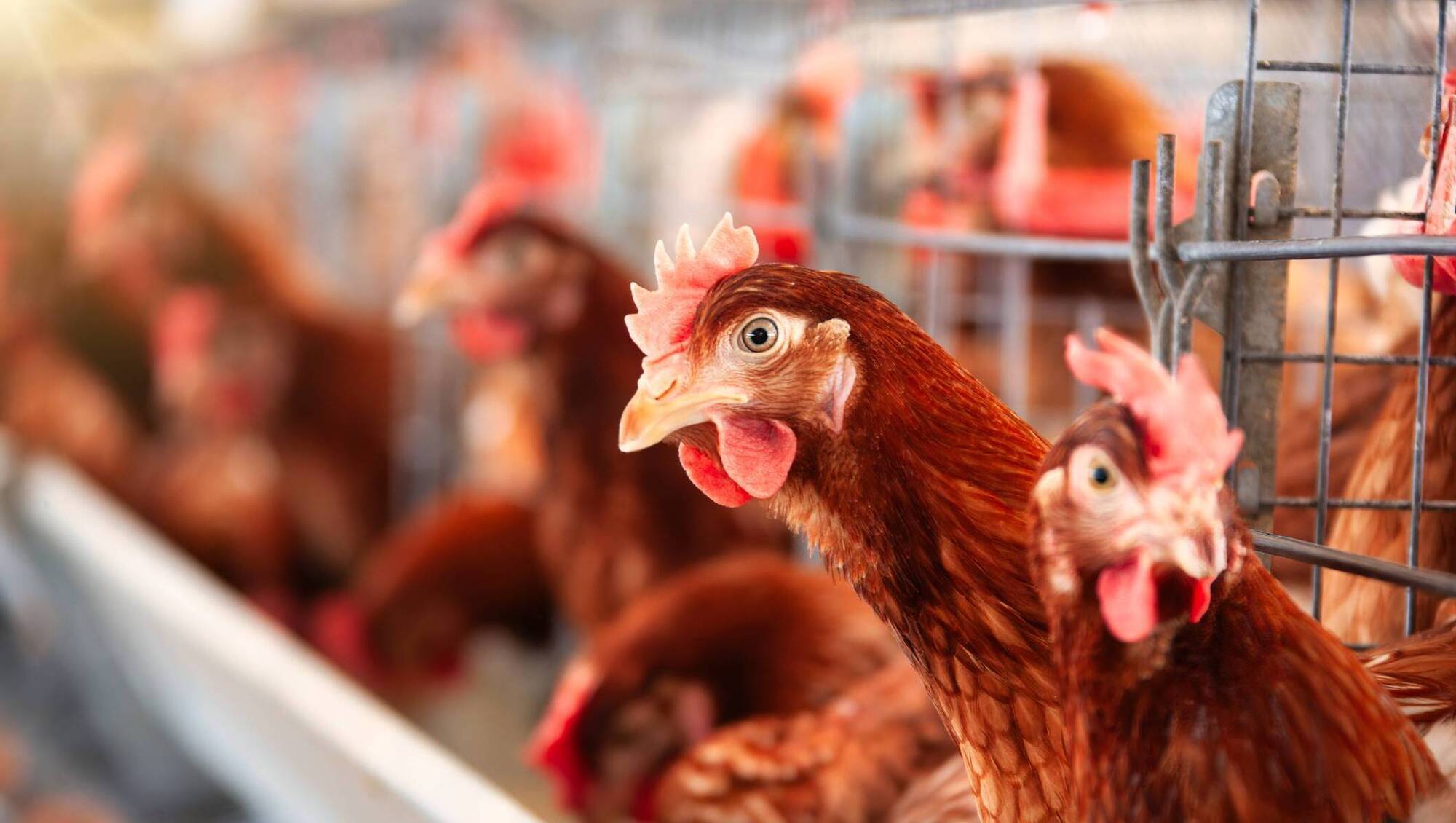
EU legislation requires that flocks infected with Newcastle disease are slaughtered, and feeding stuffs, contaminated equipment and manure destroyed or treated to inactivate the virus.
Millions of poultry have been lost across Europe due to a flare-up of Newcastle Disease in Germany, Poland, Spain, and the Czech Republic.
Already, avian flu has swept across Europe, Asia, Africa and the Americas over the past few years, resulting in the destruction of more than 140 million poultry worldwide.
Newcastle Disease (ND) poses a similar threat, with both of these viral diseases spread via direct contact with infected birds, or indirectly via contaminated objects.
While avian influenza is most commonly associated with waterfowl, and these wild birds play a role in its spread worldwide, Newcastle disease has a broader host range that includes pigeons, crows, gulls and other species. This increases the difficulty of prevention and highlights the importance of strong preventative practices on farms.
Ireland is currently free from ND, the last known case was seen here in 1997. Strict rules are in place to prevent the entry of ND into Ireland.
However, the wild birds which can spread the virus cannot be controlled.
EU legislation requires that flocks infected with ND are slaughtered, and feeding stuffs, contaminated equipment and manure destroyed or treated to inactivate the virus.
Movement restrictions are put in place around affected farms.
These “stamping-out” measures may be extended to other poultry farms in the vicinity, or farms in contact with infected farms.
Biosecurity measures are put in place, including measures to prevent contact between poultry and wild birds.
Routine precautionary vaccination against ND is applied on a large scale in the EU and elsewhere in the world.
Emergency vaccination can be applied as a response to an outbreak of ND.
No vaccine is 100% effective in preventing infection, but vaccines reduce the effects of the disease.
Newcastle disease has a rapid onset and is very contagious, with up to 100% sickness if a susceptible flock is infected. Highly virulent strains lead to severe respiratory, gastrointestinal and neurological clinical signs. Mortality can reach 100%. Milder strains can be asymptomatic.
Occasionally, humans can be mildly affected.
In the EU, 266 ND cases have been notified up to July, compared to 211 in the 2025 calendar year, and 97 in 2023, when a disease flare-up started.
Outbreaks have occurred in vaccinated and unvaccinated flocks, in 128 poultry flocks in Poland, Germany and Spain, as well as 138 cases in non-poultry species and backyard flocks It was 30 years since ND was seen in Germany, but it has now flared up in commercial flocks of laying hens, turkeys and broiler chickens, as well as in hobby farms, with more than two million birds which died or were culled in the disease control measures. More than 40 outbreaks have been confirmed in Germany.
In Spain, birds have been lost in the provinces of Valencia and Castilla y León (where tests have revealed a highly virulent strain of the virus causing outbreaks in flocks totalling more than one million birds). Two separate, independent introductions of the virus have been confirmed in Spain, indicating that two distinct wild bird migration pathways or biosecurity breaches were to blame.
Newcastle disease has emerged as a second significant threat to commercial poultry production across Europe, on the heels of avian influenza.
With several countries now implementing ND vaccine campaigns, there are fears of a vaccine shortage.
Meanwhile, highly pathogenic avian influenza, of the same type that has caused mass mortality in poultry and wild birds, has been detected for the first time in Australia, in migratory seabirds.
There have been eight detections. But there is no evidence of it causing mass mortality events or spreading to poultry farms.
Commercial poultry producers in Australia have strengthened biosecurity measures to reduce contact between domestic birds and wild birds.