EU milk prices fall for 10th consecutive month
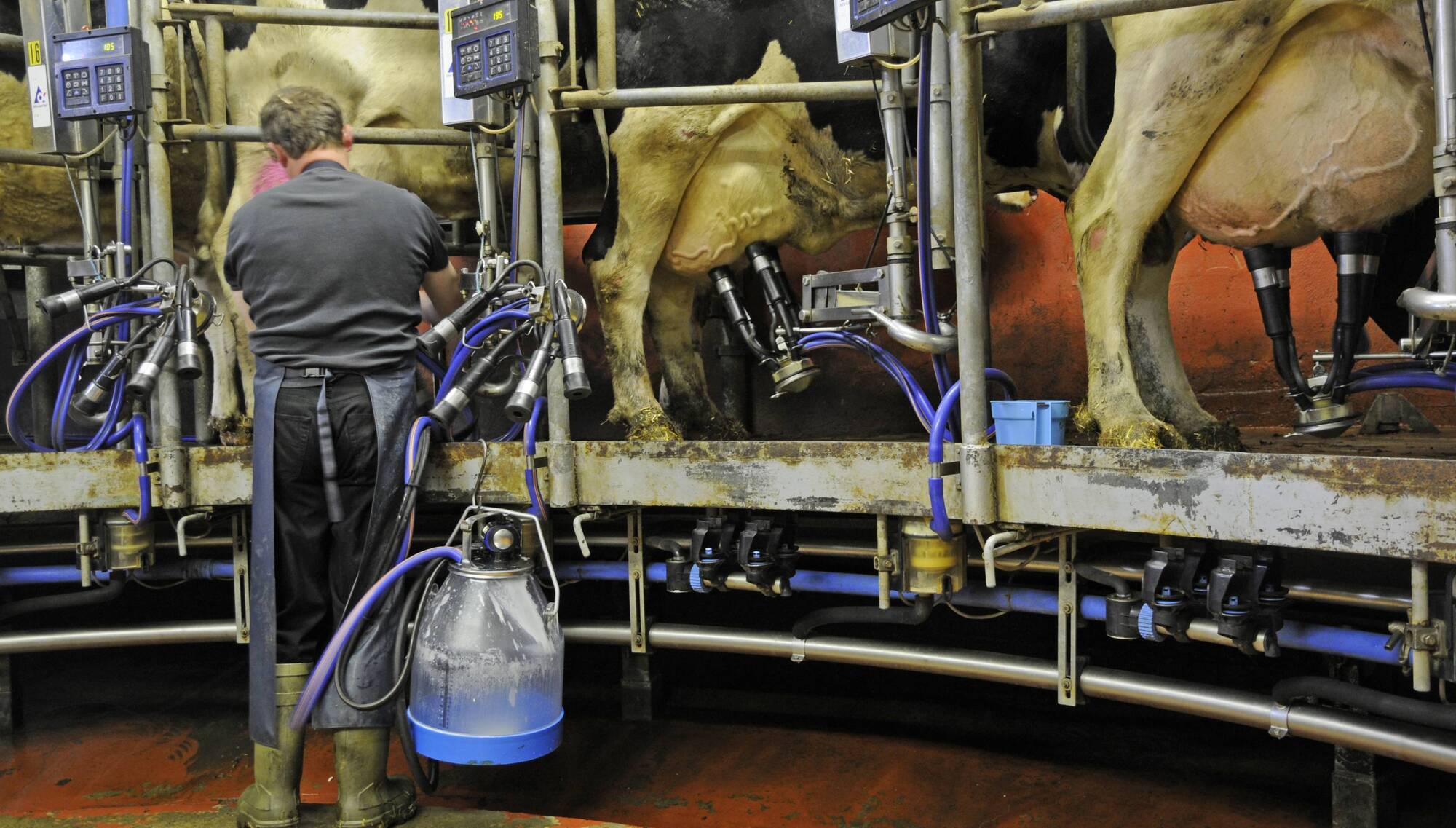
Rising input costs are the most pressing concern, with energy, fertiliser, and interest rates squeezing farmers’ profit margins.
Lower milk prices, particularly in the EU, are squeezing farmers’ profit margins, and slowing milk production globally, which is expected to affect markets.
This trend has already started, according to last week’s Global Dairy Quarterly report by analysts at Rabobank.
They said global milk production growth had started to slow, following four consecutive three-month periods of expansion above 2%. The growth peaked at 5.2% in the last three months of 2025.
But growth is now flattening, and global milk production is predicted by analysts at Rabobank to decline by 1.6% in the last three months of 2026. Annual production is predicted to decline slightly in 2027, supporting a rebalancing of global milk markets.
Across most regions, rising input costs are the most pressing concern, with energy, fertiliser, and interest rates squeezing farmers’ profit margins.
Ongoing Middle East tensions and the Strait of Hormuz closure are behind these trends, and also causing food price inflation and affecting consumer purchasing habits. But the “protein halo” effect (which has led to some whey protein shortages) has continued to support dairy demand.
Read More
Meanwhile, the latest EDF-ZuivelNL International Milk Price Comparison revealed the 10th consecutive monthly price decline in April.
The standard price paid by 17 EU European milk processors fell every month since July 2025, according to the milk price comparison compiled by the European Dairy Farmers network and the Dutch dairy trade association.
The standard price paid in April averaged €39.76 per 100 kg (excluding Emmi in Switzerland). The three Irish processors in the comparison paid €37.92 (Dairygold), €36.93 (Kinisla, formerly Kerry), and €38.39 (Tirlán). The prices are standardised at 4.2% fat; 3.4% protein; 1,000,000 kg per year; TBC 24,999 per ml; and SCC 249,999 per ml, VAT excluded.
Unchanged from March, the Dairygold milk price included a bonus of €0.10 for the Bord Bia Sustainable Dairy Assurance Scheme (SDAS), and the Grassroots sustainability premium (€0.78).
Also unchanged, the Tirlán price (in line with the processor’s commitment of price stability for March, April, and May) included a sustainability premium of €0.50 per 100 kg. Not included in the comparison was a separate €0.18 supplementary payment.
The Kinisla price, gaining €0.01 from March, was once again unchanged from the three preceding months for fat and protein. It included an SDAS payment of €0.12.
Prices in the comparison ranged from €33.50, paid by Saputo Dairy UK (Dairy Crest), in the UK, to €65.46, paid by Emmi in Switzerland. The highest price paid by monitored EU processors was €46.02 at Valio in Finland.
The comparison also included the April milk price paid by Fonterra in New Zealand (€36.86), and the April price for Class Three milk in the USA (€34.63).
For 16 European processors, the average base price was €37.81. This compared with €36.26 (at Dairygold), €36.81 (Kinisla), and €36.97 (Tirlán).
The comparison also has a rolling 12-month average. This averaged €46.04 for 16 European processors. The 12-month average was calculated at €43.59 at Dairygold, €43.19 at Kinisla, and €44.38 at Tirlán.
High prices in 2025 lifted the 12-month averages for the Irish processors. Their prices climbed from July 2024 and were among the highest in the comparison by September, 2024.
Previously, Irish prices were near the top of the EDF-ZuivelNL International Milk Price Comparison in 2021 and 2022.