Brian Reidy: Planning for high-quality silage
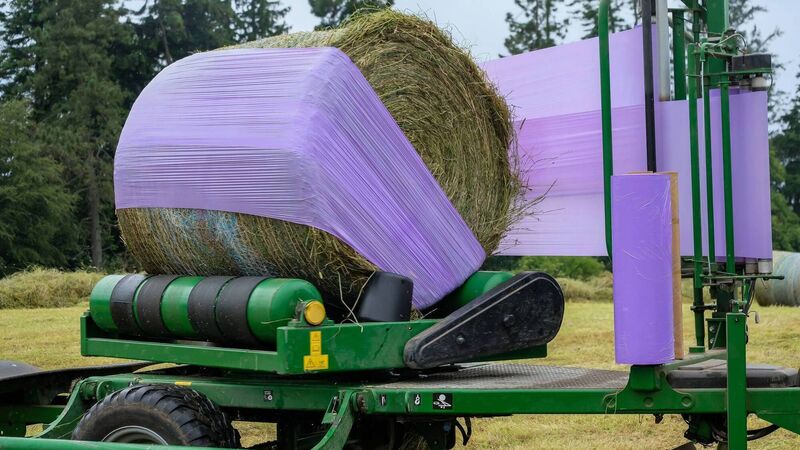
Making better-quality silage will help to reduce your overall production costs while animals are housed.
April is just around the corner, and even though spring has only just arrived, silage-making is not too far away. Many will not have finished feeding silage yet this spring, but nonetheless, next season’s crop must be planned for.
Air temperatures are on the rise, and hopefully soil temperatures will follow. Growth, while steady, is not getting going yet, and many who turned out early are having to slow down the rotation so they don’t start the second round too quickly, while others who were unable to get to grass early will not hit target grazing areas by the start of April and may have to mow some off to get back on track.
In both dairy and beef herds, we must all make wise decisions regarding forage production for next winter, in order to optimise animal performance and farm profit. Cutting better-quality silage earlier will always result in improved animal performance, with less dependence on purchased concentrates, which will undoubtedly be critical next winter.
If energy prices remain high or surge even higher, it will invariably result in higher concentrate costs. Fertiliser has also taken a jump in recent weeks, and this will also increase the cost of home-grown forages. Making better-quality silage will help to reduce your overall production costs while animals are housed.
One way of improving the quality of your silage is to cut it earlier than you traditionally would. Take care not to apply too much total nitrogen(take account of the nitrogen fraction of any slurry applied when doing the sums) so you can cut early. Younger reseeded swards can use up more nitrogen than older swards, so consider this before spreading.
Contractors charge by the acre but producing quality rather than bulk must be your goal once you have adequate volume. Your cutting date will of course be down to weather, ground conditions, stocking rate, contractor availability, units of nitrogen applied etc.
There is never a compelling argument for planning to make poor silage. Early silage made with young leafy grass will increase the performance of all stock and can easily be diluted down with straw for dry cows.
Do you have an up-to-date soil test for your silage ground? This year, again with higher fertiliser prices, you must get soil indexes right to optimise the return on your nitrogen purchases. Have you put slurry out and how much? Silage production has a big requirement for potash in particular.
How much nitrogen you spread should be determined by the intended cutting date and the swards’ ability to grow, based on soil fertility and reseeding history.
Early cuts will require less nitrogen as high-nitrogen swards are difficult to preserve. Splitting fertiliser application for first-cut silage is also a good idea. It will allow you to assess growth during early April and enable you to apply more or less fertiliser when applying the second round in mid-April based on uptake/growth. Sulphur is also a very important element for silage ground as it boosts availability of nitrogen to the plant during peak growth.
To start with, calculate the silage stocks being carried over from last year.
Grass silage production is getting more and more expensive every year. Unfortunately, its quality can be variable depending on weather, cutting date and grassland management/reseeding policy. Too much poor or average silage in the pit may in fact increase overall production costs.
First-cut grass silage of 20-24% dry matter will typically cost €45 to €50 per tonne this year, depending on yield or €450-€500 per acre on your own land. When you include a land value, reseeding, liming, fertiliser, weed control and contractor charges these figures can rise sharply. With the prices currently being paid for rented land along with fertiliser costs, then silage is getting very expensive.
Remember to build in a 15-20% safety volume to provide for a longer winter due to poor weather, poor growth etc.
It is always worth considering the cost of all forages each year. 1000 UFL of a two-cut grass silage system is more expensive than the same 1000 UFL from maize silage in the open or under film.
Expanded this further it can be show maize is far more efficient at producing energy than a two-cut silage system. One unit of nitrogen produced only 17 UFL from the two-cut grass silage system while one unit produced 28 UFL in maize in the open, 34 UFL in maize under plastic.
Land and fertiliser are expensive — make sure they are working hard for you and your animals. Food for thought!
- Brian Reidy is an independent ruminant nutritionist at Premier Farm Nutrition