New scheme offers 60% support for nutrient storage
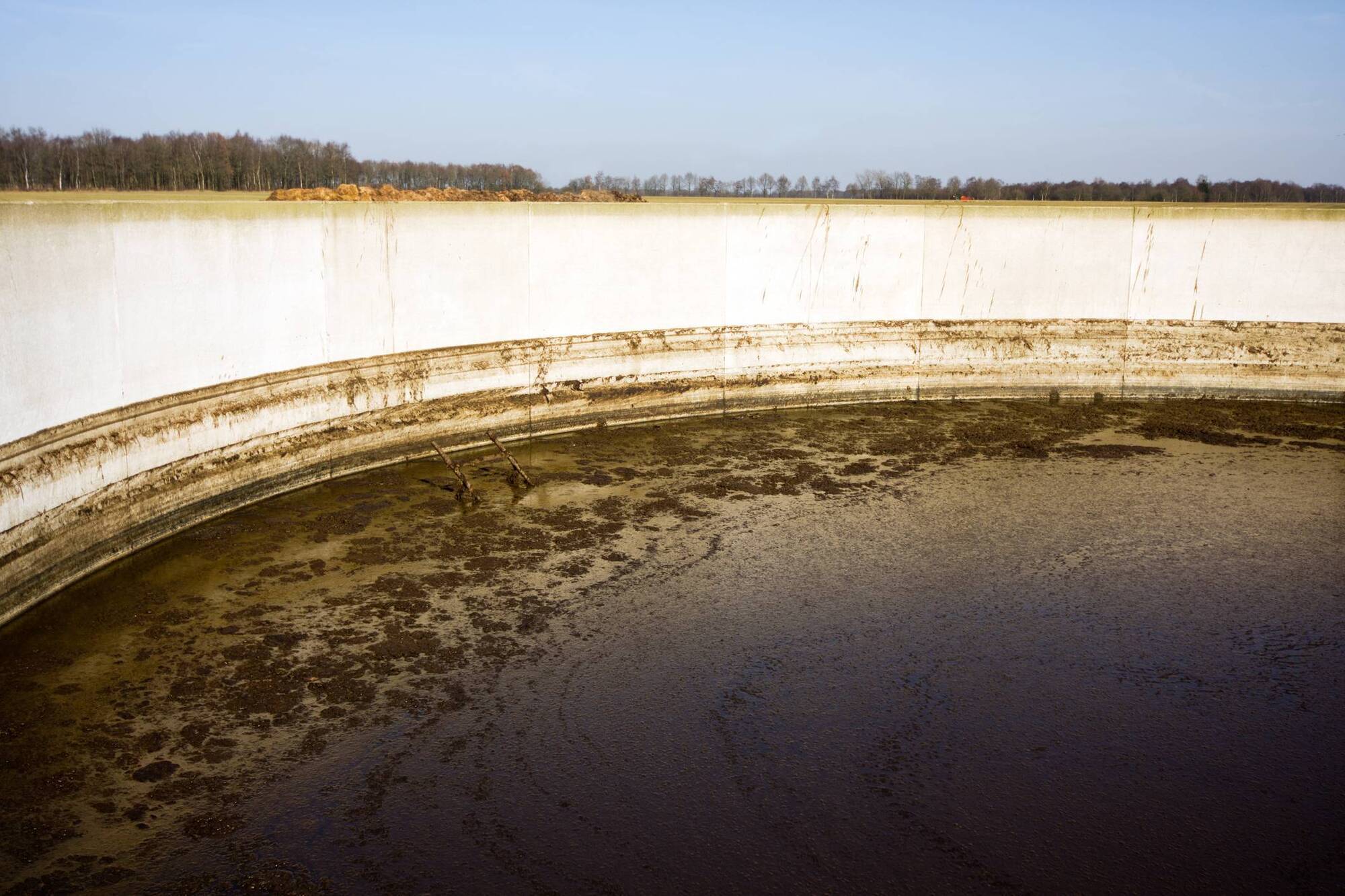
The new scheme came into effect in January 2025, as part of TAMS 3, the Targeted Agriculture Modernisation Schemes.
The new 60% Nutrient Storage Investment Scheme effectively doubles the overall grant funding available, said Seamus Nolan, Teagasc’s Scheme Support Unit Specialist, in a recent Dairy Edge podcast.
Prior to this, farmers in general would have been eligible for only a 40% slurry storage grant, although young trained farmers, women farmers, and organic farmers were already eligible for a 60% grant.
The new scheme came into effect in January, 2025, as part of TAMS 3, the Targeted Agriculture Modernisation Schemes.
“Those nutrient storage investments that are covered are manure pits, mass concrete tanks, circular slurry stores, and geomembrane-lined stores," Mr Nolan explained. Sub-investments are similarly supported (related slats, etc).
However, farmers must already have enough slurry storage before they can apply.
“All nutrient storage investments, or animal housing, are deemed nitrates-related investments, so in order to be eligible, you have to be nitrates-compliant currently, in order to apply," said Mr Nolan.
“The Department assesses your current storage. As part of the application, you have to submit your current storage facilities on the farm, and they assess you on the basis of the most recently completed winter, in terms of livestock. For people who are over 100 kilos of organic nitrogen stocking rate from January 1, 2025, they must have storage for all animals on the holding for the most recently completed winter. If you’re less than 100 kilos, so you’re more extensive, you can use what’s called ‘reduced storage’ to comply. Essentially you can say that a number of animals are out-wintered”, Mr Nolan explained.
“If you apply, and you’re deemed to be not eligible, there is a good possibility that you will be cross-reported, and you will get a farm inspection on the basis of it," he cautioned.
Currently, slurry storage space is calculated on the basis of 0.33 cubic metres excretion per cow per week. “That is being reviewed. The chances are that is going to increase. It probably won’t increase until the new Statutory Instrument is produced. That will potentially be in 2026," he said.
“If you’re tight on storage now, when the new figures come in, you’re going to be extra tight. You’re probably going to be short. It’s a good time to review what storage you have on the farm.
“Any new facilities that you are designing, or capacity, should be based potentially on those new figures that will come into force. A farmer might do their figures now and they might say ‘I’m okay, I don’t need to apply for anything’, but bear in mind, you’re compliant now with the current regulations, but the chances are you won’t be compliant in maybe 12 months’ time. Bear in mind as well that normally when the Department introduces new regulations in terms of the storage, they will give farmers approximately 12 months to become compliant.
“Whether we talk about a 20% buffer based on the current figures, or we work off the new figures, it’s 20% over and above the current figures, no matter what way you look at it," he said.
He advised calculating storage at 20 to 25% in excess of the current requirements. “20 to 25% over your current storage should leave you reasonably safe”, he said.
He advised farmers to contact their own advisor, who will be knowledgeable about the current specifications. Much depends on the future plan for the farm, when calculating future nutrient storage capacity. If there is a plan to increase the herd in a year or two, that should be factored in when planning to avail of the new nutrient storage grant.
“An individual farmer has a €90,000 ceiling at 60% for the nutrient storage element, and they also have a €90,000 ceiling, assuming they have no other investments taking place, to put the shed over the tank, and that will be available at 40% for the ordinary farmer, or at 60% for the young farmer, or the woman farmer or an organic farmer. A registered farm partnership will qualify for double the €90,000 available for the nutrient storage scheme," said Mr Nolan.
Even if a farmer has drawn down TAMS 3 funding already, the new nutrient storage scheme is separate, and the farmer is eligible up to the full €90,000. “If they had applied for a tank prior to this nutrient storage scheme coming into place, that tank would have been approved under their existing €90,000 ceiling, so that would not come out of the nutrient storage scheme ceiling, because it was applied for BISS application."
Drawings submitted for tanks or housing should fully comply with DAFM specifications.
Mr Nolan highlighted that planning applications must be made when constructing slurry tanks, so preparation needs to start in good time. “Any kind of a structure at all under the Department’s TAMS scheme requires either full and final planning permission at the time of application, or a declaration of exemption. Both of those have to come from the local authority."
Usually planning permission, rather than an exemption, will be required. That process will take at least three months, if there are no objections, or no additional information is sought.
“I can go ahead and apply for TAMS once I have planning permission, but that application for TAMS will not be processed until the TAMS tranche closes. That tranche doesn’t close until September”, Mr Nolan explained. “At the minute, you’re talking about, I’d say, five months potentially, at a minimum, before you have approval, after the tranche date closes."
Depending on the scale of take-up of the grant, contractors may be busy and not readily available, once grants have been approved.
The DAFM is currently reviewing nutrient storage grant costings, given the significant increase in many component prices, and new reference costings will come into force towards the end of 2025. “Those costs won’t be backdated, if you already have an application in the system."