US-Iran deal takeaways: reopening the strait of Hormuz, waived oil sanctions and Lebanon
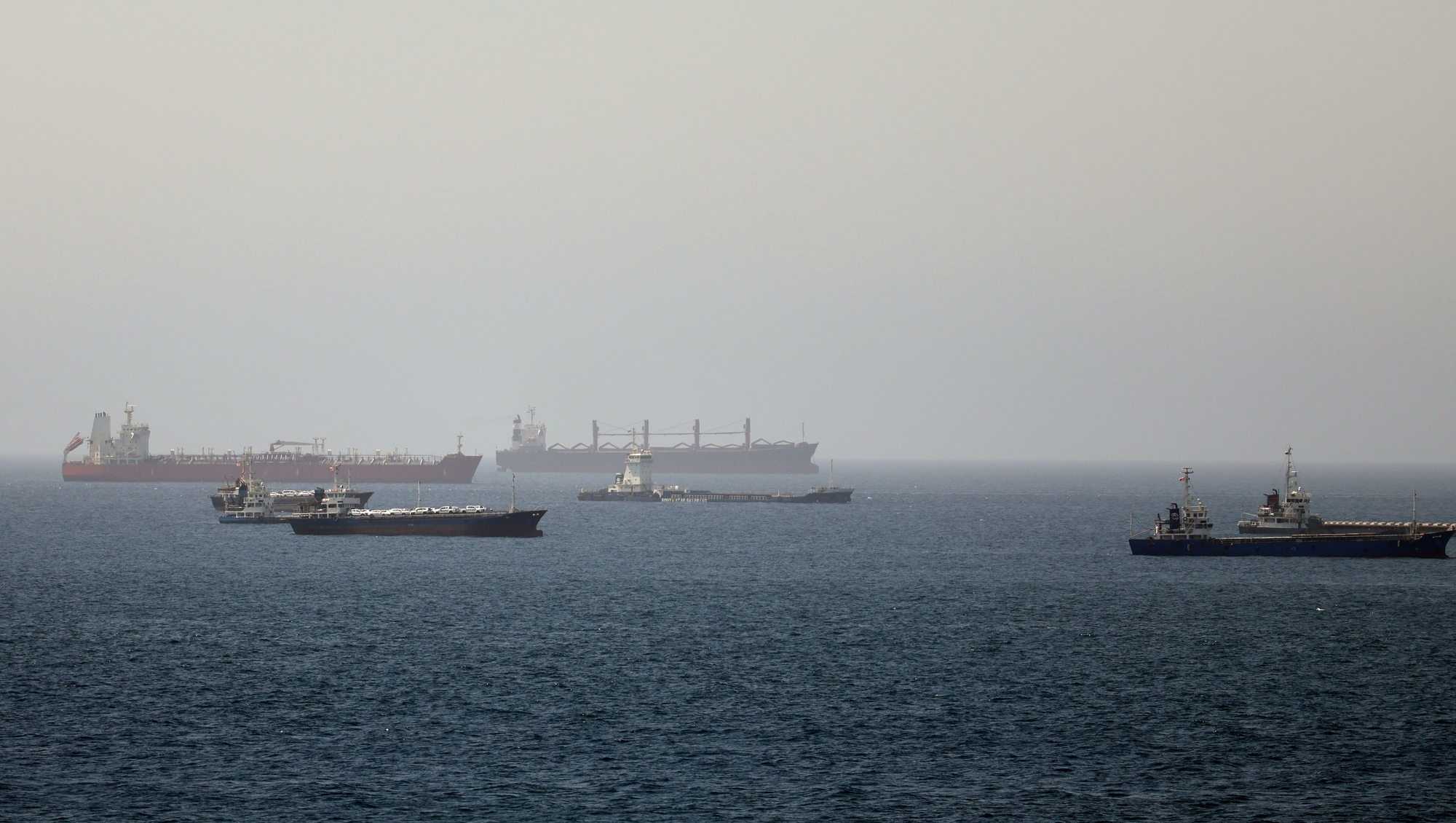
Tankers and cargo vessels are seen in the Gulf of Oman, along shipping routes linking the Strait of Hormuz and the Arabian Sea, Tuesday, June 16, 2026. (AP Photo)
Senior US officials have revealed the contents of a preliminary memorandum of understanding (MOU) between Washington and Tehran to end the 110-day conflict which has cost thousands of lives and devastated the world economy.
The officials dictated the MOU to journalists on Wednesday, before it was signed by Donald Trump and Iranian counterpart Masoud Pezeshkian.
Both sides have 60 days to negotiate the terms before a final agreement.
This is what the deal includes:
Read More
Both the US and Iran, along with their allies, agree to declare an end to military operations on all fronts the moment the document is signed.
Senior officials on the call said:
“The United States of America and the Islamic Republic of Iran and their allies in the current war by signing this MOU declare the immediate and permanent termination of military operations on all fronts, including in Lebanon.”
The inclusion of Lebanon is significant, and effectively requires Iran to rein in Hezbollah.
Israel retains the right to strike back if Hezbollah attacks regardless, officials added.
Israel was not a party to the negotiations or the MOU, and may not feel bound by the agreement.
US officials claimed that Iran conceded that its enriched uranium stockpile would at “minimum” be down-blended (or diluted) on Iranian soil, under the supervision of the UN’s International Atomic Energy Agency (IAEA).
Rather than a concession from Iran, this appears to be a compromise from the US; Iranian negotiators offered to down-blend their 440kg stockpile of highly enriched uranium under the supervision of the IAEA inside Iran in February, two days before the US and Israel launched their war.
In those negotiations Iran had resisted calls to ship the uranium out of the country which proved to be a major sticking point with the US.
A large number of issues related to the nuclear program remain unanswered, with much to be negotiated over the next 60 days.
“The two parties also agreed to discuss the issue of enrichment and other mutually agreed matters related to the Islamic Republic of Iran’s nuclear needs, based on a satisfactory framework being agreed upon in the final deal.”
Much of the coverage of the deal has treated sanctions relief and the nuclear question as separate tracks. Officials on the call said the two paragraphs use identical language and are deliberately intertwined.
“The United States of America undertakes to terminate all types of sanctions against the Islamic Republic of Iran … in an agreed upon schedule as part of the final deal.”
“The sanctions relief in seven is tied to the nuclear settlement in eight,” a senior official said, referring to the paragraph numbers in the agreement.
“To the extent that you perform on the nuclear questions, you will get the sanctions relief.” So: Iran will not receive broad sanctions removal simply by signing the agreement.
Iran will receive waivers for crude oil exports, petroleum products and associated banking services the moment the document is signed.
“Immediately upon the signing of the MOU … US Department of Treasury will issue waivers for the export of Iranian crude oil, petroleum products and derivatives, and all associated services, including banking transactions and services, transportations, etc.”
Officials defended the move, arguing that Iranian oil was already flowing to China regardless – and that existing sanctions were simply giving Beijing a steep discount.
Critics have argued that such a move allows Iran to immediately start to refill its coffers, before negotiations over the nuclear program even begin, and surrenders a key tool of economic leverage that the US had before the war began.
Iran is required to ensure toll-free passage for commercial vessels for at least 60 days, with full restoration of traffic within 30 days.
Senior US officials said the Gulf states would never agree to any longer-term arrangement that charges for access.
However, Iran’s chief negotiator, Mohammad Bagher Ghalibaf, later said Tehran would charge ships using the strait after the 60-day fee-free period.
Ghalibaf said in an interview on state television that the “strait of Hormuz will not return to pre-war conditions”.
“Iran has the right to sovereignty over the Strait of Hormuz and of course we will receive a fee for services.”
Senior officials said for the first time in the 100 days of war, Iran fired on no vessels in the strait of Hormuz the day before the call.
According to the officials on the call, the text makes clear that access to Iran’s frozen funds is contingent on the regime actually implementing the agreement’s terms, not at signing as Iranian officials had hoped.
“Such funds … shall be made fully usable for payment to any ultimate beneficiary designated by the Central Bank of the Islamic Republic of Iran … upon the implementation of the MOU.”
The agreement gives both sides 60 days to negotiate a comprehensive final agreement, extendable by mutual consent. A binding UN security council resolution would be required to endorse any final deal.
“The United States of America and the Islamic Republic of Iran commit to negotiating and achieving the final deal in maximum 60 days extendable with mutual consent.”
However, the fragility shouldn’t be understated – one senior US official explained: “Either side can walk away at any time.”
If talks collapse, they indicated the US was prepared to tighten the economic pressure significantly.

CONNECT WITH US TODAY



Be the first to know the latest news and updates