Are Europe's food connoisseurs ready for lab-grown meat and foie gras?
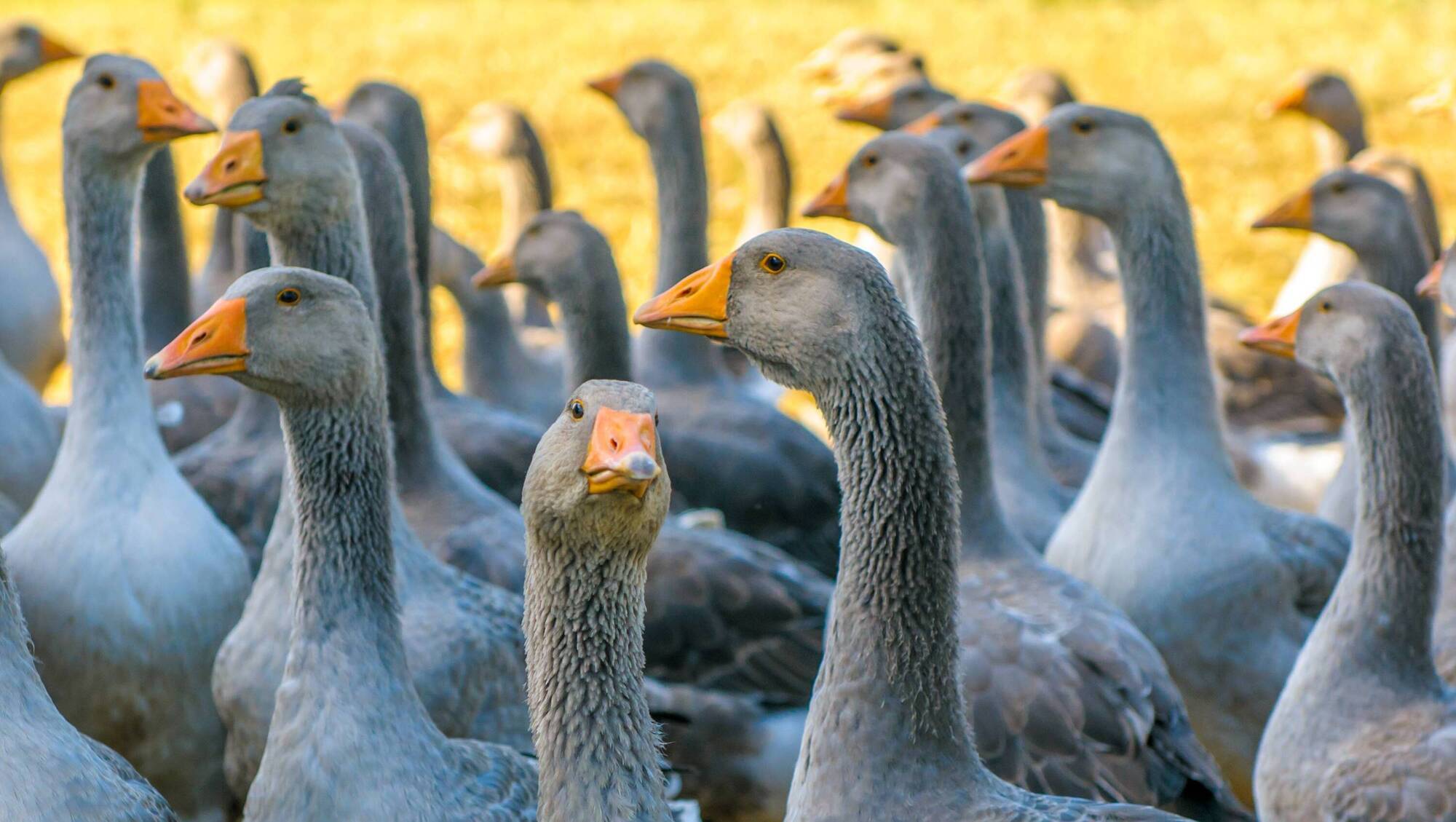
Lab-grown foie gras could spell the end for the force-feeding of geese which animal rights activists say is inhumane and cruel.
The world's gourmets could soon face a difficult moral question.
They pay up to €100 for a kilogram of fresh foie gras, despite its production involving force-feeding ducks and geese to encourage rapid growth of their livers.
If a French company succeeds in getting EU authorisation for its laboratory-grown foie gras, will connoisseurs of French cuisine accept it, and spell the end for the force-feeding that animal rights activists say is inhumane and cruel? Public and private investors have bet more than €65m on the answer being yes.
That is how much money the French company, Gourmey, has raised to commercialise its sustainable gourmet products, grown directly from animal cells in laboratories. Foie gras is its flagship product.
According to the Good Food Institute non-profit think tank, there are 174 publicly announced lab-grown meat and seafood companies worldwide which have attracted about €2.8bn of investment.
But only the US, Singapore, and Israel have approved and allowed the commercial sale of lab-grown meat (it was authorised earlier this year in the UK for use in pet food).
Also called cultivated or cell-based, the lab-grown product comes from animal cells grown in a nutrient-rich environment to form muscle, fat, and connective tissue.
Now Gourmey has made the first request ever to the European Commission to sell lab-grown meat.
EU farmers have reacted badly, they are unlikely to be buyers of the Gourmey foie gras, after the European Livestock Voice, representing the meat supply chain, said this first application will open the door to many others, for bigger players and bigger markets. Obviously, that would pose a threat to traditional livestock farmers.
The EU’s food safety authority (EFSA), has nine months to publish its opinion. It could be authorised only if the EFSA finds it does not pose a safety risk to human health. For this product mimicking foie gras, it is also required that it does not mislead consumers, nor be significantly less nutritious than foie gras.
Placing it on the market will also require a qualified majority (at least 55% of member states representing 65% of the EU population) support. To block the decision, at least four member states must vote against it.
Already, Hungary and Italy have opposed new foods such as lab-grown products, and the agriculture ministers of France, Italy, and Austria were backed by nine other colleagues when they called last January for stricter assessment of lab-grown products.
It will take up to two years, but success would open the markets of the EU, Iceland, Lichtenstein, and Norway for Gourmey, which is also seeking market approval in Switzerland, the UK, Singapore, and the US.
The global foie gras market was estimated at about €1.3bn in 2020.
But there are many hurdles to overcome for Gourmey. And competitors; since 2022, IntegriCulture in Japan has been developing lab-grown foie gras. And plant-based and other versions of foie gras already offer consumers an alternative.
When Nicolas Morin-Forest founded Gourmey in 2019, the pitch was that its lab-grown foie gras eliminated animal welfare concerns, and could sell in the many countries where the product is banned.
Supporters say lab-grown foods can be produced using fewer resources, and can contribute to food security. Critics say they do not have the same nutritional value as traditional products, and production is expensive and energy-intensive.
Outbreaks of bird flu also threaten the traditional foie gras supply chain.
Morin-Forest's aim is to be better than conventional foie gras, by partnering with top chefs to create a signature flavour. But it would have to pass the test of some of the world's richest diners. Would lab-grown foie gras pair perfectly with their Sauternes, Port, or Champagne?