Ireland has one of the lowest levels of organic land in EU
Between 2012 and 2022, the total organic area increased in almost every EU country.
Ireland has one of the lowest shares of organic land making up its total agricultural area in the EU.
New Eurostat figures show that in 2022, Ireland had only a 2% share of organic area, the same as Bulgaria, while Malta only had 1%.
In contrast, countries with the highest shares of organic area within total utilised agricultural area in 2022 were Austria (27%), Estonia (23%), and Sweden (20%)
Ireland had a total organic area of 52,793 hectares in 2012, which increased by 81% to 95,701 in 2022.
The total area of agricultural land in organic production in the EU was an estimated 16.9m hectares in 2022.
Between 2012 and 2022, the total organic area increased in almost every EU country.
The area quadrupled in Croatia over this period, the sharpest rate of increase within the EU.
It also expanded particularly rapidly in Portugal (278%), Bulgaria (182%), France (179%), Hungary (145%), Romania (123%) and Italy (101%).
France had the highest organic area in 2022 - at 2.9m hectares, equivalent to 17% of the EU total.
France, together with Spain (2.7m hectares), Italy (2.3m), and Germany (1.6m) accounted for 56% of the EU’s total organic area in 2022.
The organic production of cereals remains a relatively small part of total cereals production in the EU.
The highest shares recorded among EU countries in 2022 were in Sweden (7% of the total cereals production), Estonia (6.6%) and Italy (6.4%). Ireland had the second lowest share.
Sweden also had the highest share (19.2%) of organic fresh vegetable production in total vegetable production among EU countries, followed by Germany (11.4%) and Italy (6.3%). Ireland came in eighth place for its share.
In 12 EU countries, more than a half of their respective total organic areas came from organic arable land in 2022.
In a separate 11 EU countries, more than a half of their respective total organic areas came from organic pastures and meadows. In particular, organic pastures and meadows accounted for the vast majority of the total organic areas of Ireland (88%), Czechia (81%) and Slovenia (79%).
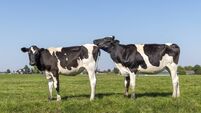
There were 5.4m bovines being reared organically in 2022 within an EU herd of 74.8m bovine animals (equivalent to 7.2%).
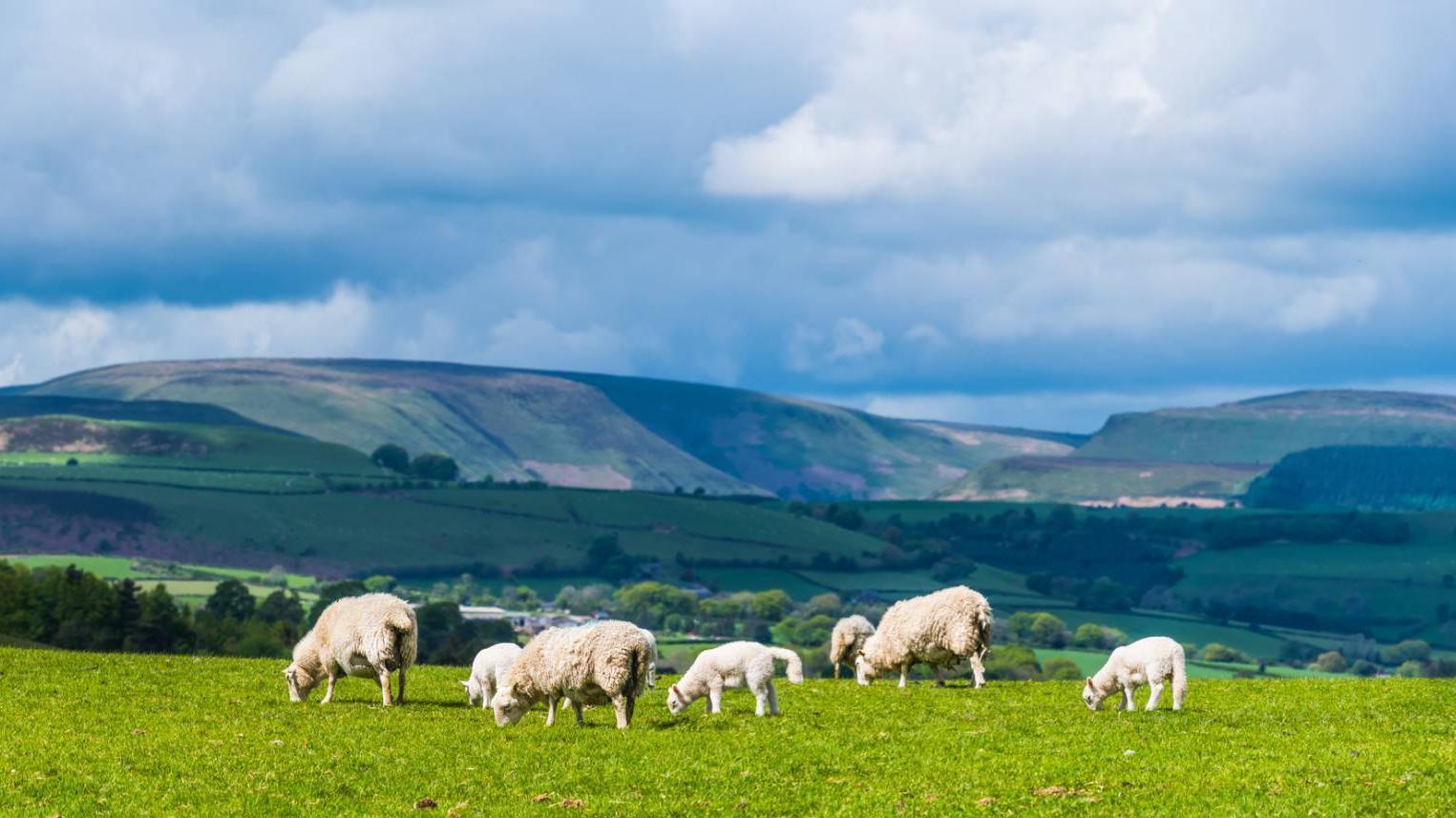
There were 1m cows being reared organically in 2022 (4.9% of the EU's cow herd), and 6.1m sheep (10.4% of the EU's flock).
Between 30% and 45% of sheep and goats were being reared in 2022 using organic methods in Estonia (44%), Czechia (41%), Austria (36%), and Greece (35%).
Greece had also the highest share of organic dairy cows (31%), followed by Austria (22%) and Sweden (18%).
One of the main objectives of the European Commission’s Farm to Fork strategy is to encourage the development of organic farming areas.
It has set a target of at least 25% of the EU's agricultural land being under organic farming by 2030.
Ireland's Climate Action Plan has set a target of more than tripling the organic land area by 2030 to approximately 445,000 hectares.
The latest tranche of the Organic Farming Scheme means the land area farmed organically will now be approximately 225,000 hectares (5%) with over 5,000 farmers. The area farmed organically has tripled since 2020.