Ireland's tradition of saving hay to be documented
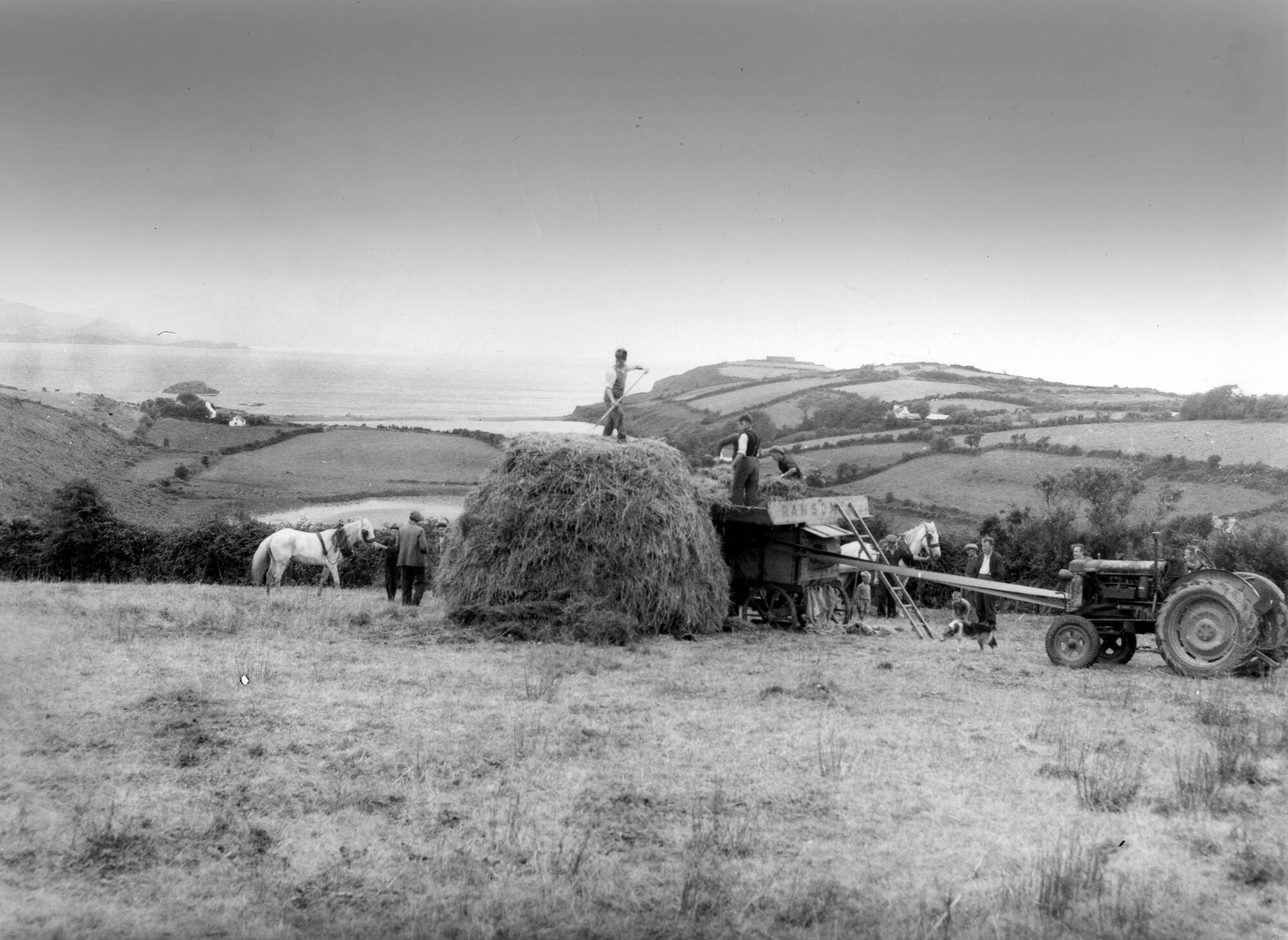
Those who toiled in meadows had a unique style which embraced many of life’s disciplines. They nurtured good fellowship. Neighbours helped each other with the work.
Saving hay between showers of rain is a traditional challenge for farmers, and it has now been highlighted in a new documentary series which begins tonight on TG4.
The stretch of coast along Galway Bay running west from Na Forbacha to Ros an Mhíl is widely known as Cois Fharraige.
Pobal Cois Fharraige, filmed by Aniar TV during the summer of 2023, follows the busy lives of people in the creative and vibrant rural community.
Those featured include Máirtín Ó Cualáin as he waits patiently for a spell of good weather so he can save his hay.
His experience will resonate with farmers countrywide. For it will reveal a way of life before silage took over from hay making.
That was a time when rural people always checked the weather forecast with greater interest than usual before going to bed at night, and looked at the sky first thing in the morning to see if it was day for cutting and saving hay.
Those who toiled in meadows had a unique style which embraced many of life’s disciplines. They nurtured good fellowship. Neighbours helped each other with the work.
Women at home prepared what they described as “the dinner” and sent it to the fields with children on bicycles and on foot.
But the message bag, filled with sandwiches and slices of home-made bread, was never complete without a few pint bottles of stout.
It also contained at least one whiskey bottle filled with hot tea. Finding a secure cork for the bottle was often an adventure.
Sometimes one had to be hastily made from the page of an old newspaper. The milk to colour the tea was usually put into an empty 'Baby Power' or a noggin 'Paddy' bottle.
There were tantalising moments too, like waiting for a kettle to sing on a primus burner to make a mug of tea to quench the thirst.
Cutting meadows with scythes, as was done in earlier times, was hard work. It required strong men with plenty of stamina. Above all else, it demanded skills in using and edging the scythe.
Seasonal farm workers were in as much demand in those days as the modern agricultural contractor is at the present time. Each one could cut over half an Irish acre of hay in a day.
But the arrival of the horse-drawn mowing machine changed everything. A new era had arrived.
The hay was left to season on the ground for a few days. It was turned, put into cocks, and eventually made into wynds. After a few weeks these would be brought home on a float which had its own winch.
Getting a lift on a horse drawn float taking a wynd of hay home to the barn from a meadow yellowed from the harvesting was often the highpoint of the summer holidays for many rural school children.
Some of them even helped with the work in the hope of securing an honoured position on the top of the wynd as it was carted along narrow country roads with a scattering of their friends being content with a seat behind them on the back of the float.
Those were innocent and happy times of fun and games when the sun always seemed to be shining, the days appeared longer and the streams that bit clearer for those who went catching “collies” with jam jars.
The arrival of the modern tractor with hydraulic lifts and fitted equipment, plus other farm machinery, took a lot of the fun out of hay saving.
Yet, the mowing machine and the "Tumbling Paddy'' remain as fresh in the minds of people who lived in those times as the jumping frogs in a meadow and the irritating midges on a warm evening.
Exiles, weary of city life, often wished they were at home for the saving of the hay in the stretching tapestry of multi-coloured meadows on sunny summer days.
A day in the meadows was sometimes an adventure for children, which not even Disneyland could ever hope to match in the modern era.
Birds' nests and bounds ditches had to be respected, cross bulls avoided and barbed wire fences negotiated.
Daisies for chains were collected on the way. Frogs became a source of wonder. Certain dogs had to be given a wide berth and gooseberries and blackberries were never in the realms of forbidden fruit.
The weather, of course, was always vital to hay making. Country people liked to depend on ancient customs as indicators of how things were likely to turn out.
Swallows flying low over the ground or crows perching on freshly mown meadows were regarded as signs of rain. So too were the distant hills when they were looking nigh.
Farmers driving the cows to be milked in the morning often observed the grass. If it was dry, it was a sign there would be rain before night, while fine weather was likely to continue if the grass was wet. Gadding cows indicated rain.
Women who worked the churns in the days when a lot of butter was made at home were also weather prophets.
They could tell thunder was on the way when the cream did not solidify. A red sky at night was regarded as a shepherd’s delight, but a red one in the morning was a shepherd’s warning.
It is a way of life that has largely vanished, but the TG4 series, which begins tonight at 8pm, will hopefully revive memories, especially as it follows Máirtín Ó Cualáin to see if he manages to save his hay in wet weather.
Read More