Understanding a changing climate
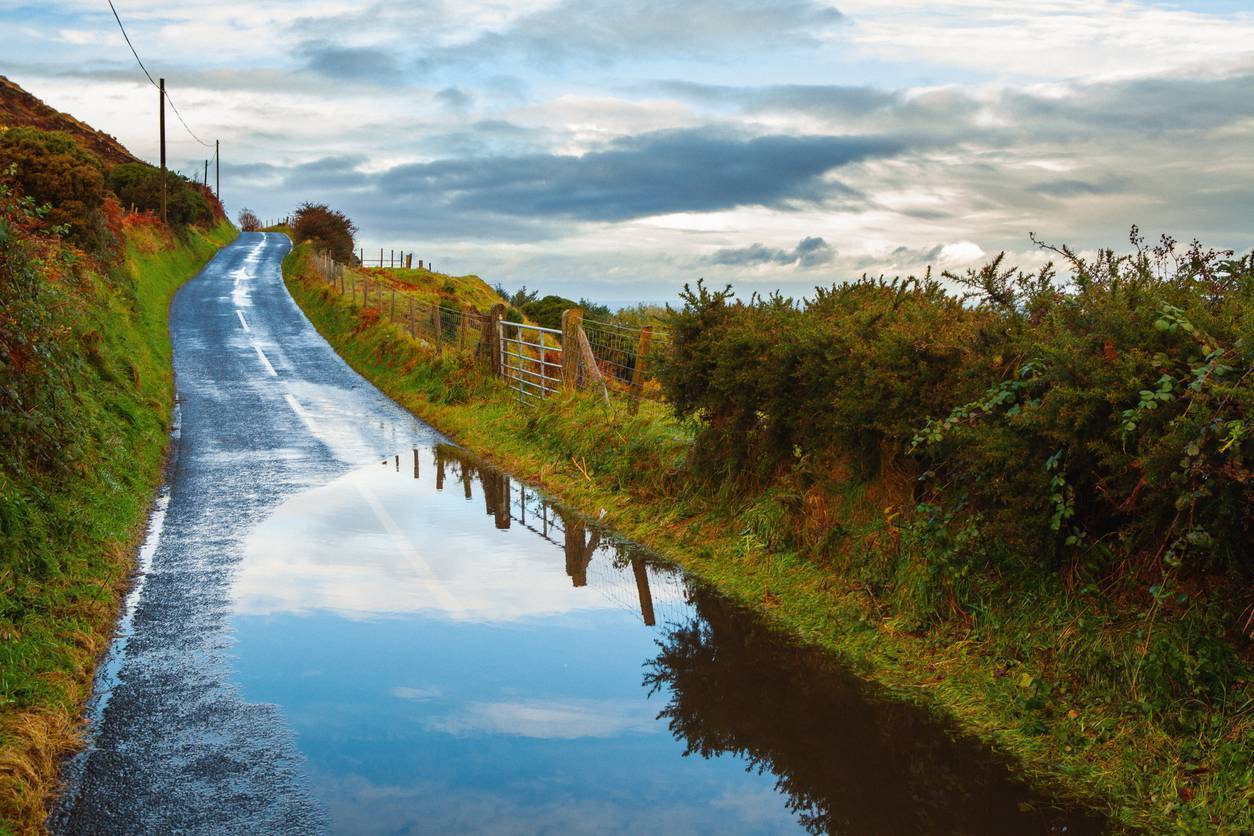
One of the causes of the recent excessive rainfall in Ireland is thought to be the warming Atlantic Ocean.
More rain was the forecast, when Keith Lambkin, the Head of Climate Services Division with Met Eireann, joined Teagasc sustainability advisors Deirdre Glynn and Cathal Somers on a recent edition of the Environmental Edge podcast.
Where did the recent excessive rainfall in Ireland originate? “One of the causes of this is the warming Atlantic", Keith said. "During 2023, there were record heatwaves out in the Atlantic, and during June, the readings of temperatures in the marine sector were off the scale. Scales literally had to be redrawn to capture the temperatures that we were seeing”.
“If you get really warm water, it starts to evaporate and heats the air above it, and warmer air can also carry more moisture.
"Those winds that are blowing from the west were blowing all that very moist air across Europe. That’s one of the factors that contributed to the very heavy rainfall”, Keith explained.
“If you look at the temperatures in the North Atlantic at the moment, they’re still in record-breaking territory”, he said. “We’re still likely to see enhanced rainfall throughout the course of the year”.
The 2023 European State of the Climate report was published jointly by the Copernicus Climate Change Service and the UN World Meteorological Organisation (UNWMO) in April 2024. Keith said, “The report tells us that Europe is the fastest warming continent on the planet. It’s actually currently warming at twice the regular speed of the rest of the planet”.
He said the Arctic is warming incredibly fast and Europe is experiencing a lot of that heating effect. “As the planet heats up and as the sea heats up, we get a lot of warm moisture over the Atlantic and the westerly winds bring that warm air across Europe, so it’s adding almost an extra weather effect, as additional heat”.
Another driver of increased heat is Europe's clean air policy. “There are tiny particles in pollution that are extremely good at reflecting the sun’s energy back out into space.
"By cleaning up a lot of these pollutants for genuine legitimate health reasons, we’re actually letting more of the sun’s energy land and come on to Europe”, Keith explained. The combination of such factors is leading to record-high temperatures in Europe.
Also discussed on the podcast were geo-engineering weather solutions, such as an American project to shoot sea salt particles into the sky, in order to modify solar radiation. “There’s a counter-argument to that", said Keith. "If you start messing with Mother Nature, you may create a whole load of unintended consequences on the back of that, and a lot of these theories aren’t fully proven".
In the 1970s, scientists discovered the depletion of the ozone layer, and convinced politicians to put in place the Montreal Protocol ban on chlorofluorocarbons. "We started to see the hole decreasing, levelling off, and now we’re beginning to see it recover”, Keith said.
“That’s a similar journey that we’re on from a climate change perspective".
"We had the Paris Accord, which is basically trying to reduce the additional carbon dioxide in the atmosphere, and we’re on that last hill of the journey now”, Keith said.
“We see the biggest economic damage typically from floods and winds, right across Europe and here in Ireland. But when it comes to actual mortality rates, it’s the extreme heat that is the big killer, and that’s the main trend we’re seeing”.
Because of gradual warming, spring and growth are tending to arrive earlier in Ireland. “We can’t rule out the possibility of cold episodes as well”, Keith said. “They cause an awful lot of trouble, because you’re just not used to them, or maybe you’re not prepared for them”.
“We have these great ambitions to be carbon neutral, net zero emissions by 2050. What net zero by 2050 means is that we’re still allowed to produce greenhouse gases, but we need to be able to absorb the same if not more of the greenhouse gases".
"If we can get to that point, we’ve effectively fixed the leaky tap. We have not drained the water. We are effectively trapped into the climate system that we have at that time. So, all these mitigations and action plans aren’t trying to get us back to where we were 100 years ago. They’re trying to put the genie back in the bottle. They’re trying to stop things running out of control and getting worse.
"But make no mistake about it, we’re locked into the heating and these changes in climate that we’re already seeing.
"We’re just trying to take all these drastic measures to try and stop it getting even worse”, Keith explained.