Digital legacy for Fungi the dolphin
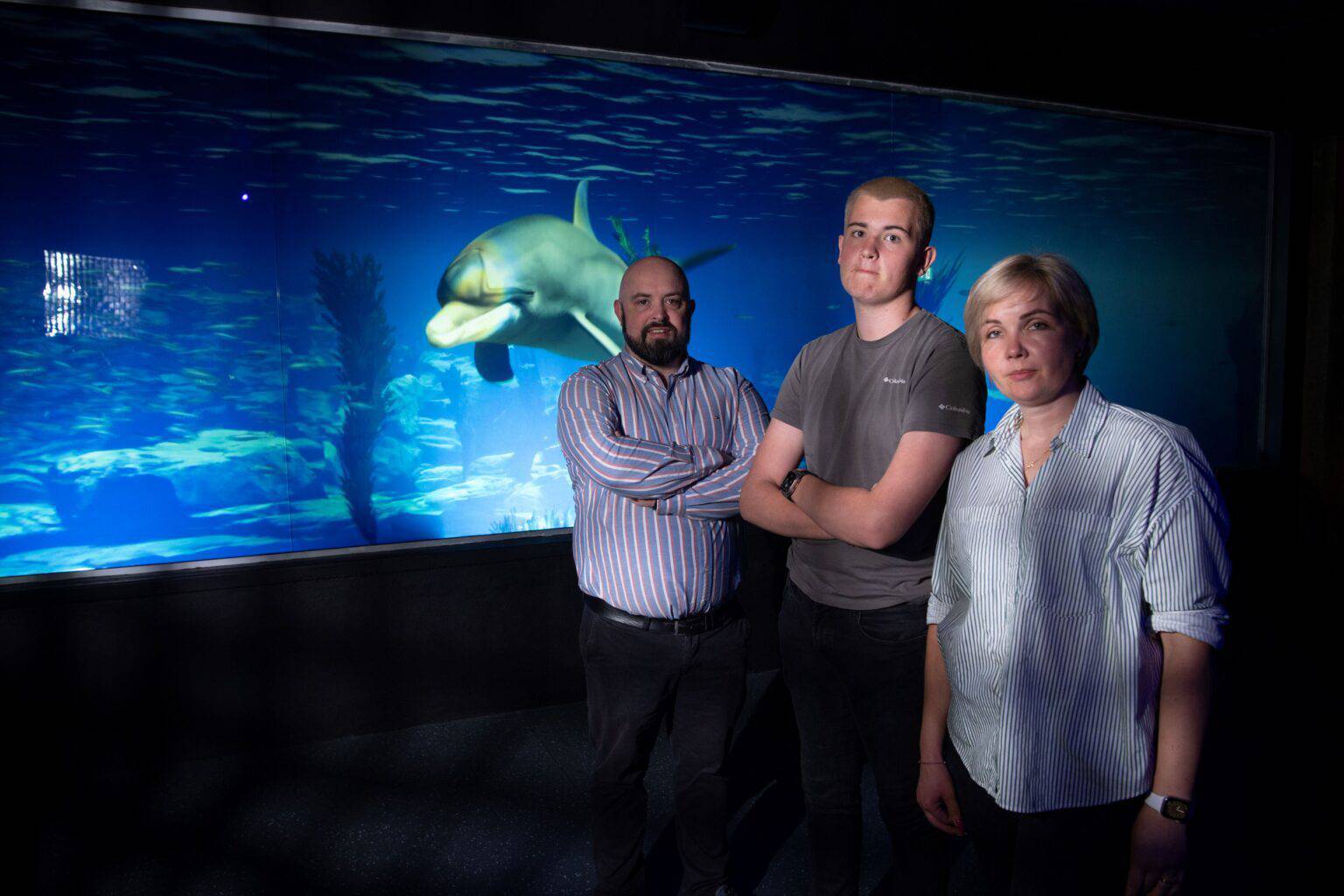
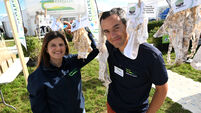
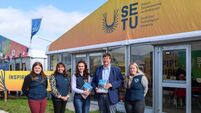
Michael Ó Catháin at the Wild Atlantic Virtual Experience in Dingle with his son owen and wife Sonata. Picture: Domnick Walsh
A decline in fish processing due to climate change has led a new virtual focus in Dingle on Fungi the Dolphin.
Tourists of people flocked to the Kerry harbour over the years when the much-loved dolphin was a huge attraction off the coast.
Fungi has long gone, but a former Dingle fish processing plant is making waves with a new high-tech marine visitor attraction, which is keeping the spirit of the much-loved dolphin alive.
The Wild Atlantic Virtual Experience (WAVE) is now offering visitors a unique, immersive ocean experience by telling the story of marine life through the eyes of the men and women who have fished off the Kerry shores for thousands of years.
Using Ireland’s largest 360-degree LED screen, WAVE is the brainchild of the Keane family, whose business, Ó Catháin Iasc Teo., has long been a vital part of the Dingle community as a fish processor and exporter.
One of the star attractions in the new visitor centre is Fungi, who features through a life-size computer-generated image. But the experience also explores shipwrecks and uncovers the myths and legends of the sea.
The €1.35m project is bringing visitors up close to majestic humpback and orca whales, seals, turtles, and other sea life.
It is grant aided by more than €177,000 under the Brexit Blue Economy Enterprise Development Scheme.
Recommended by the Seafood Taskforce established by Agriculture, Food and Marine Minister Charlie McConalogue, the scheme is implemented by Bord Iascaigh Mhara (BIM) and funded by the European Union under the Brexit Adjustment Reserve.
According to Michael Keane, climate change has hurt the Ó Catháin fisheries business substantially in recent years.
“We had to do something to stay in business, and we knew the fish business and the culture, so we eventually hit on the idea of developing Wave in the 17,000 sq ft building in which we had our fish processing operations,” he said.
As well as Fungi, another highlight is a virtual trip through a sunken Spanish Armada ship and German U-boats.
“The focus is heavily on sea mythology and its influence on Irish culture with an imagined underwater society.
“Due to the scaling, people can get a feel for the actual size of the fish that come into Dingle Bay. It is done from the perspective of those working in fishing talking about their daily life and what they see,” he said.
Michael said: “Without the support of the Brexit Blue Economy Enterprise Development Scheme and BIM, we would not have been able to make this investment. Since we opened the reaction has been great.
“We will keep developing the experience and aim to create an iconic International and local market attraction that highlights the best of the Dingle Peninsula, accessible all year, and further enhancing Dingle as a year-round destination.
WAVE can accommodate over 200 tourists per hour and is laid out in five separate rooms, each with its own experience. It aims for 70,000 visitors annually and 16 full-time employees over five years.
Michael Keane added: “As a company, we were determined to continue in the fishing industry, which we have been part of for over fifty years.
“But we had to look at solutions to sustain the company and its employees going forward. And we have given them the option of a new career in tourism.”
The Keane’s still do fish processing on a much smaller scale, with sales through the O’Cathain fish shop to restaurants in west Kerry and wholesale around Ireland.
Being environmentally sustainable is a huge part of the approach, and WAVE aims to be carbon neutral by 2028.
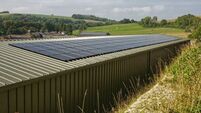
It has installed energy-efficient lights and solar panels. It also has a cafe with sustainable packaging and offers locally supplied produce. The building has also been designed to easily add further initiatives over the coming years.