Calls for zero tolerance to wildlife crime
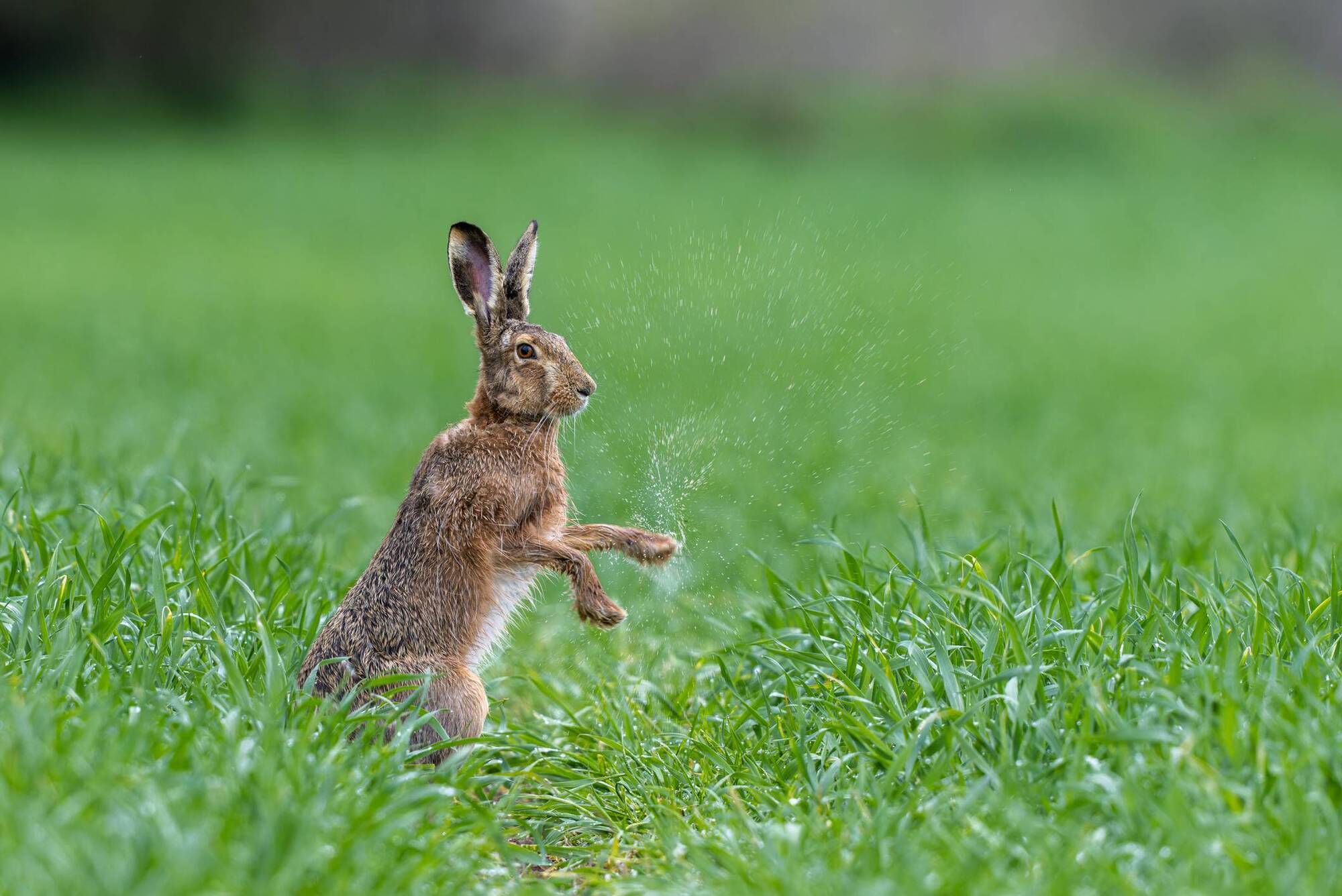
Senator Lynn Boylan made the call for a zero tolerance approach to wildlife crimes, such as disturbing bats, illegal hare hunting, badger baiting and the destruction of habitats.
A zero-tolerance approach to wildlife crime has been sought following claims in the Senate that the State has failed to adequately enforce existing laws and policies to protect biodiversity.
Senator Lynn Boylan, who made the call, said wildlife crimes, such as disturbing bats, illegal hare hunting, badger baiting or the destruction of habitats that provide clean water, clean air and healthy soils, all contribute to biodiversity loss.
“Weak enforcement in this country is sending the clear message that wildlife crime is tolerated and is not taken seriously.
“Unfortunately, despite some high-profile cases of illegal wildfires and poisonings, there has been a failure to crack down on wildlife crime in any meaningful way,” she said.
Senator Boylan said records show that between 1977 and 1987, there were 752 cases, an average of 75 prosecutions per year.
However, only 118 wildlife crime cases have closed successfully since 2020, an average of 39.3 per year.
“This is a drop of 48% in prosecutions per year. This is not because the crimes are not happening, unfortunately,” she said.
Senator Boylan said the subject was not in the portfolio of Minister of State Mary Butler, who was scheduled to reply to the debate.
She said Minister Butler would more than likely cite a year-on-year increase of 39% from 2022 to 2023, which is up to 43 prosecutions.
“While that is a step in the right direction, we are starting from a very low level. This is, therefore, an example of shifting baseline syndrome,” she said.
She recalled that in the 1980s, a target of 200 was set for the number of prosecutions per year. It was not reached, given the average of 75.
Senator Boylan also noted that the recently launched national biodiversity action plan does not contain a specific target for prosecutions.
Instead, it just has the vague ambition to seek to increase compliance with wildlife legislation in cooperation with agencies through enhanced detection, enforcement and awareness raising.
“We need a zero-tolerance approach to wildlife crime,” she said, noting there had been some optimism with a focus on wildlife crime making it into the programme for Government, but that dissipated with a U-turn on a dedicated wildlife crime unit.
Senator Boylan said one of the main barriers to increasing prosecutions is that the responsibilities of the National Parks and Wildlife Service (NPWS) wide-ranging and require skill sets that are extremely specialised.
Bringing prosecutions is clearly a complicated task so the only real way to bridge this gap, as the experts have said, is to establish the promised wildlife crime unit, she said.
She also called for a go-to hub to support regional staff with procedures for detection, investigation, putting a prosecution file together and bringing it to the Chief State Solicitor's Office Minister Butler, deputising for Minister of State Malcolm Noonan, whose remit includes the NPWS, said wildlife crime is a widespread issue that poses a serious threat to biodiversity and the sustainable development of countless communities.
While there is no universally agreed definition of what constitutes wildlife crime, it can be described as any action that contravenes current legislation governing the protection of wildlife, but it probably goes beyond that as well.
She said Ireland's fourth National Biodiversity Action Plan 2023-2030, the first national biodiversity action plan to be published on a statutory basis, was launched by Minister Noonan on January 25.
It takes an all-of-government and all-of-society approach to protecting nature. The plan includes targets to ensure that the legislative framework for biodiversity conservation is robust, clear and enforceable.
The work of NPWS staff has seen a 39% increase in prosecution cases taken in 2023 compared to 2022 figures.
She said the NPWS's capability to take more enforcement action and detect and prevent wildlife crime is being greatly enhanced through the recruitment of additional staff to support this work.
This means that there will be more boots on the grounds patrolling, investigating, enforcing, and educating.
The NPWS is also recruiting ecologists to add scientific expertise and ballast across the service to enhance its wildlife crime efforts.
Strengthening relationships with other enforcement and regulatory authorities, such as the Customs, is also pivotal.
The NPWS is building on a joint protocol with An Garda Síochána, whose members have powers and functions to enforce wildlife legislation similar to NPWS-authorised officers.
She said the NPWS is reviewing the Wildlife Act to improve its enforceability, and a public consultation on this will be announced shortly.
Minister Butler said Senator Boylan had also asked if the Government would reconsider its position on the wildlife crime unit.
“I will have to go back to the Minister of State (Malcolm Noonan) on that and ask him to engage with her directly on her specific questions,” she said.