82% of signpost farmers using clover to reduce fertiliser
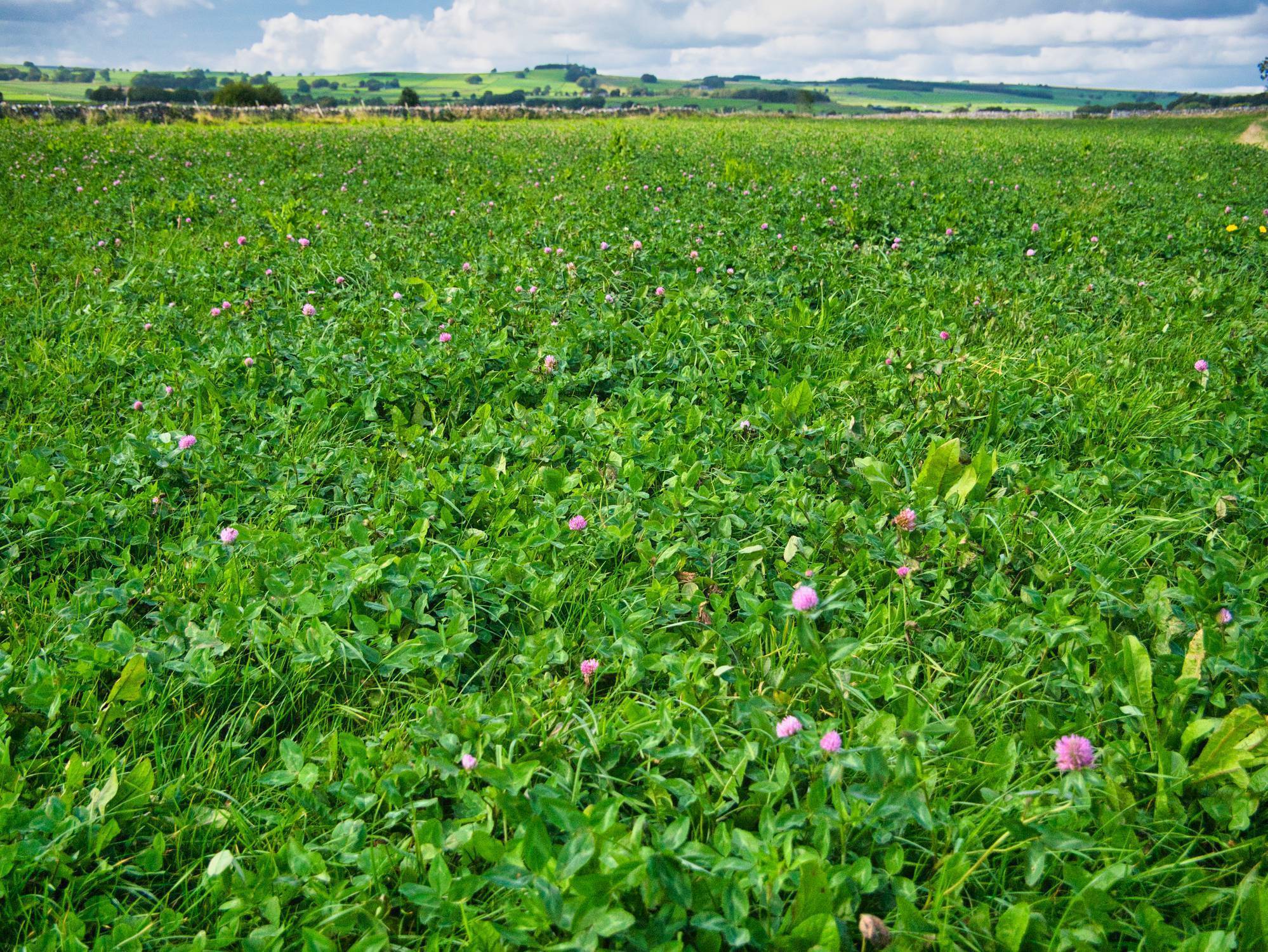
The biggest challenge for farmers can be to have the confidence to reduce the nitrogen input in the summer period, when there is good clover cover.
Agricultural greenhouse gas emissions in Ireland could be reduced by 11% by widespread use of protected urea instead of CAN, said Dr Siobhán Kavanagh, Teagasc, speaking to Catherine Egan on a recent episode of Teagasc’s Beef Edge podcast.
“The big motivation is, it’s an awful lot cheaper than CAN. At the moment, I think it could be about 20% cheaper than CAN, so on a cost basis, it’s significantly beneficial. It’s also been shown through our research projects, both on the dairy and the beef side, to deliver the same amount of grass. So it’s a win-win. And it can be used right throughout the year. I think that’s probably one of the simplest things that farmers can do".
Dr Kavanagh is a specialist with the Signpost sustainability programme led by Teagasc. Signpost aims, in particular, to reduce greenhouse gas emissions from agriculture, but also to promote biodiversity and water quality.
She said: “There’s no point in us demonstrating how you improve environmental sustainability, without also being able to show how you can be productive and profitable”.
There are 125 demonstration farms involved in Signpost. It includes the Future Beef and the DairyBeef programmes. Future Beef demonstrates how beef farmers can produce a quality product as efficiently as possible, while the DairyBeef 500 Campaign promotes the best farm practices for viability and sustainability.
The farms work alongside 21 Signpost advisors. “They’re to support all farmers, whether you’re a Teagasc client or not, to put a plan in place to help improve environmental sustainability”, Dr Kavanagh said. They can help farmers to accurately calculate the emissions on their farms, and with actions to reduce those emissions. This service is available free of charge to farmers.
She explained: “We’ve taken that Marginal Abatement Cost Curve [MACC], which is quite complicated, but we’ve distilled it down into 12 key steps”.
“Number 1 on that is using protected urea. We know that protected urea will significantly reduce greenhouse gas emissions, but for the ordinary farmer out there, deciding whether to use it or not, that’s not going to be their big motivating factor”, she said. Instead, the key motivator will be value for money in terms of grass production.
“We know that we have to reduce emissions by 25% by 2030, and basically, 11% of that 25 can be taken off by using protected urea. It really is just a matter of, when you’re going in to buy your fertiliser, to switch from buying CAN to buying protected urea. And when you are using compounds, it’s using compounds like your 18-6-12 and your 10-10-20s, which are the lower-emitting ones.
“The next steps are around soil fertility or nutrient management plans. Applying lime is a very significant one. It’s probably one of the cheapest ones that you can incorporate. We know from research work that applying lime has the potential to release up to 80kg/ha of nitrogen per year.
"By releasing that nitrogen, you can cut down on the amount of nitrogen that you’re applying to land. Lime reduces our emissions, because you’re putting out less chemical fertiliser. Less chemical fertiliser means less emissions. It is important that if you apply lime, and correct the soil pH, you correspondingly then reduce the amount of chemical N.”
The Signpost specialist said efficient use of slurry is another important action which farmers can take. Getting it analysed, spreading it mainly in the spring to get maximum value from it, and using low emission (LESS) equipment, which can reduce ammonia N losses by as much as 60%, will all contribute to optimising its value. “By knowing the analysis of the slurry, you have the potential to actually target the slurry where you need it".
Signpost demonstration farmers have increased their use of lime on average from 0.5t/ha in 2021, to 0.75t in 2022, and 0.75t or higher is expected to be recorded also for 2023. Already, 77% of Signpost demonstration farmers use LESS technology to spread slurry. All of them get their slurry analysed. They use nutrient management planning to target their slurry and fertiliser application.
They ensure that their soil index is good (most beef farms in Ireland, unless very intensive, have a soil index of between two and three, Index 3 is considered the optimal level for all nutrients, said Dr Kavanagh. A good soil index improves the efficiency with which nitrogen is used and hence reduces the requirement for chemical N).
“One of the big actions on the MACC curve is reducing age at slaughter. That’s better productivity, it’s better performance, it’s getting performance earlier in life and keeping it going”, said Dr Kavanagh. “That’s a combination of good grassland management, good general management, good health and good breeding”.
A good herd health plan will include vaccination and a dosing policy that uses dung samples in decision-making. “I think having that plan in place is hugely important. If animals aren’t healthy, they’re going to be longer on the farm, therefore, their emissions are going to be higher”.
A survey in 2023 indicated that 82% of Signpost farmers had clover on their farms. The biggest challenge for farmers can be to have the confidence to reduce the nitrogen input in the summer period, when there is good clover cover.
Dr Kavanagh was asked which three actions farmers should prioritise in 2024. “I think the protected urea is the most straightforward one. We’ve had good uptake from our Signpost farms, 39% of their nitrogen now is applied as protected urea. If we could bring all farmers to that level, we’d be very happy. It’s probably one of the easy wins for us”.
“I think liming, it’s relatively cheap. We know that the return on it is very high, €6 or €7 for every €1 invested, and that will help reduce nitrogen.”
She suggested that optimal breeding of beef and dairy animals was the third priority action area for 2024.