Less than a month before hen harrier consultation closes
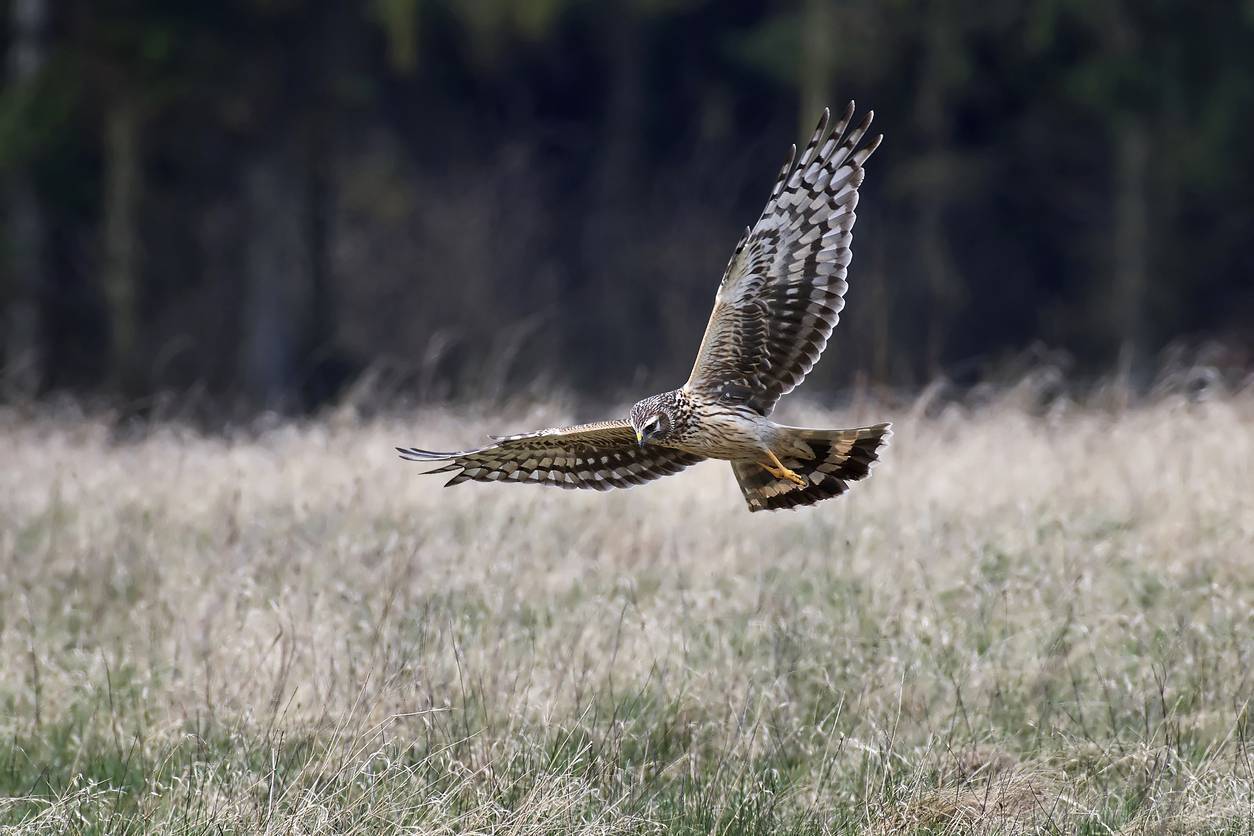
Hen harrier looking for food in its natural habitat
The general public has been given one month to comment on the Government's Hen Harrier Threat Response Plan, which has been in preparation since 2014.
There is intense interest in the plan among the owners of 169,118 hectares in six Special Protection Areas (SPAs) designated for conservation of the bird's breeding habitat and population.
Farming is significantly curtailed by the SPA designations, and no afforestation is allowed, making it difficult to sell land in the designated SPAs.
Farmer organisations want restrictions on forestry removed. They say it is a significant challenge for farm families in these relatively unproductive areas to achieve adequate income, and afforestation grants and 15-year premiums are potentially a substantial and important income stream, providing much greater security than typical five-year agri-environment schemes.
As it stands, farmers have to get permission in the hen harrier SPAs if they want to improve heath or bog; construct, remove or alter fences, stone walls, hedgerows, banks or any field boundary other than temporary electric fencing; or allow off-road recreational use of mechanically propelled vehicles.
Farmers also say rules on eligibility for EU farmer income payments penalised them for managing their land in a way suitable for hen harriers.
In Munster, designated SPAs include the Mullaghanish to Musheramore Mountains, the Stack’s to Mullagherierk Mountains, West Limerick Hills, Mount Eagle, Slievefelim to Silvermines Mountains , and Slieve Aughty Mountains. Non-designated important breeding areas include parts of Co Clare, the Ballyhouras and Nagle Mountains in north Cork, and the Knockmealdowns.
There is great concern among farmers that further restrictions might be placed on areas outside existing SPAs, which surveys have shown are important for hen harriers.
According to the new draft of the Hen Harrier Threat Response Plan (HHTRP), the challenge is how best to achieve farmed habitats that suit the hen harrier while providing reasonable income for farmers and recognising that farmers, in general, want to farm well and many are keen to improve agricultural efficiency and output.
Meanwhile, the forest sector says protection measures enforced in SPAs (such as restrictions on forest operations, and no new afforestation) may not be delivering hen harrier conservation. The forest sector also opposes restrictions on forestry in non-designated areas that are important to hen harriers.
Non-governmental organisations (NGOs) who made submissions during the HHTRP's 10-year preparation said hen harrier habitat destruction continued because of land eligibility issues (for farm income support payments). However, forestry was the main threat to the harrier they identified; they said there is too much forest in the SPAs.
They also called for longer-running landowner schemes in SPAs, to bridge the income gap compared to 15-year forestry incentives. NGOs also want restorative land management, and an agri-environment scheme for wintering hen harrier. They said guidance on birds and wind energy development is needed, along with education of farmers and local communities for positive change.
The draft HHTRP lists "high threats" for hen harrier SPAs. It says drainage for agriculture and land reclamation puts almost a third of winter roost sites at risk. It says conversion to forest is "high threat", although the species can forage and nest in pre-thicket forests. But this habitat becomes unsuitable as the forest matures, and is eventually replanted (which is legally required in most cases).
The draft HHTRP, also highlighted agriculture, climate change and wind energy development as pressure and threats to harrier habitats.
According to the draft, "While wind energy production is identified as one of the key pressures on the species, wind energy development is also, more generally, a key part of the global and national response to alleviating climate change. Biodiversity and climate change commitments have equal standing, and creating opportunities to achieve both, without compromising each other, is critical, particularly as biodiversity can assist in climate change mitigation and adaptation".
Minister for Nature, Heritage and Electoral Reform Malcolm Noonan is seeking input from the public on the draft plan, submissions can be made up to February 13.