Brian Reidy: What was on my Christmas list?
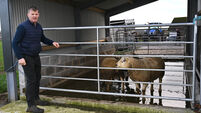
Livestock nutritionist Brian Reidy is hoping for peace between the sectors and better silage in 2024.
Now that Santy has been and gone for another year, I can now reveal some of the list I had for him this year.
2023 was a tough year for agriculture in Ireland, and we are all hoping that 2024 can be a lot easier on us.
Our farmgate prices struggled all year while inputs started off at a very high level and were much slower to drop meaning margins were eroded for all sectors.
When you add in the weather woes, making planting, grazing, silage production and crop harvesting very challenging, resulting in a stress filled year.
Further to this we have had the Nitrates regulations beginning to kick in along with all the other outside influences kicking farmers at every opportunity.
My wishes for 2024:
Silage production really needs to be reassessed in Ireland and everybody needs to have a good look at how we achieve this.
We are currently cutting too late and not often enough. Applying too much N and not enough K. Rakes and mowers are too tight to the ground and this is bringing in clay and causing Mycotoxin issues.
Pits, in many cases, are not being filled and consolidated to an acceptable standard. And too many old swards are being ensiled.
Cooperation between tillage and livestock producers must be developed more around the country. The livestock producer needs maps and an outlet for their slurry, while the tillage producer could produce winter forage and feed for the cows and cattle.
In particular, the production of maize silage needs to be looked at through this model. Producing twice the UFL per unit of Nitrogen in maize vs. two cuts of grass silage.
Those growing more maize will need significantly less Nitrogen to grow their winter forage, meaning more Nitrogen is available for the grazing platform. And we all know the new fertiliser register isn’t there to encourage us to up our Nitrogen use.
Contract heifer rearing standards are far below acceptable standards in many cases. It's a controversial statement, I know, but I have seen some very poor heifers being returned to their owners.
Who is responsible for the purchase of the extra meal if poor quality silage is made and fed to these heifers?
From what I have seen, the owner gets caught for this, and there is no penalty for the rearers when they make bad-quality silage.
Is there an agreed parasite control protocol? Is there an agreement regarding grazing rotation and the quality of grass required? Who is responsible for any losses?
My next wish is for an explanation as to how the average Dexter bull used on a suckler herd will result in progeny that leave a significantly higher margin than the average Charolais or Limousin bull.
The cynic in me would almost think that the suckler cow is being driven out of Ireland and soon she will only be viewed in the zoo.
Part of this wish is to see farm organisations actually ask the serious questions.
These people are on the board of ICBF but obviously left the new indices run with no regard for the consequences for the country's suckler producers.
If these indices remain in place and the top-quality continentals are public enemy number one, then that’s just another nail in the coffin for rural Ireland.
Nitrates
The last item on my list has been a cause for great confusion in 2023.
The nitrates banding in dairy herds has brought about many a discussion and loads of strategies to navigate these new rules.
One such strategy is to underfeed a herd so that they end up dropping back to a lower band. This is a strange and crazy strategy, which will not end well in most herds.
If you don’t supply sufficient nutrients to a herd to help it fulfil its genetic potential for production, then you will certainly compromise that herd's yield, milk quality, fertility, health and longevity.
What happens if, in 2024 or beyond, we get a fantastic growing season and cows consume significantly higher volumes of grass dry matter, resulting in milk yields holding far better than in 2023? Will these herds have to dry everything off in September or October to stay in a lower band? Utter madness, in my view!
Furthermore, if as is possible, 220 becomes 200, or 190 or 170, will the advice be that in order to maintain numbers, you must significantly reduce feeding to curtail performance? Think before you make these decisions!
Producing your milk with fewer cows fed well will be better for man/woman and beast.
Oh, Tipp for Liam was also on my list!! Can't forget that one!
As this is my last article of 2023, I would like to wish all of the readers a very happy and prosperous 2024.
It has been great to read the email and WhatsApp correspondence regarding some of my articles during the year and the banter regarding them was great fun at meetings and shows throughout the year.
Looking forward to doing all again in 2024.
- Brian Reidy is an independent ruminant nutritionist at Premier Farm Nutrition.