Hoofin' It: Focusing on herd health for farm resilience
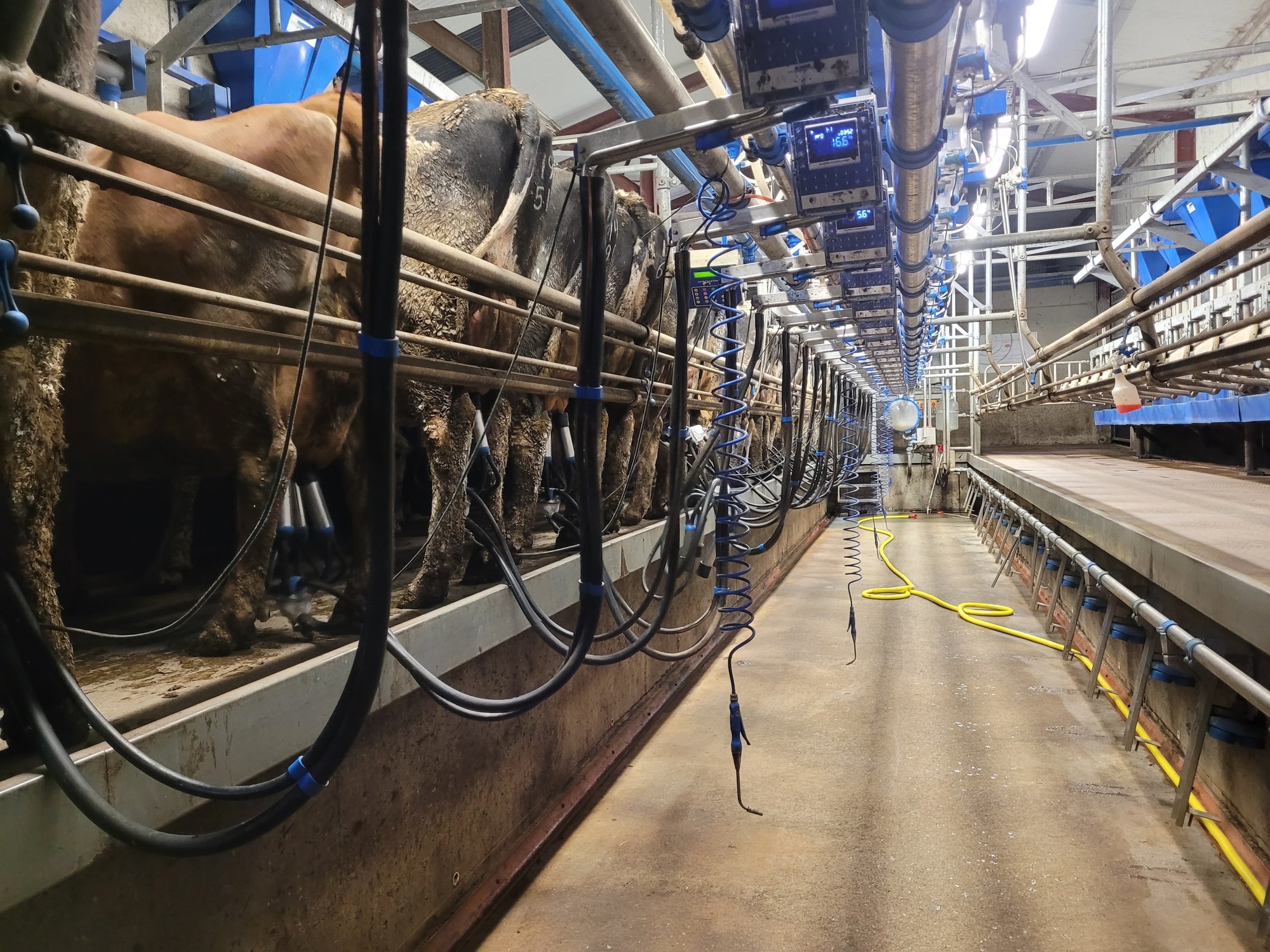
Cows in the milking parlour on the Hynes farm
As much as we have to deal with the early winter workload after the wettest October in decades, more importantly, it is time to look at all the challenges and think out solutions.
Having a healthy herd is crucial and Pete met up with a Munster Bovine vet recently as we are part of their herd health program and as they monitor disease levels in herds through milk samples the key is to find solutions.
He returned home from the meeting having felt it was a breath of fresh air to spend time with a vet who had a common sense approach to have to maintain and improve our herd health.
SCC can be a challenge but some strategic culling should address any chronic issues and we still have some scope to only sealers on some cows.
Everything else can be controlled by using long-acting dry cow tubes. Most importantly we are only breeding replacement heifers from cows with low SCC so long term we have more scope to use selective dry cow therapy.
Stomach and lungworm doesn’t seem to be causing the herd any issue, a combination of building up a level of immunity within the herd combined with how we manage our worming program in youngstock seems to pay little dividends, so it will be easier and more economical to control these parasites this winter.
Neospora levels seem to have dropped in the last few years and this is possibly a combination of ensuring dogs have no access to feed passages in sheds along with ensuring cleanings are removed from calving pens during calving season.
With a herd health plan in place pre-drying off, it was also time to scan the dairy herd, a little later than usual for us but life had been hectic with show season.
Perhaps the delay also worked in our favour as our cows are scanned externally so by delaying scanning, it meant less cows needed to be internally examined.
Ian Giles scans the herd for us every year and I enjoy his visit as he is very calm with the cows but also very accurate with the data he gives us when we match it against insemination dates. We had previously scanned the heifers with 100% in-calf.
The cows showed a 7% empty rate which we were delighted with and also a testament to our AI technician David Murphy from Munster Bovine who has achieved excellent results here over the last few years.
It’s a team effort; the cows were in good body condition at the start of breeding season, and with regular topping up of tail paint, we were able to present cows for David which were accurately on heat.
We greatly reduced the amount of dairy semen we used during breeding season, perhaps cut it really fine but looking at scanning results, it paid off and we should have a sufficient number of heifer calves born next spring whilst dramatically reducing the number of dairy bull calves born. Strategic use of sexed semen has helped.
70% of the herd is due to calve in February, with all heifer calves due within the first three weeks of calving, beef calves will start arriving from the beginning of calving with every cow calving from February 21 due to insemination from beef bull.
We also have some of the very first calves due from Rathard Resilient, a bull we bred and sold to the NCBC. Resilient was a G1 bull in the spring of this year and now sits in the Autumn catalogue with Munster Bovine and Progressive Genetics.
His dam scanned in calf to sexed semen and is due at the start of February 2024 for her fourth lactation. She is also on target to produce over 600kg of milk solids this season.
It was even sweeter to see Resilient's great-granddam scan in calf again, so she will be heading for her 11th lactation in 2024, she is an old girl now, but she still turns up for work and has an average SCC of 65 this year.
With drying off in mind, we are trying out a different teat sealer this year alongside our usual sealer. We previously used a sealer for one season which had poor viscosity which turned out to be an absolute disaster, so ever since, we are always very selective about the sealers we use.
Reports are extremely good about Fatroseal from Duggan Veterinary, a combination of superior viscosity combined with a short tip, air-free syringe suggests that the sealers will deliver good results for us so we are using it on one-third of our cows alongside the sealer we used last season to see how the results compare.
We will learn a lot in a short space of time and gain further results with an early milk recording next season. With springtime in mind, 2023 was full of doom and gloom as regards milk prices, but global markets are recovering, it would seem they have turned a corner and analysts we speak to outside Ireland are confident as it stands that February milk deliveries will return higher margins once processors do their job.
Dare I say a base price of 42c is not unrealistic, badly wanted, but will processors pay it?!