Environmental policy must 'address real commercial needs and concerns' to get farmer buy-in
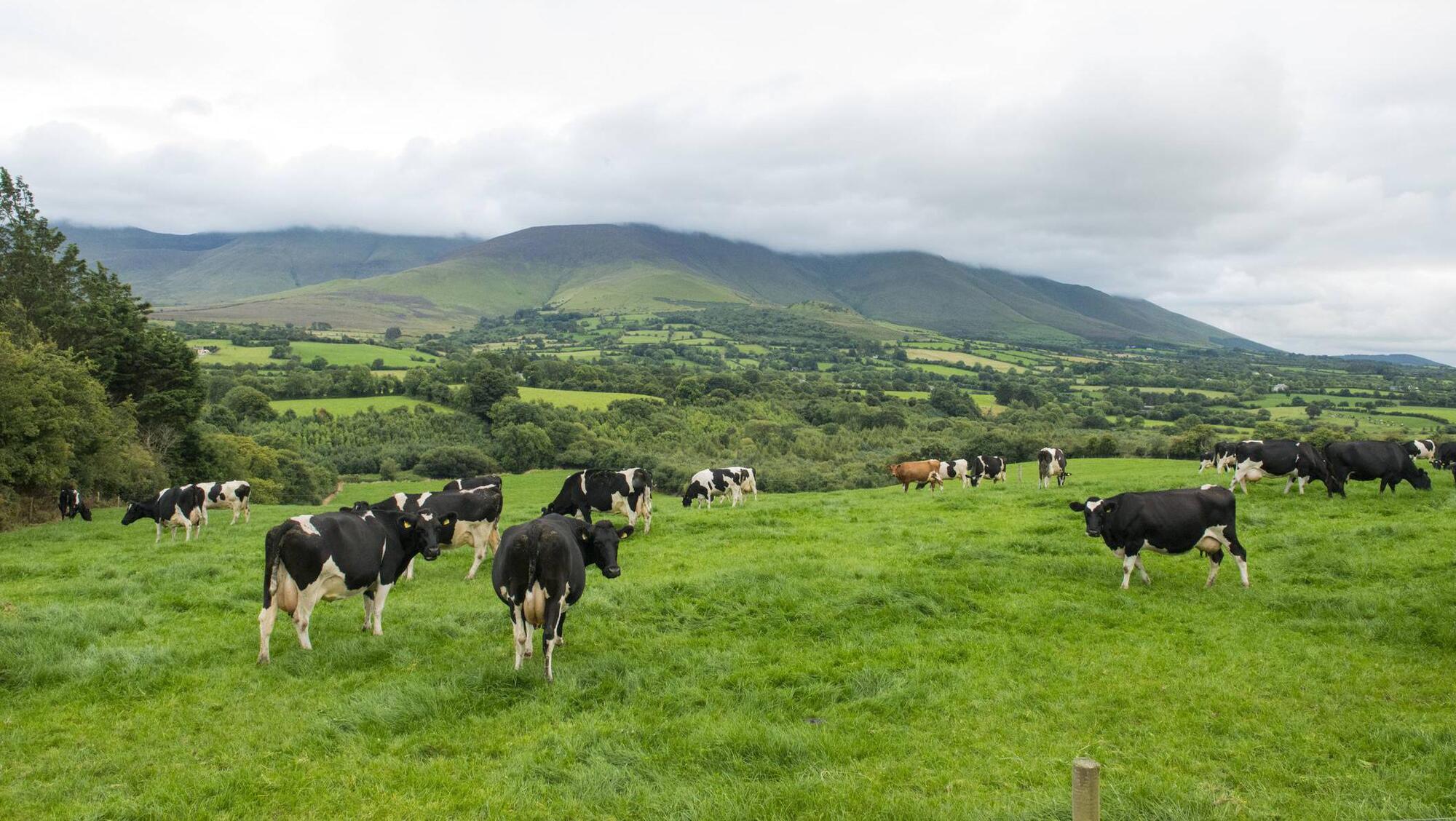
The ICMSA has said that with the new agri-environmental scheme ACRES, "no effort" has been made to make the scheme "appealing or workable" for commercial dairy farmers
Environmental policy has to "address real commercial needs and concerns" if it is to get buy-in from farmers.
At a meeting with Tánaiste Leo Varadkar this week, Irish Creamery Milk Suppliers' Association deputy president Denis Drennan called for the Government's policy on farming and agricultural emissions to "reach out" to commercial family farms, and "cease the useless and regressive either/or approach" to organic and commercial farming.
Ireland's CAP Strategic Plan - approved by Cabinet this week - is an example of an "active exclusion of commercial family farms - particularly dairy farms", the ICMSA has claimed.
Mr Drennan said that with the new agri-environmental scheme ACRES, "no effort" has been made to make the scheme "appealing or workable" for commercial dairy farmers, with the result that "the very farms needed to make Government policy effective could not participate".
“We have consistently pointed out to the Government that if we are to make anything near the kind of emissions reductions they have set out while preserving the economic ‘motor’ that is our commercial dairy sector, we have to design schemes that bring in the commercial family farms that want to participate," Mr Drennan said.
"It’s self-evident that this policy of excluding commercial and focusing on organics or niche farming has no chance of getting the kind of critical mass in terms of emissions reductions that the Government policy claims to want.
"It’s actually working to exclude the very type of farms that the policy needs if it is to have any chance of getting that momentum."
The ICMSA has stressed that environmental policy has to address "real commercial needs and concerns" in order to get the critical farmer buy-in.
"That means making environmental schemes attractive and workable for commercial family farms," Mr Drennan added.
"It can’t be an ‘either/or’ where family farms must choose between being either environmentally progressive or commercially feasible.
"Policy and schemes must be designed to be both environmentally progressive and commercially feasible."
Meanwhile, the Irish Farmers' Association has said that with contracts under schemes GLAS and REAP set to finish at the end of this year, combined with expressions of interest for ACRES, it is expected that over 60,000 farmers may wish to participate in an agri-environment scheme.
However, Minister for Agriculture Charlie McConalogue has announced 30,000 places under tranche 1 of ACRES.
"It’s essential that all farmers eligible for an environmental scheme receive a payment in 2023," IFA rural development chairman Michael Biggins said.
The IFA has also welcomed changes to specifications of the ACRES scheme, such as to the extensively grazed pasture measure.
"The changes now mean farmers will receive €250 per hectare instead of €200 under this measure and can claim €2,000, with eight hectares of land instead of 10 hectares," Mr Biggins said.
"This will help farmers with smaller holdings qualify for a higher payment under ACRES, which is a positive development and something we have been pressing strongly for months now.”