Fertiliser giant Yara braces for €1bn gas bill increase
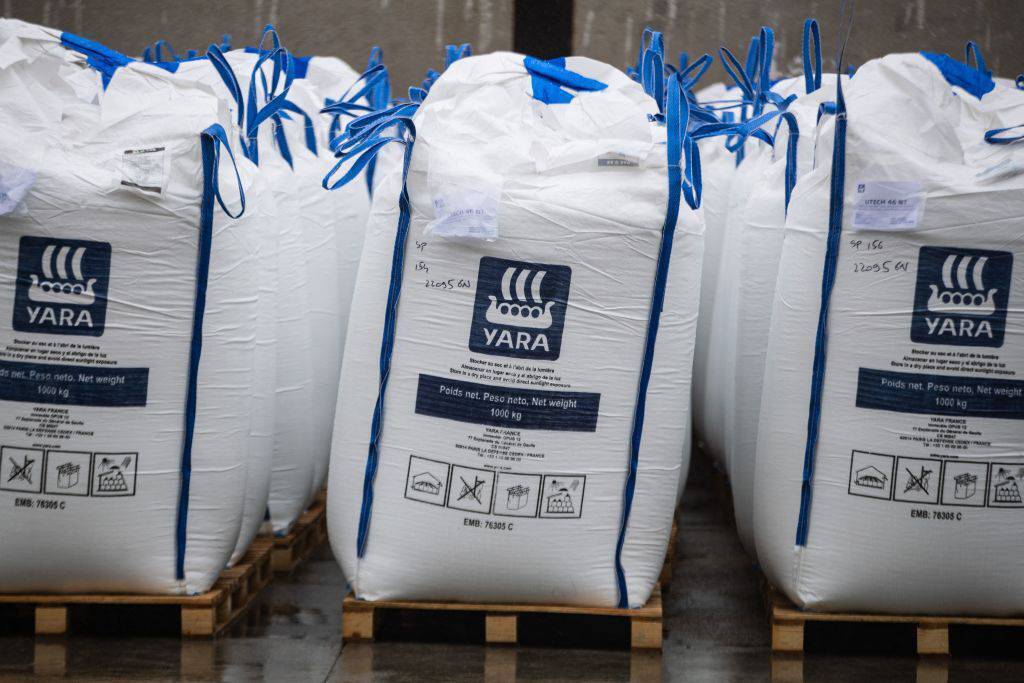
Yara has curtailed its ammonia and urea output in Italy and France in March due to the record high natural gas prices in Europe. Picture: Sameer Al-Doumy/ AFP via Getty Images
A €1bn gas bill increase for April, May, and June is one of the war disruptions revealed by Yara, the world’s leading crop nutrition company, in its quarterly business report.
Yara’s gas bill increase will fall back to €711m, for July, August, and September, predicts the Norway-based company.
Yara revealed that its first-quarter earnings increased from €555m to €1,277m, thanks to increased product prices offsetting raw material price hikes.
But the company repeated its concerns for global food security, calling on government action to protect food supply chains, and to decrease dependency on Russia.
“War in Ukraine reduces food and fertiliser supply, driving prices higher, and threatening global food security.”
Yara said since 2020 the wheat price paid to farmers in the US has increased from $210 to $450 per tonne, and in Canada from $190 to $900.
These higher grain prices improve farmers’ profitability and create increasing demand for agricultural inputs, such as Yara’s fertiliser.
Farmers’ wheat revenue above nitrogen cost has improved 1.5 times from 2020 to 2022; by cutting their kg per ha of nitrogen fertiliser from 221 to 192, wheat growers have kept yield at 9.46t per ha, compared to 9.62t.
Yara has historically sourced phosphate, potash and ammonia from Russia, and purchases significant volumes of natural gas from Russia for its production in Europe.
It has stopped all sourcing from suppliers linked to Russian sanctioned individuals, turning to other global sources in order to keep supplying its customers.
The company revealed it has received claims for damages from suppliers linked to Russian sanctioned individuals; it has assessed these claims, and made no financial provisions for them.
Accounts payables to companies linked to Russian sanctioned individuals amounted to $227m (€216m) as of March 31, of which $112m (€106m) was immediately due.
However, Yara said future settlements will depend on the development of sanction regulations.
Yara’s direct investments in Russia and Ukraine are “limited”.
As a result of high gas prices (up 378% in Europe in 12 months), Yara curtailed production at several of its European ammonia and urea facilities in early March, but these resumed production when the profitability situation improved.
In Europe, Yara nitrogen industry deliveries to date in the 2021/22 season are estimated at 17% behind a year earlier; deliveries were slow in the first quarter, and are likely to end behind last year for the season as a whole.
In the first quarter, Yara’s global crop nutrition deliveries were down 11% compared to 2021, but this slump is highest in Europe, falling 24% from 2.9m to 2.2m tonnes.
The company says European producers’ nitrate stocks are at a low level. Yara’s own stocks of finished fertiliser are currently at their second-lowest level since 2018.
“Future financial effects of the war are highly uncertain, and cannot be reliably estimated,” a spokesperson said.
Yara says industry consultant projections show increased global nitrogen capacity growth in 2022, however, the outlook indicates a continued tight market, driven by high grain prices, supply disruptions, and low global inventories.
Calling for co-ordinated action to create a more resilient global food system, Yara recommended support for planting and harvesting in conflict zones; keeping borders and markets open; logistics to allow free movement of food and agricultural inputs; release of strategic grain stocks, and financial liquidity for low-income countries; support for smallholder farmers to close the yield gap in underdeveloped regions; and increased investment in infrastructure, renewable energy, and regenerative agriculture.
The company’s own response includes a $25m (€24m) fertiliser donation in co-ordination with the World Food Programme, which is the food-assistance branch of the United Nations; strengthened collaboration across food supply chains; careful monitoring and management of risks in raw material supply and volatile markets with sanctions; and free digital tools (AtFarm) for farmers.