Methane-reducing feed pilot to include 10,000 cows in three European countries
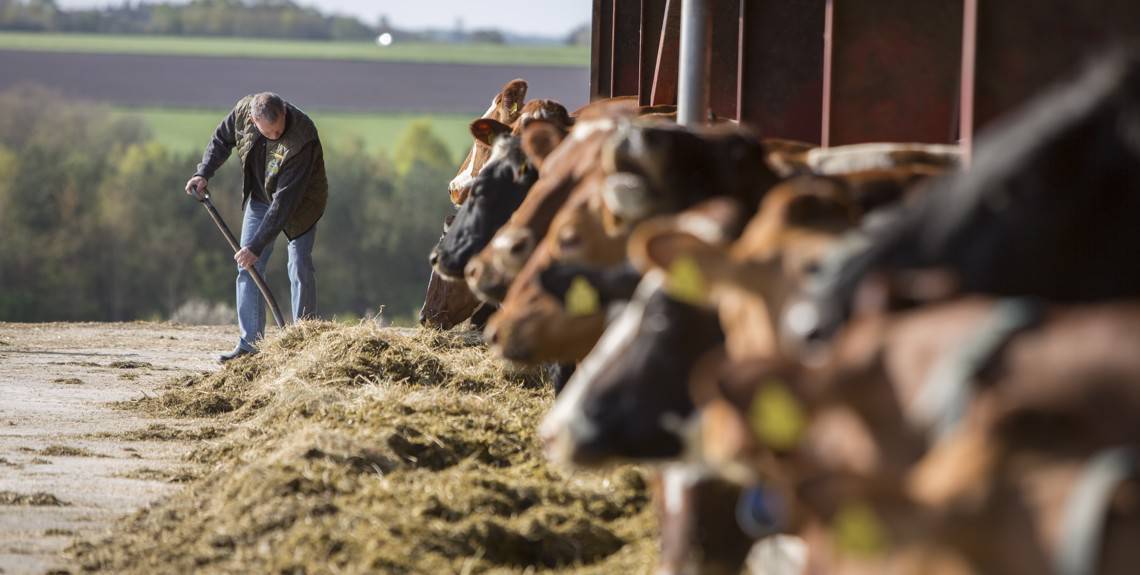
The feed additive has the potential to reduce ruminant methane emissions by as much as 30 per cent.
A feed additive with the potential to reduce ruminant methane emissions by as much as 30% will be fed to 10,000 dairy cows across Europe as part of a large-scale on-farm pilot programme to reduce agricultural emissions.
On-farm trials have shown new feed additive Bovaer can reduce methane emissions by around 30% while maintaining animal welfare. Three European countries will be included in the on-farm programme led by international dairy company Arla in partnership with manufacturer Royal DSM.
Arla Foods’ estimates an average carbon footprint of 1.15kg of CO2 equivalent per kilo of raw milk, with cows’ digestion of feed accounting for around 40% of this.
The cooperative is set to pilot the use of Bovaer with 10,000 dairy cows across more than 50 farms in Denmark, Sweden and Germany, ensuring a diverse group of farms participate in the pilot programme.
During the on-farm pilots, farmers will receive Bovaer from their feed suppliers and mix it into the feed for their dairy cows. Arla will collect milk samples for analysis and comparison to milk from dairy cows not fed the feed additive.
If preliminary findings are as expected, Arla Foods plans to double the pilot project to include 20.000 cows in 2023. Bovaer is currently commercially available in the EU, Brazil, Chile, and Australia.
The additive is the product of over 10 years of research and development and has been extensively tested in 14 countries around the world. In the EU, it is the first-ever approved feed additive with environmental impact, confirming its impact on methane emissions and its safety for animals, consumers and the environment.
It works by suppressing an enzyme that triggers methane production in a cow’s digestive system. It takes effect immediately and is safely broken down into compounds already naturally present in a cow’s stomach and is scientifically proven to not affect the milk quality.
Just a quarter of a teaspoon of Bovaer added daily to each cow’s feed will enable a consistent reduction in methane emissions of 30%, on average. This feed additive, therefore, contributes to a significant and immediate reduction in the environmental footprint of meat and dairy products.
Hanne Søndergaard, Arla Foods Executive Vice President and Head of Agriculture and Sustainability, said: “Climate change requires urgent action, and we believe that dairy is part of the solution. The results from our initial trials with Bovaer at both a research facility and one of our Danish farms are very promising.
"Together with DSM, we are now gaining practical on-farm experience by applying the feed additive in one of its largest pilot progammes to date, and one of Arla’s biggest climate projects overall, with 10,000 cows. This is a great example of innovative scientific solutions and actions we are taking to create a sustainable and resilient future for dairy and I am excited to see how far this will take us."
Mark van Nieuwland, Vice President of Bovaer at DSM, added: “Leaders of more than 100 countries recognize the urgency of cutting methane emissions as they pledged to make a difference at the UN Climate Change Conference, COP26, a few months ago.
"The recent IPCC report on the impact of climate change tells us there’s no time to lose when it comes to reducing greenhouse gas emissions. Transforming livestock farming will be key to this and forward-thinking companies like Arla Foods are already working hard on sustainable dairy.
"Through our scientific innovation and collaboration, we can help achieve a sizeable reduction in emissions by changing the feed that animals eat every day and in doing so, support the health of animals, people and planet."
CLIMATE & SUSTAINABILITY HUB