Cows and planes - what it's like to be stuck in the middle of the climate debate
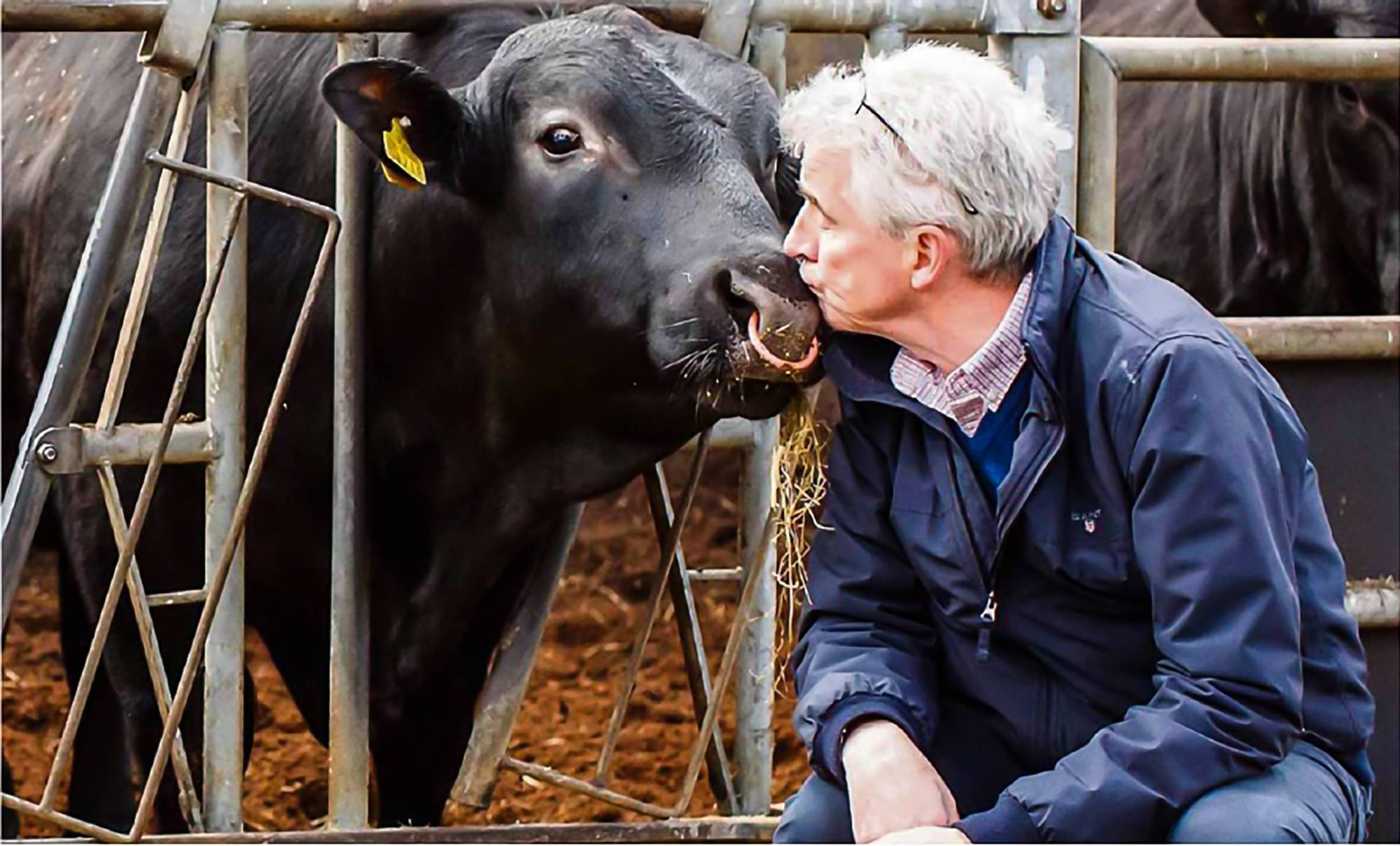
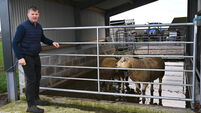
Michael O'Leary pictured on his farm in Co Meath.
There aren’t many ‘getting it in the neck’ over climate change more than Michael O’Leary.
As one of Ireland’s most successful businessmen, he now finds himself straddled across the two industries locked in the crosshairs - farming and aviation.
O’Leary might be best known for his airline business, but the well-known businessman has Irish country living in his blood, spending his summer holidays on his mother’s family’s dairy farm in Kanturk, and sharing a keen interest in livestock and bloodstock breeding with his father.
Even with backing as deep as Michael O’Leary’s pockets, Gigginstown House, his 1,800-acre farm in Co Westmeath, is very much run as a commercial enterprise, expected to sustain itself in every way possible, while also fulfilling the family’s passion for quality livestock.
It’s taken him 20 years to get the farm to the point where it is “comfortable” economically - but now his focus is on making both businesses as environmentally sustainable as possible.
“I bought Gigginstown when it was 200 acres in 1993 and it’s now 1,800 acres. We started off with 20 cows and it’s now up to 350 cows and the herd size is around 700 cattle,” he said.
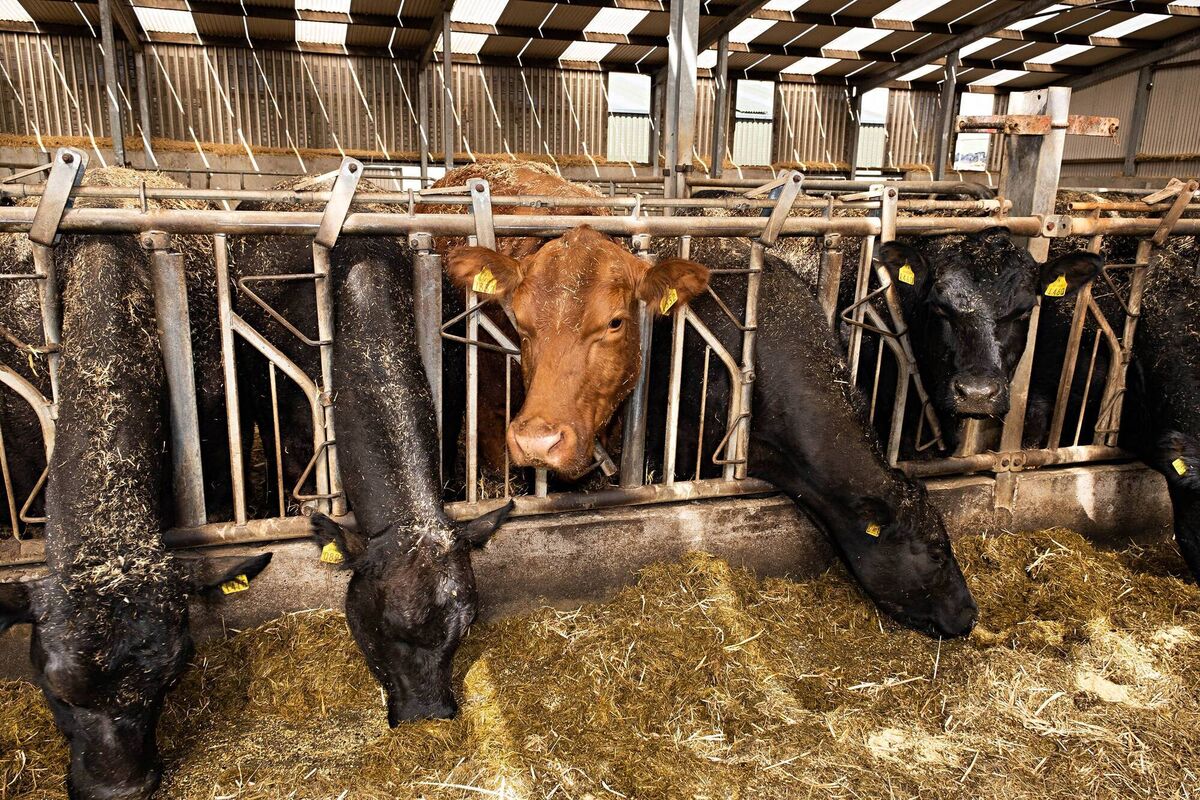
The herd – which includes around 500 pedigree Angus cattle and 200 commercial Angus – are managed by fellow Corkonian Joe O’Mahony.
“We are almost entirely self-sufficient. We still buy in a little fertiliser, but I am trying to get that down to nothing so we just use farmyard manure and slurry as our fertiliser,” O’Leary said.
“We grow our own crops, so all of our cattle feed is home-grown - we are trying to make the whole thing circular and self-sustainable.” Each year, the farm sells around 150-200 head a year into the factories.
Around 80% of the pedigree herd are sold for breeding. Around 20% move into the commercial herd for finishing and the commercial herd are sold into the factories.
“The Certified Angus Beef programme has been a huge success,” he said, explaining that it has helped to boost the marketability of the breed.
The foundation cows for the pedigree herd were bought from Edmonton and Regina Shows in Canada.
“I flew them in – it cost me an absolute fortune, but it gave us something different that no one else in Ireland had at the time,” O’Leary said.
“I started into Angus 20-25 years ago and it’s been very successful for me,” O’Leary said.
“Back then, most of the hobby farmers were all doing Charolais or Blonde d’Aquitaines.” O’Leary said.
“I never really liked Charolais, particularly because I didn’t want to have to get a vet every time they’re calving. I think the Angus are very pretty, and they are easy calvers too."
The great and good of Ireland appear to have a penchant for the black stuff, with Ireland rugby legend Rory Best also an outspoken advocate for the Angus breed – and yes, they have crossed paths.
“We have sold some stock to the Bests. They’re very good farmers,” he said.
Nowadays, new animals are mainly bought in from herds in the UK and Ireland.
“We try to buy one or two stock bulls every year to bring in fresh genetics,” he said.
“We are running nine stock bulls – we need about seven or eight but you always want to have a spare one for injuries. We also implant embryos into around 20 or 30 heifers a year to bring in Canadian and UK genetics.”
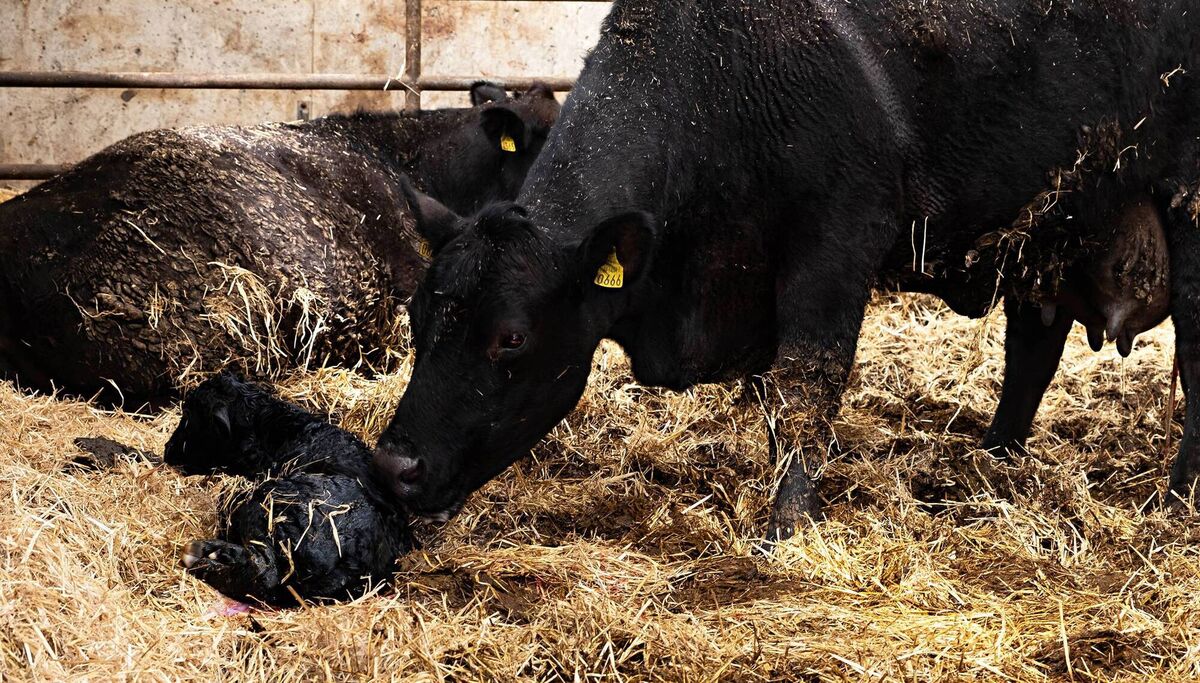
Breeding is focused on producing efficient, productive stock, with 83% of the stock put forward for the sale are four and five star rated.
“At the moment, the madness is that everyone is chasing stars so we are looking for bulls that can afford five stars. If you haven’t got stars at all, people won’t look at them,” O’Leary said.
“They may not always be the best physical specimens, but we have to have bulls, and increasingly cows, that have high star values.
“We try to pick the best of the bulls and a reasonable selection of the heifers. We are selling 20 heifers – 10 would be the best heifers we have over the last 18 months and we have a balance then in with more commercial animals so we appeal to all price points.” But unlike on his flights, punters at the sale will not be expected to chip in for any “extras”.
“Any of the heifers will either be in-calf or if someone wants it covered we will get her in calf before she gets delivered,” O’Leary said.
“If they want the heifer covered by a Gigginstown stock bull that will be included.
“We stand behind everything we sell at the sale. If a bull doesn’t work or is shooting blanks, we will take him back no questions asked. It’s the same if a heifer doesn’t get in calf.
“When I bought Gigginstown in ’93, I was buying cattle in March/April and selling them in September/October.
“So I was buying them when prices were high and selling them when prices were low, which is a way to lose money.
“So gradually, over a number of years, we bred our own. It needed some investment in sheds and pedigrees, but now we’re calving 250-300 cows a year and selling €300,000-400,000 of beef a year.
“As long as you don’t have to worry about the cost of the infrastructure, it pays itself. We have been comfortable for the last three years – but it's taken us 20 years to get there.
“I’m fortunate in that I don’t need to depend on it for an income, so when prices are low we’ll go out and buy more stock and when prices are high for other things – as they are this year for steel and concrete, we don’t do any building.
“You want the farm enterprise to build up slowly over many years and to be sustainable both financially and environmentally.”
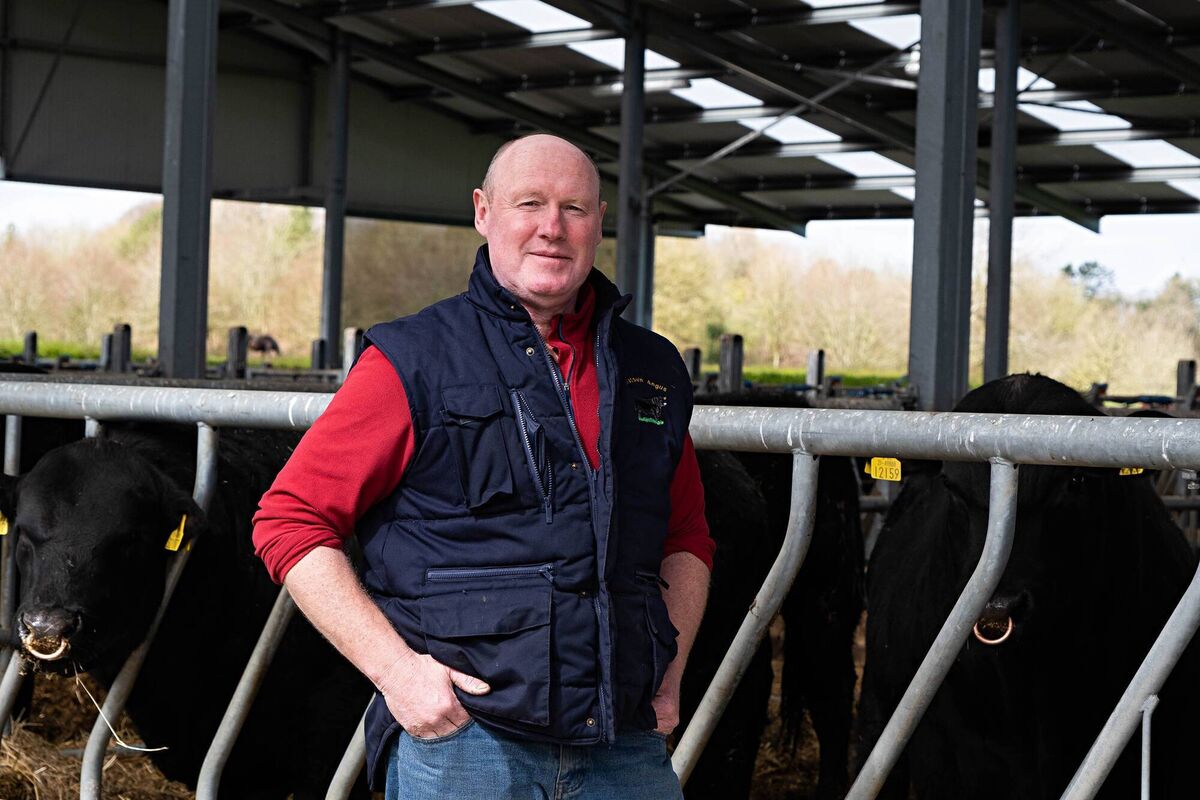
O’Leary explained he and Joe are always keen to try new things on the farm. Three years ago, they made the decision to purchase 750 acres for tillage.
“In the winter, we had the cattle in on peat bedding, but peat is being banned so we have needed straw for the last few years. Therefore, we bought more land to grow more tillage,” he said.
“We grow winter and spring barley, winter and spring wheat and around 250 acres of wholecrop as well.
“So we are producing much more of our own feed as well. We are always trying something new. We put 60 acres into oilseed rape two years ago.
“That has been quite successful – we leave some of the bull out of the rapeseed from October through to January,” he said.
“We have also had some of the breeding animals out on stubble as well, and that has been quite successful.” Greener farming O’Leary admits he has considered anaerobic digestion, but opted to go down the route of solar PV panels instead.
“The numbers didn’t stack up for us; we wouldn’t have enough slurry to sustain it,” he said. “And solar was a more affordable way of generating power.
“We are putting solar panels on all of our cattle sheds now that it’s becoming much more affordable.” Within the last three years, he has built three new sheds.
“We started off building 12-bay sheds and now we are building 24-bay sheds, but we’ll be taking a break this year because steel prices and concrete costs have gone through the roof,” he said.
“Now is not a sensible time to be building.” And speaking of rising costs, what approach is Ireland’s shrewdest business taking when it comes to spiralling fertiliser prices?
“We are fortunate that we have a lot of slurry. We have been trying to cut back on chemical fertiliser. The combination of lime and slurry has helped improve soil fertility.
“We’re not organic, but we’re trying to move in that direction – to reduce our chemical fertiliser use.” “Mercifully, we had it bought in already this year,” he said. “We always lock in our fertiliser prices in November. But it was up about 50% compared to the year before so it still felt a lot more expensive.
“Grain prices are high and factory prices are high - so for all of the whingeing farmers are doing on input costs, everyone accepts that farming is doing reasonably well at the moment.
“If I hadn’t have bought when I did, I am fortunate enough that I could still afford to. But I know that I am in a fortunate position that I don’t need to make my income from farming – I found an even more stupid industry like airlines to make a living from.” But if he had to choose one, which would he rather have?
“Farming, of course,” he said. “By a million miles!”
“There’s a kind of relaxation of walking through the fields; it’s a real release. I love looking at the cattle – more so than the horses. Whereas, my children generally prefer looking at the horses.
“If there’s a field of Angus there, I think they are just gorgeous.”
O’Leary hopes his eldest daughter will follow in his wellies, with his passion for cattle.
“One of the schools we are looking at sending my daughter to in September has been very big into the Angus Schools programme, so if Tiana goes there, she will have to win it in four or five years – it will be a matter of pride!
“It’s a great programme for young people and it makes me so optimistic about farming that so many young ones are wanting to study ag science at school now,” he said.
As for his other business, Ryanair, O’Leary says environmental criticism is “entirely unjustified”, with the airline claiming to boast the lowest carbon emissions per passenger mile of 27 major airlines in Europe.
Many of the reductions have been made through investing heavily in new technology – this year, the firm will take 65 new Boeing Max aircraft.
“They have 4% more seats and burn 60% less fuel and are 40% quieter,” he explained.
“If you look at EU CO2 emissions, air travel accounts for 2%, shipping accounts for 5%, but nobody ever talks about shipping or slapping environmental taxes on it. Road transport is 26%,” he said.
“We have a major tourism industry here in Ireland, we also have an economy that needs low-cost, affordable air access to Europe - we will end up taxing ourselves out of existence.
“We also have a commitment to be plastic-free [on our planes] within the next three years and are about 80% of the way there.” It does seem somewhat bizarre that while the firm is also investing in reforestation programmes in Portugal and Africa, the 8,000 trees O’Leary has planted on the farm in Westmeath over the last 15 years are not counted in terms of offsetting emissions.
“Irish farmers should get much more credit for the work they do for the environment,” he said.
“Instead of criticising the farmers and agriculture, we should be supporting what they do in terms of maintaining hedgerows, planting trees, fencing along watercourses – we are the custodians of the countryside and get no credit for it among the townies.
“One of the things the tragedy in Ukraine has demonstrated is that we need to focus on food security and that’s where farming comes into its own.”
The Gigginstown House sale takes place on Saturday, April 16 at 11:30am at Fennor Farm (N91 K026) with bids accepted both online and in person on the day.
“We could have done it online again this year, but it’s a much more fun experience to have people on the farm,” O’Leary explained.
“Online is terrific from a sales point of view, but we want to make more of an occasion out of it.
“We have established the sale over the last 10 or 15 years and it’s a good atmosphere over Easter weekend.”