The re-establishment of a national deer management forum must happen “as a matter of urgency” farm organisations have said, as they recently raised their concerns over the spread of bovine TB.
Agriculture Minister Charlie McConalogue has instructed his officials to establish a successor to the Irish Deer Management Forum, which has not met since 2018, in coordination with officials at the Department of Housing, Local Government and Heritage including the National Parks and Wildlife Service.
This new body will be established this year, the Irish Examiner understands, with the expectation that the first meeting will be held in the coming months.
A spokeswoman for the Department of Agriculture said that the new body will enable stakeholders to “discuss issues related to deer and make recommendations on how best to address the challenges involved”.
“The terms of reference for the new body are under consideration, and are not yet finalised,” the spokeswoman said.
The Irish Farmers’ Association told a recent meeting of the Oireachtas joint committee on agriculture, food and the marine that the main driver to achieving TB eradication “will not be the simplistic and one-dimensional approach of controls on farms or on farmers in how they go about their daily business”.
“While a multifaceted approach will be necessary, the main driver has been and will always be the effective implementation of the wildlife control programme,” IFA animal health chairman TJ Maher said.
“We have seen first-hand in this country the impact this programme can have in reducing the levels of TB; in the late 1990s we were having up to 44,000 TB reactors a year taken from our farms.
“The commencement of the wildlife programme in the early 2000s reduced these numbers to less than 16,000 by 2013.
“There is no doubt a number of factors have contributed to the increase in reactor numbers since then, but central to this has been the lack of progress in enhancing the wildlife control programme prior to and since then until recently.”
Mr McConalogue has committed additional resources to the programme in the most recent budget.
However, the IFA has warned that the “main limiting factor” is the human resources available to “effectively and efficiently implement the programme to positively impact on the levels of TB”.
“Additional funding has been provided for this, we must now see this translate into boots on the ground to carry out surveying and capturing,” said Mr Maher.
“If we are serious about eradicating TB, we must have an effective and efficient implementation of the wildlife programme with the primary focus on density reduction of badgers where found associated with TB outbreaks.”
'Complete approach' to wildlife management
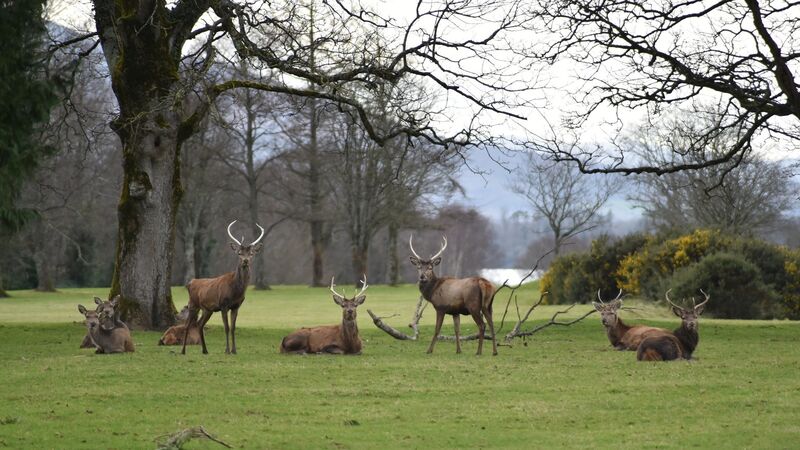
IFA has called for the establishment of the new deer management forum to happen “as a matter of urgency”, in order to address the TB risk associated with deer “which is becoming more prevalent”, it claimed, and the broader impact these deer are having “roaming through our farmland, eating grass, damaging crops and fences”.
In calling for the re-establishment of a deer management forum to investigate the role deer play in the transmission of the disease, Macra na Feirme president John Keane said that a “complete approach” to wildlife management is now required to reduce the spread of disease.
“Continued culling of badgers and further research into the effectiveness of vaccination and the role that deer play is also needed,” Mr Keane added.
“Research carried out on TB in deer in Ireland had found that in certain areas where there are high densities of deer, cattle, and badgers living alongside each other, the same strains of TB can circulate between them.
“Greater evaluation of this interaction is required to establish the connection and role that all species play in the transmission of the disease.”
He added that the control of the sources of infection “is as important as the on-farm practices” that farmers are doing.
Paul Smyth of the Irish Creamery Milk Suppliers’ Association said that in terms of the resources that are currently put to wildlife, “most of the resources go to dealing with badgers”.
“We cannot have a situation where resources are then taken from badgers; it has to be an extra resource that goes in,” said Mr Smyth.
“We need to look further into the genome sequencing in deer and the effect of how it passes between bovine and the deer population, and understand that more fully.
“In saying that, at present, there is too high a density of deer within the bovine catchment area and that is the sole focus that should be there in reducing that density.
“It is slowly coming to the attention of the department that this is a major factor, and the reduction of that density for established deer needs to be a priority for the department.”
Damien Hannigan of the Irish Deer Commission and member of the Irish Deer Management Forum told the Irish Examiner that he would welcome the reactivation of the forum, to allow it to “continue its valuable work in implementing evidence-based deer management practices that support all land uses, and the conservation of our wild deer”.
Among the Irish Deer Management Forum working groups was a TB sub-group, and this group was “subsequently immersed into the TB forum” set up in 2018 by then agriculture minister Michael Creed, with a commitment to the eradication of bovine TB by 2030.
“Covid-19 has created many challenges for deer management in Ireland, and it important we manage wild deer at sustainable levels, taking into all land uses,” said Mr Hannigan.
“The forum would support and aid such an objective. However, it is important that the forum is overseen and sponsored by the NPWS and Minister Malcolm Noonan; while the DAFM is an important stakeholder, NPWS are the Government department with responsibility for the legislation which underpins deer management in Ireland — our Wildlife Acts.
“It is also important the forum has equal representation of all stakeholder sectors and is evidence-based.”
He stressed that it is “crucial” the management decisions are “well-founded and based on evidence-based data, and not simply arbitrary, seat-of-the-pants as a result of political and landowner pressure”.
“Despite claims of known deer populations, in Ireland we have never undertaken a deer census so the population of wild deer is unknown; however, it is likely Covid-19 restrictions and the worldwide crash in venison prices has caused deer populations to increase in some areas, and landowners in these areas should be supported,” Mr Hannigan added.
“TB is a devasting disease for our farming community and rural Ireland, with many different views on any role wild deer may play in the spread of bovine TB.
“In 2018, DAFM senior superintendent veterinary inspector Eoin Ryan stated there was ‘no evidence of a link between wild deer and spread of TB outside Wicklow’, and in 2021 it was confirmed nationally just three [out of 87] wild deer tested positive for bovine TB in 2020.”