Farmer protests highlight the global pressures in the food and agriculture world
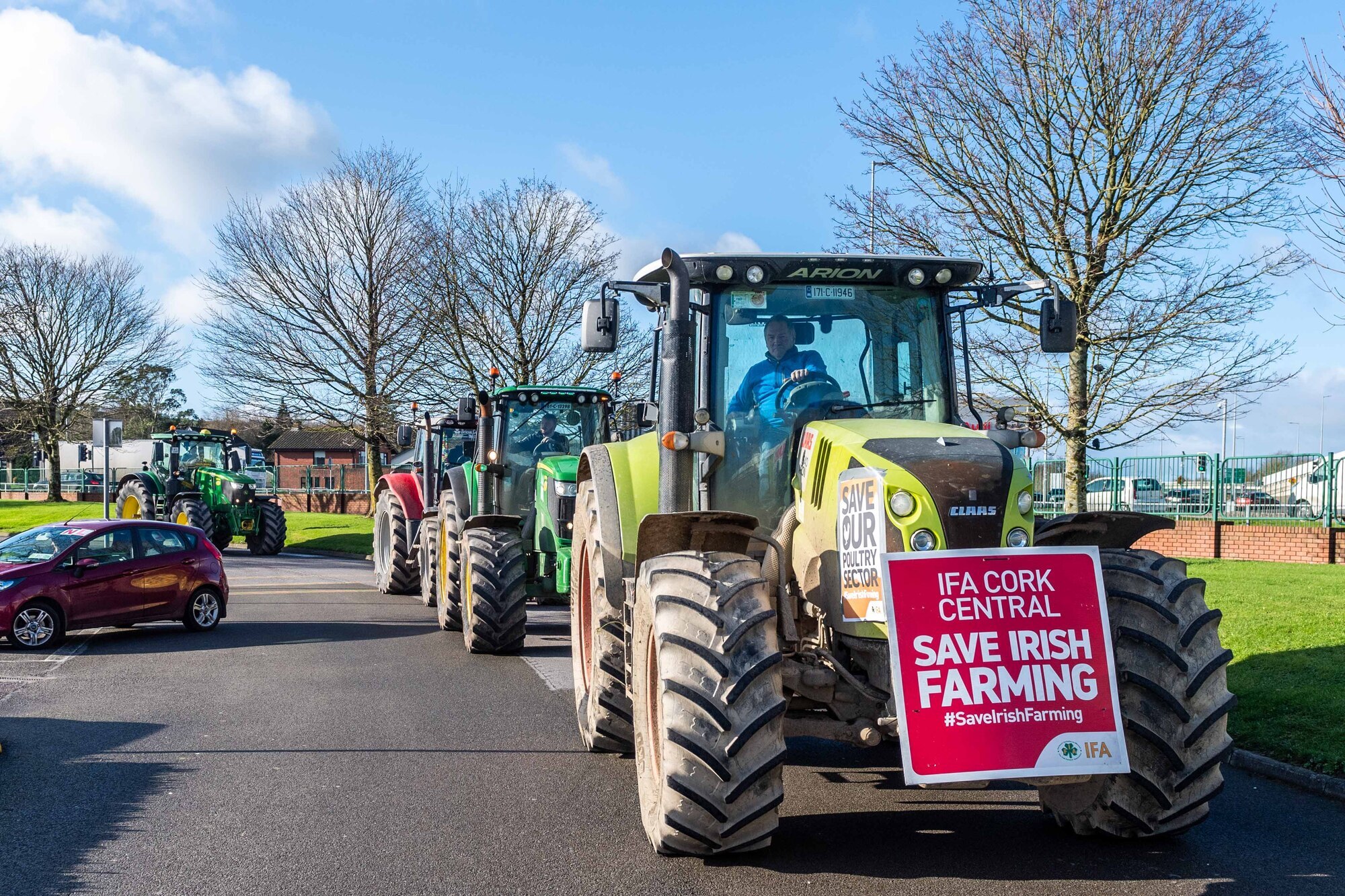
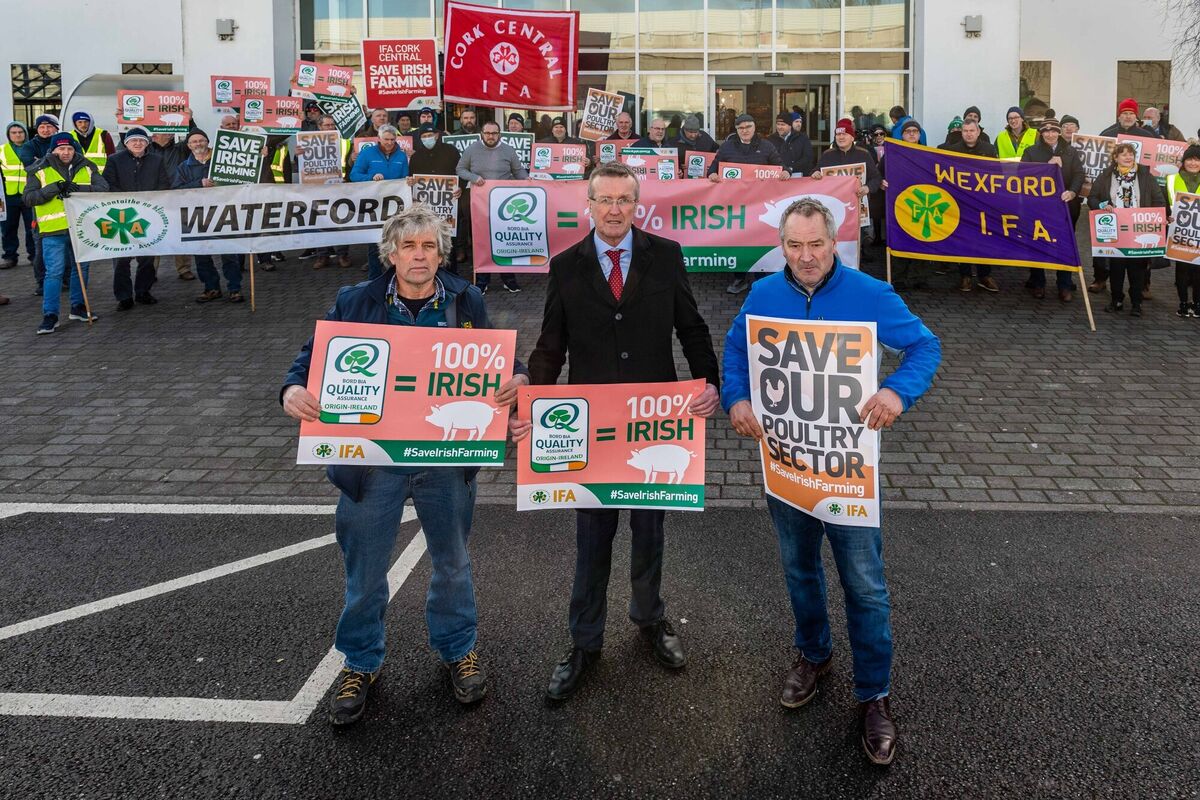
A large contingent of pig, poultry and horticulture farmers attended the Cork protest. Picture: Andy Gibson.
Last week’s IFA protest standoff to force Dunnes Stores to discuss price increases for farmers was a local manifestation of unprecedented pressures in the food and agriculture world, extending from primary producers such as farmers all the way into retail and the cost of living.
Protesting pig and poultry farmers said they cannot survive at current prices.
But some processors, on the next step up the food chain from farmers, say they face “off the charts” inflation in all their costs.
It’s the same at consumer level, with the annual rate of consumer price inflation in the UK, the main market for Irish food and drink exports, rising to 5.5% in January, a level last seen in the early 1990s.
In the US, the inflation rate is 7.5%, the highest since 1982 Year-on-year food price increases are 8% in Canada and 5% in Brazil.
Higher costs for commodities, energy, fuel, freight (including an estimated 822% price rise in shipping container prices from Asia), packaging, warehousing, and labour costs are affecting the entire global food chain, which was already stretched by low food stocks.
Rising fertiliser prices are a huge extra factor for farmers, likely to add considerably to the already high prices of global food commodities and ingredients, with wheat prices reaching their highest level since 2012, sugar prices up more than 40% year-on-year, and vegetable oil prices hitting all-time highs (they are used in nearly every packaged food).
The food retailers now talking with IFA are simultaneously engaged in even more intense negotiations with food manufacturers.
The outcomes of such talks throughout the food chain will determine where inflationary pressure on the cost base for virtually every food will be felt hardest – by consumers, retailers, processors, farmers, or the foodservice industry.
There is little sign of inflationary pressures lifting. Unfortunately, they may increase, because of the global weather trends which disrupt food production.
A second consecutive year of drought in South America looks set to reduce that continent’s huge food exports, even as drought in the western United States deepens to its worst level in more than 1,000 years.
Inflation is part of a “perfect storm” hitting the food industry, with prices also driven by successive years of poor crop growing conditions globally, pulling down food commodity stocks worldwide to their tightest levels for some years.
Global supplies of many commodities will remain low through at least another crop cycle. Undersupply could increase in particular due to an expected drought-related shortfall in South American production.
An equally devastating drought in the western US is one of the factors driving US beef prices up 25% in 2021. Higher animal feed costs are also to blame, with maize futures prices up 5.5% so far in 2022, and up 35% year-on-year. Soybean prices gained 17% so far in 2022, and 38% annually.
These trends, and labour shortages, have also resulted in higher US poultry prices.
Droughts in Canada also reduced grain and oilseed supplies, while unprecedented demand from China heats up markets further.
Dairy product prices are at an eight-year high, mainly due to higher feed costs.
As global vegetable oil supplies tightened, prices rose substantially.
Global markets are also affected by some major producing countries restricting commodity exports, in order to maintain domestic supplies and control their national food price inflation. Indonesia has curbed palm oil exports; Russia and Argentina have restricted grain exports.
Throughout 2021, food suppliers renewing contracts throughout Europe were seeking price rises of up to 30% from retailers and foodservice operators, in order to cover their inflated costs.
They can’t risk pushing too hard, causing price negotiations to fail, and being delisted by a big retailer. But many companies cannot absorb cost inflation for long periods, because of the low average profit margins in food production.
Unlike recent years, the food industry can’t borrow its way out of the inflation crisis, as the era of cheap money is being brought to an end by central banks.
Along with food processors, retailers will fight hard against any concession in the current inflationary climate to farmers.
Retailers left with no option but to increase prices to consumers will have to carefully gauge the consumer reaction, and must guard against losing market share.
Similar inflationary circumstances arose in 2007/08 and 2010/11. On the former occasion, retailers were able to raise prices due to the favourable economic climate (in a boom period which was quickly followed by a financial bust).
But retailers had to be much more cautious on the latter occasion, before inflicting higher food prices on populations recovering from the financial crisis.
This time around, retailers may rely on strong household savings cushioning food price increases, after lockdowns reduced household spending.
Of course, consumers would react to price increases, by trading down to cheaper food products, which may trigger substantial shifts in demand that affect farmers, processors and retailers. For example, sales of premium-priced foods such as beef may fall.
It remains to be seen how successful IFA are in demanding price rises of 15c a chicken and 2c an egg for poultry farmers.
IFA Pigs Chairman Roy Gallie said that pig farmers need retailers to pay more also, to help farmers “in a vice-like grip, with feed price increases on one side, and falling pig prices on the other”.
The Chair of the IFA Farm Business Committee Rose Mary McDonagh has said a whole-of-industry approach is needed, to ensure that farmers aren’t left carrying all the risk and full cost of inflation.
IFA president Tim Cullinan called for Minister Charlie McConalogue to make farmer protection part of his legislation on the long-promised food regulator. The IFA chief said the Government’s inaction on retail legislation has left farmers without any power in the food chain.