You are responsible for your dead or dying trees or overgrown hedges
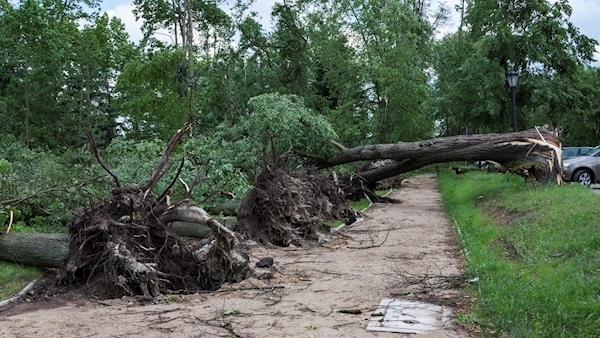
It was a wet and windy weekend.
Met Éireann warned of violent gusts that reached gale force in many areas.
People were advised to take care on all roads, and be mindful of the possibilities of debris, fallen trees and branches or power lines, etc, especially after dark.
There is an obligation on every owner and/or occupier of any structure, and the owner or occupier of any land on which a structure is situated, to take all reasonable steps to ensure that the structure or the use of the structure is not a hazard or potential hazard to persons using a public road, and that it does not obstruct or interfere with the safe use of a public road or the maintenance of a public road.
I am calling on every landowner or occupier to examine their lands, and their boundaries, and to assess the trees located on their lands for the safety of the public, including pedestrians and cyclists, themselves and their family members.
Examples of hazards might be dead or dying trees, ditches or hedges interfering with traffic, blocking footpaths, obscuring road signs or obscuring a view of the road ahead.
Local authorities have certain powers under Section 70 of the Roads Act 1993 to force a landowner to comply with their legal obligations.
Where a structure or the use of a structure is a hazard or potential hazard to persons using a public road, or where it obstructs or interferes with the safe use of a public road or with the maintenance of a public road, a road authority may serve a notice in writing on the owner or occupier of the structure, or on the owner or occupier of any land on which the structure is situated to remove, modify or carry out specified works in relation to the structure within the period stated in the notice.
If the owner fails to comply within the period stated in the notice, they have authority to carry out the work and charge the owner.
It is an offence not to comply with the notice, and a person guilty of an offence shall be liable on summary conviction, to a fine not exceeding €1,238.70 or, at the discretion of the court, to imprisonment for a term not exceeding six months, or to both such fine and imprisonment, or, on conviction on indictment, to a fine not exceeding €12,386.97 or, at the discretion of the court, to imprisonment, for a term not exceeding two years, or to both such fine and imprisonment.
In relation to trees which may overhang onto the roadway or near power lines, local authorities and the ESB have powers to deal with this type of dangerous tree.
They can give notice to the owner requiring them to cut or prune the tree.
The best solution may be to contact the ESB, if you are concerned that a tree poses a potential risk to the power line near your home.
These reports will be taken very seriously, and the ESB can choose to remove it themselves or compel your neighbour to do so.
DO NOT APPROACH If you come across fallen trees there may be fallen wires that could be live & dangerous. STAY CLEAR phone 1850 372 999. pic.twitter.com/SyXx8Uyy4H pic.twitter.com/cojux2oLA9
— ESB Networks (@ESBNetworks) December 8, 2019
If the ESB/local authority decide to direct the owner to remove the tree, and the owner fails to comply, they have authority to carry out the work and charge the owner.
It is also worth noting that, by virtue of Section 37 of the Forestry Act, it is illegal to uproot any tree over 10 years old, or cut down any tree of any age, including trees which form part of a hedgerow, unless a felling notice has been granted.
You should check this out before taking any action.
Overhanging trees and encroaching roots can cause disputes between neighbours.
You are free to cut back any tree overhanging your property, but you may not trespass on your neighbour’s property to do so.
If you are concerned about a neighbour’s tree, it is best to approach the landowner and outline your concerns.
The simplest way to resolve these issues is to talk to your neighbours in a friendly way.
If the landowner refuses to acknowledge the problem, you should report the matter to your local authority, and allow them to carry out an inspection of the tree.