US envoys in Moscow to meet Putin following talks in Abu Dhabi
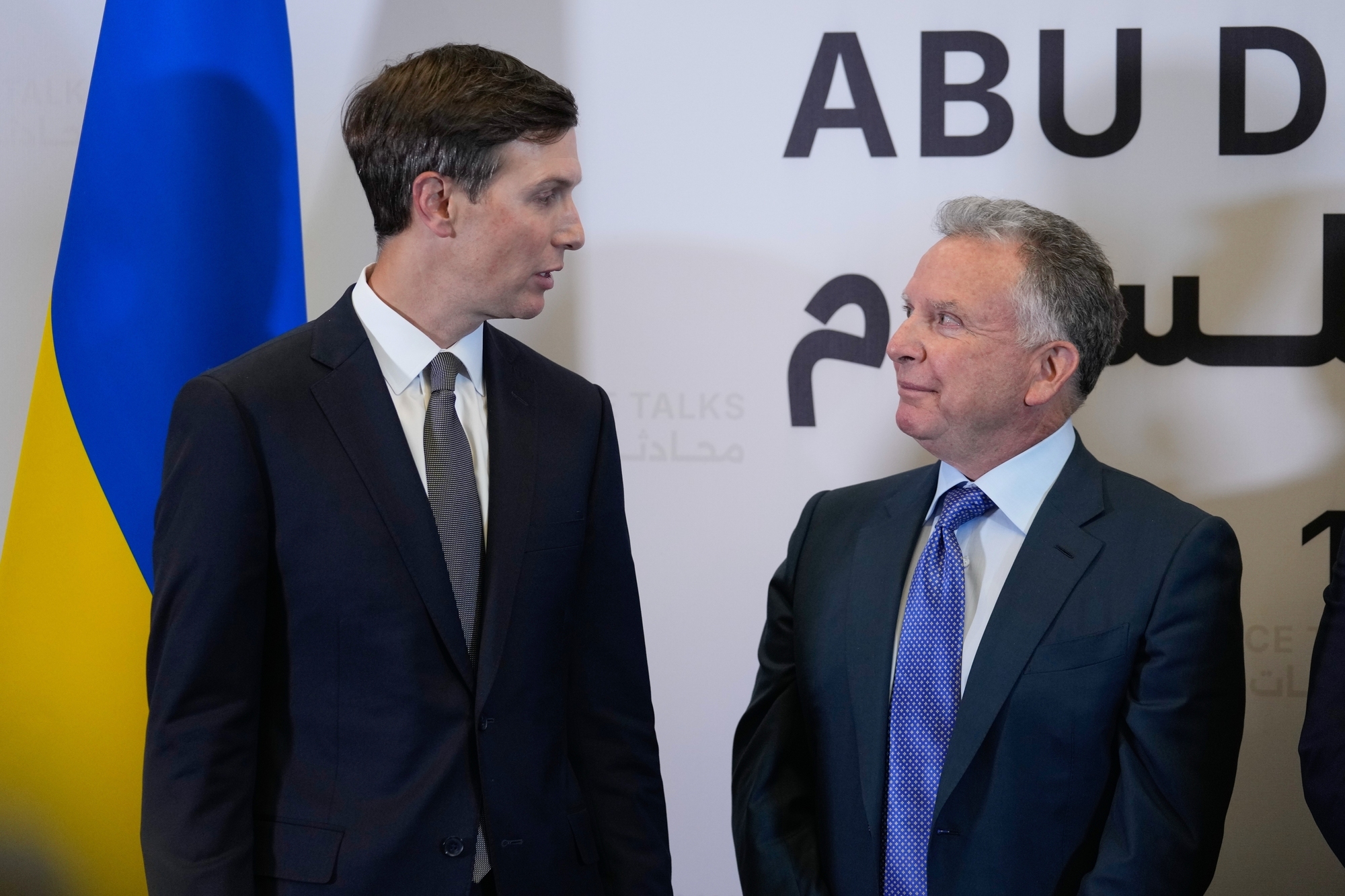
US President Donald Trump’s envoys have arrived in Moscow for talks with President Vladimir Putin about the results of US-mediated negotiations between Russian and Ukrainian delegations.
Steve Witkoff and Jared Kushner, who is also Mr Trump’s son-in-law, attended the two days of negotiations in Abu Dhabi, in the United Arab Emirates, which wrapped up on Wednesday with an agreement on a large exchange of prisoners of war but no visible breakthrough on ending the nearly five-year hostilities.
After meeting with Mr Putin, Mr Kushner said that he and Mr Witkoff will fly to Dublin, Ireland, to meet Ukrainian President Volodymyr Zelensky.
The Ukrainian leader gave a muted welcome to the outcome of the talks, saying the proposed prisoner exchange was a positive step.
At the same time, he insisted that Ukraine will not give in to demands that it cede its territory that has been occupied by Russia in exchange for peace.
Hopes had been low for any significant breakthrough in the first meeting in nine months between the delegations.
Russia and Ukraine have from time to time swapped POWs but have remained far apart in their demands for accepting a peace settlement.
Along with post-war security guarantees for both countries, other key hurdles are the fate of Russian-occupied Ukrainian territory and what role European countries will play in an eventual settlement.
Moscow does not want European countries, which are concerned about Russia’s conduct and broader intentions on the continent, involved in the direct negotiations.
Mr Kushner said one of the goals of the Moscow meeting is to try to get Europeans added to the talks.
Mr Kushner noted that both Ukraine and Russia needed clarity on post-war security arrangements, and European countries, the EU and Nato have to be involved in those discussions to build consensus on next steps.
Kremlin spokesman Dmitry Peskov said on Wednesday that European representatives could eventually join peace talks but added their current statements “don’t indicate any desire on their part to contribute to movement along the path towards peace”.
Moscow complains that Europe is financing and supplying weaponry to Ukraine.
Ukraine wants to ensure that Moscow does not attack again, and EU officials say any discussions on Europe’s security arrangements could only start after a ceasefire.
Many in Europe see the inclusion of Russia in those plans as a concession to Mr Putin, who has described Nato’s eastward expansion as a top security threat to his country.
Moscow has demanded that the alliance withdraw its troops from Russia’s borders.

CONNECT WITH US TODAY



Be the first to know the latest news and updates