Up to three years of Mercosur talks
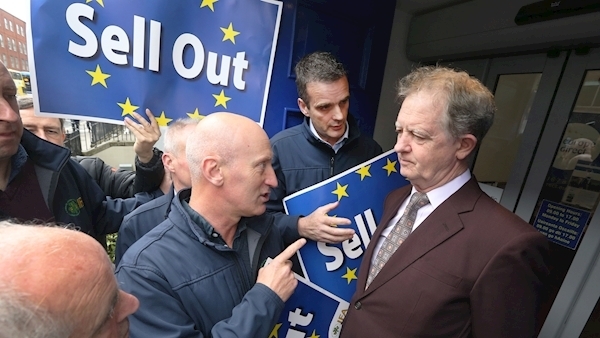
Up to three more years of talks remain before the EU-Mercosur trade deal can be finalised.
Following agreement in principle, it must be approved by 28 EU countries and four Mercosur countries.
The European Parliament, and up to 40 national and regional assemblies in the EU can be added to the list of approvals needed.
The first step is legal revision of the agreement in principle, to produce a final text.
The EU Commission will translate this text into all EU official languages, and submit the agreement for approval by the Council and the European Parliament.
The European Commission has exclusive competence to negotiate EU trade deals, but even before they concluded last weekâs agreement, the governments of France, Ireland, Poland and Belgium, had expressed concern about the agreementâs impact on their agricultural sectors.
âThe cumulative effect of the various quotas negotiated within the various free trade agreements signed by the European Union could ultimately destabilise production and the agricultural sector,â said the four heads of state and government.
In particular, French farmers and politicians have been complaining about concessions in the EUâs earlier trade deal with Canada, and the Mercosur deal could be a bridge too far for them, because it adds major South America, meat producers to Canada, all competing with French beef farmers.
France, Ireland, Poland and Belgium, had demanded that quotas for import of Mercosur beef, poultry, pork, sugar and ethanol must not be increased.
European ethanol producers say the deal threatens to âtrade awayâ their business, and the European renewable energy association said their industry is being thrown âunder the bus.â
EU Agriculture Commissioner Phil Hogan said he recognised the concerns of farmers, including those from his country, Ireland, but that the blocâs free trade pacts were opening new markets for EU farmers, particularly for premium products, and for spirits, wines, and confectionery, three categories on which trade tariffs of up to 35% will be dropped.
Nevertheless, the proposed trade deal is opposed by farmers across the EU.
Along with facing strong competition from South American imports, they find it impossible to accept the proposal of imports from countries that encourage deforestation and support agricultural practices not accepted in the EU, while ambitious measures to adapt to climate change are demanded of farmers in the EU.

In rare agreement with farmers are environmental organisations such as Greenpeace, whose spokesperson said trading more cars for cows is never acceptable when it leads to the destruction of the Amazon, and harm to both its rainforests and its indigenous peoples.
French President Emmanuel Macron has warned the Mercosur deal would be scrapped if Brazil reneges on the Paris climate deal. Livestock farming is blamed for 80% of the deforestation in the Brazilian Amazon, which is home to 40% of the worldâs remaining rainforests.
The Mercosur deal is good news for some of the EUâs biggest traditional industries, which would benefit from proposed removal of âŹ4bn of duties per year on their exports to South America.
It is proposed that Mercosur countries withdraw tariffs of 18% to 35% on EU cars, machinery, and chemicals.
This explains why Germany, for example, supports the proposed trade agreement, with Federal Minister for Economic Affairs and Energy Peter Altmaier welcoming the deal as a breakthrough and success, saying it will increase welfare and employment, stabilise global markets, and enormously strengthen multilateral rule-based trade.
The EU is also counting on the agreement to improve access to the South American market for telecommunications, transport or financial services.
It will be more difficult to get full trade deal agreement in the EU than in South America, where President Bolsonaro expects the Brazilian Congress to be one of the first to approve the EU-Mercosur treaty, and Argentinaâs President Macri is believed to have personally urged President Bolsonaro and French Prime Minister Macron to cede ground and move forward with the agreement.