Why the 25% of milk on our shop shelves coming from Northern Ireland may increase (Brexit permitting)
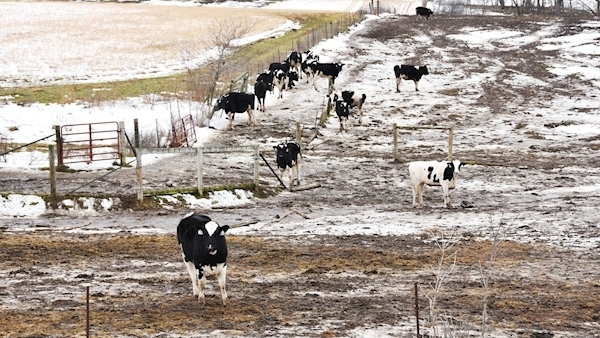
The number of registered liquid milk dairy farmers in Ireland has dropped significantly in recent years, falling from 3,113 to just 1,901 in 15 years.
Many farmers have moved away from the all-year-round production needed for liquid milk, switching to less costly spring-based production.
About quarter of the milk on the shop shelves comes from Northern Ireland, and that may increase (Brexit permitting), because the price farmers are getting for liquid milk is “a joke”, according to one high-profile farmer who plans to join those leaving all-year-round production.
He is the Fianna Fáil TD for Tipperary, Jackie Cahill, who was the ICMSA President from 2005 to 2011.
He recently publicly indicated his plans to end liquid milk production, and has told the Irish Examiner it’s not profitable.
“My milk in October with no conditions attached was making 41 cent per litre, so why would you bother calving cows to produce milk? We get paid a flat price for 3.6%, 3.3% so you get no benefit of the constituents of the milk and it’s just not paying.”
He cited issues with herd management, and said the younger generation would rather have a compact calving spread during the spring.
“Having two herds of cows is problematic, you have one bunch of cows going dry when the others are calving, you have cows coming bulling, you have two sets of bulling periods, two sets of scanning, two sets of rearing calves, two sets of everything.
“The plus side of that is it stretches the workload but, from the second week of September to the second week of April, you are actually in effect calving cows, and I find the younger generation now, they would prefer the few weeks of hardship and get their calving over and done with, rather than this long drawn out process”
“A lot of younger people like to have the cows dry from the second or third week of December to the first of February and to have that break, whether it’s to go on a week’s skiing holiday, or just to have the break around the Christmas. A lot of people are anxious for this break to help recharge the batteries. But, overwhelmingly, it’s the profitability of the industry that is the main reason people are getting out.”
He explained that liquid milk producers are foregoing profitable milk production during August, September and October.
“At 42, with manufacturing milk at the back-end of the year making over 40c, liquid milk is definitely not attractive economically”, he said.
To me, it’s just not paying, we are feeding our cows at the moment, you are giving them beet, you are giving them molasses, you are giving them all kinds of different ingredients, you are pushing milk yields, but you are not getting the return for it.
He said there was previously a very good economic return from liquid milk, however this is no longer the case.
“The only person now who is making money out of a litre of milk is the retailer, the processer isn’t making it or the farmer isn’t making it, and I would put a lot of blame firmly at the door of the processor, because they all competed for market share, they gave away margin. When you give away margin it’s impossible to get it back, and that’s the scenario we have now, milk is a loss leader in a lot of the major retail outlets, and it’s the farmer paying for that”.
However, Brexit could change that, notes the Fianna Fáil TD. “No government likes to see food inflation, but the price that milk is being sold for in the major retail outlets isn’t tenable, whether Brexit will have an effect on it or not is a question.
“It might be one of the few wins that will come out of Brexit, in that the milk from across the border might find it hard to make its way on to the shelves here”.
Having got out of liquid milk last winter, ICMSA Dairy Committee Chairman Ger Quain is another high-profile dairy farmer turning his back on this farm enterprise.
He says liquid milk producers need 15 cent above the manufacturing price to justify producing liquid milk during the winter.
“You are going to have extra costs, you are going to have extra feed, you are going to need extra silage and top quality feed. There is also going to be demand on you time, you will need help in. And demand on your resources, electricity, the cost of cooling the milk, and the hardship during the winter, it’s severe.”