Comment: Why a modern version of the US buffalo massacre is likely
Reducing livestock numbers is of course likely to be much easier politically than, for example, asking the French people to pay more for fuel, writes .
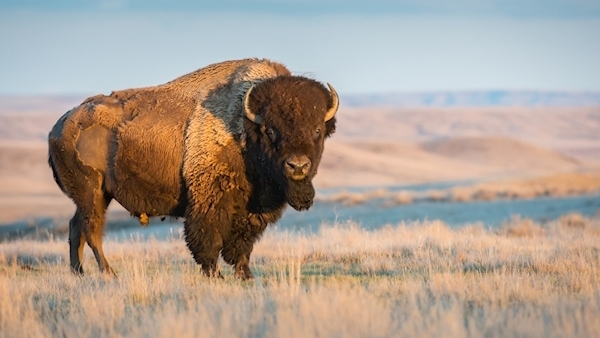
The tens of millions of wild ruminants that roamed the United States until the mid-19th century are estimated to have produced about 86% of the methane emissions which come from the 90-95 million cattle now in the US.
So the killing of nearly 30 million buffalo, nine million elks, and 13m deer during settlement of the US wasnât all bad.
In the space of a few years in the second half of the 1880s, it got rid of a lot of green house gas production.
Some estimate there were about 50m buffalo belching methane before the 15th century, the herds having grown since the Ice Age.
That compares with a peak US domestic cattle population of 130m in the early 1970s, having grown from about 30m in the 1860s, but since declined to about 95m.
Now, a 21st century version of the buffalo massacre is needed worldwide for climate change mitigation, but this time around in a more civilised, modern process, and with an entirely different objective â to keep global warming below 1.5° Celsius.
Presumably, the buffalo that came before us canât be blamed for the global warming that is predicted to devastate the world.
Scientists estimate that methane only lasts 10-12 years in the atmosphere, so that which came from the buffalo herds is long gone.
The fact that US greenhouse gas emissions from livestock are now 16% higher than in the days of the buffalo, but are still only 2.5% to 3% of greenhouse gas emissions in the US calls into question why livestock should be targeted.
It also sums up that it is industry rather than agriculture which has caused global warming.
But, livestock may be responsible for as much as 18% of global greenhouse gas emissions, and are likely to be targeted increasingly, as the climate mitigation lobbies strengthen their case.
Reducing livestock numbers is of course likely to be much easier politically than, for example, asking the French people to pay more for fuel.

With no more buffalo to get rid of, the Intergovernmental Panel on Climate Change (IPCC) instead wants rapid, unprecedented changes in energy, land, urban infrastructure, and industrial systems.
It wants technological solutions to climate change, behavioural changes on the demand side (including less meat and dairy consumption), and a five-fold increase in low-carbon energy and energy efficiency measures, by 2050, along with a steep decline in coal usage.
Professor Valérie Masson-Delmotte, Co-Chair of an IPCC Working Group, recently addressed the Joint Oireachtas Committee on Climate Action, and said there will be unavoidable implications for food security, ecosystems and biodiversity, due to necessary afforestation and reforestation; restoration of degraded ecosystems; agricultural practices linked with biochar and soil carbon sequestration; bioenergy; and carbon dioxide capture and storage, all necessary to keep global warming below 1.5° Celsius.
Those âunavoidable implicationsâ will be the next big mountain in the path of Irish agriculture.
If we get over the Brexit mountain, we will find an even taller climate change mitigation mountain ahead.
Another guest of the Joint Oireachtas Committee on Climate Action, Dr Pierre-Marie Aubert, described some of the challenges ahead.
He leads the initiative on Public Policies for European Agriculture in the International Deep Decarbonisation Research Institute (IDDRI) of researchers.
Among the mitigation measures he favours are reducing EU dairy consumption by 33-50%, without consequences for our health; and he says EU food exports must be only a temporary measure until farmers, in China for example, become efficient enough at food production.
IDDRI recently published a scenario of EU agriculture going organic and feeding all of Europe by 2050, thus reducing emissions by 40%. But it would not be enough to reach carbon neutrality, and it would have to include some cattle, to maintain grasslands.