Lack of profit more a threat to our pig farms than ASF virus
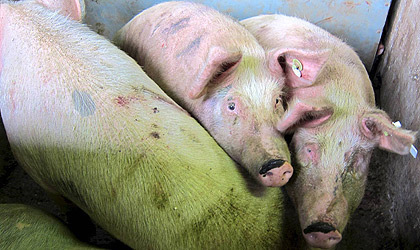
Disease-free Irish pigs could become very valuable, if African swine fever continues to spread globally, writes
Unfortunately, many Irish pig farmers may have gone out of business before they can capitalise.
Their lack of profitability in 2018 is well proven by Teagasc assessments, but they haven’t got a significant price rise from the pigmeat factories since mid-January, even while the average EU pig price has advanced from about €1.35 per kg in mid-January to €1.50.
Meanwhile, Irish processors have achieved pig meat exports at a record level for the first six months, 8% up on 2017, reaching 144,800 tonnes.

But, down on the farm, production costs are rising due to weather-disrupted harvests of the grain crops needed for pigs.
Sources in the UK say costs are now the highest in four years.
Pig farmers here say a pig feed price increase taking effect last weekend added between 4c/kg and 8c/kg to the cost of production.
But that is only the latest setback in falling profitability which has led to a number of pig units closing down, according to IFA, and some others cutting back due to their deteriorating financial situation.
IFA says even the most efficient pig farmers have been losing significant money, and do not have reserves left to support a loss-making enterprise for much longer.
Some of them must almost be hoping for nature to intervene in the form of the spreading African swine fever which is likely to bring China’s pork industry to a temporary standstill, as pig movement from outbreak areas has been banned.
The disease isn’t harmful to humans but is almost always fatal for pigs, and China is the world’s top consumer and producer of pork.
If millions of Chinese pigs have to be slaughtered to stop the spread of the virus, rising prices and imports in China could help Irish farmers get the price rise they have been clamouring for.
This seems to happening already, with pork prices up more than 7% in China since the first swine fever outbreak.
But farmers here depend on processors to pass back rising export prices to them.
IFA Pigs Committee Chairman Tom Hogan has called on Agriculture Minister Michael Creed to call an emergency meeting of all stakeholders in the sector immediately, to decide on positive actions to help save Ireland’s third largest agricultural sector.
Hopefully, the relentless march of African swine fever will help to convince the Minister and the industry that our pig farmers should be helped.
It’s not beyond the bounds of possibility that African swine fever can be kept out of our island, while it advances across the rest of the world.
In the UK, Zoe Davies, chief executive of the National Pig Association, fears it could make a sudden jump into the UK, because many of their farm workers are from eastern Europe, where the disease is spreading.
She said if anything got in, “we’d kiss goodbye to our export market.”
She said the prevailing attitude across the industry is “it’s not a matter of if it’s going to happen, it’s when it’s going to happen. It could be a couple of months, it could be 10 years.”
The UK government this week said the risk of African swine fever entering Britain has risen from ‘low’ to ‘medium’.
Over the summer, Romania recorded nearly 800 outbreaks of swine fever, including one last week that resulted in the culling of 140,000 animals.
And Bulgaria on Friday announced its first outbreak, at a farm near the border with Romania.
Since January 2014, it has been spreading in Russia, Ukraine, Moldova, Lithuania, Poland, Latvia, Estonia, the Czech Republic, Romania, and Hungary.
Denmark’s National Veterinary Institute has estimated that an outbreak could cost the country up to €1.3 billion.
In 1957, swine fever cropped up in Portugal, reportedly in airline food waste fed to pigs near Lisbon. It spread to Spain and France and wasn’t eradicated until the 1990s.