ICMSA official questions dairy profitability as drought bites

Dairy farmers have to question their viability if they are getting over-dependant on bought-in feed, says ICMSA Dairy Committee Chairman Ger Quain, as the drought bites.
The ICMSA Dairy Chairman believes that dairy expansion needs to be re-assessed, and dairy farmers’ profit margins need to be examined.
“I wouldn’t like to say that we have too many dairy cows in the country, but what I would say is that some of the expansion needs to be looked at.”
“We need to wonder is there a factor there where it is costing more now to produce than what the farmer is getting, and if you come into a winter like the winter we had last year, or the spring we had this year, farmers are getting over-dependant on feed rather than what our land can produce.
“If we are getting over- dependant on bought-in feed, I think one has to question the viability of it, and one also has to question what the farmer’s margin is at the end of the day.”
“Would farmers be better off with lower numbers and be more self-sufficient with what they are producing, especially in the difficult patch that we have gone through during the last 12 months? asked the ICMSA dairy spokesman.
“Farmers have had very high costs and have brought in outside sources of food and they are becoming quite expensive and quality can become questionable, so I think we need to probably look at the cases that are under pressure, and take a second look at the amount of money that has been spent on the processing facilities at the different co-ops.”
“When push comes to shove, there is only one person that is going to pay for that, and that is the farmer.
It has to come out of the milk, and if there is excessive money being spent on stainless steel, and if the farmer’s margin is going tighter because of higher costs, I think something has to snap somewhere.
Prudence is the best policy for expanding farmers, says Quain.
“We need to re-assess where we are at the moment, and where we are going forward.
“We need to be more prudent in our expansion programmes, and expand only where we see a margin at the end of the day, expansion for the sake of expansion is not really an option, that is my view on it.”
He said the drought work burden has increased hugely for some farmers whose water wells have run dry.
Some of them do not have access to mains water, and are drawing water from rivers to supply their cows.
“Many farmers would be on the main supply, some might have wells, but wells are coming under pressure.
“I know of several cases where wells have just disappeared within 24 hours and water evaporated,” said Mr Quain.
Farmers are drawing water to animals in tankers trying to keep them supplied with water, so the work in that is phenomenal.
On his dairy farm in Co Limerick, near Charleville and the Co Cork border, he was feeding five bales of silage a day last week, and 4-5 kgs of nuts per cow per day.
“Fields aren’t getting green, they are getting brown really, any bit of grass that grows is going brown within a few days, and it is getting lesser and lesser as the month goes by.
“It is down now to a situation of restricting grass usage to make sure that the cows and the cattle have a bit of grass every day, and supplement them with silage and nuts.”
When asked to describe 2018, he summed it up as “a year of two halves so far”.
“We went from drastic winter with no spring into a summer that we never expected, the best summer in living memory.
“But for people that want to grow grass, it has turned out to be a very difficult summer.
“It started off phenomenally well with massive growth in May, and then once we hit the middle of June, places dried out, and from there till now, there hasn’t been a bit of growth really, grass has gone frightful scarce.”
“Farmers find themselves busier now than they did last spring, out giving feeding to cows.
“It’s a phenomenal year really, I don’t know has there been any record of it before, a year of two such great extremes”
“The spring has been expensive.”
He said farmers were looking to the summer to compensate them for the previous nine months that included high spring expenses and the Beast from the East and Storm Emma.
“Unfortunately, that has not happened, and farmers are scratching their heads, asking how long is this going to last, and how expensive is it going to be. The cattle still have to be fed.”
Heat wave and drought have affected dairy farmers in two ways.
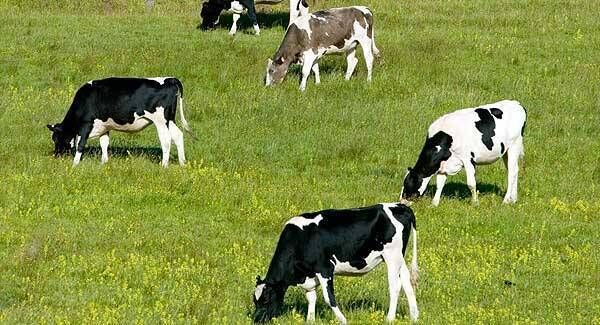
They are feeding next winter’s silage, and milk volumes for this time of the year have decreased.
Mr Quain said, “If you are going to feed a cow an extra 4-5kgs of nuts per day and give her silage, which is her winter feed going forward, that is the worry out there, that fellows are going to be using up their winter fodder, and the volume of milk you are getting is dropping dramatically every week, and the constituents of the milk are very poor.”
He explained that milk protein levels have dropped significantly for this time of year, compared to previous summers.
“Protein in particular has been quite hard hit, and it is very difficult to get above 3.2.
“3.2 is quite low in protein, you are talking about below what you would see as the basic average.
“During a normal summer, with reasonable and decent grass growth, you would be talking about protein of 3.45 or 3.5 this time of the year.
“Now, I would say farmers are struggling to get above 3.1.
“3.2 is seen as a good achievement at the moment”.
Ger Quain makes extra silage to prepare for a longer winter, due to the land quality where he farms.
But he is already feeding next winter’s silage.
“The land around here is quite heavy, we always would allow for a longer winter than you would in other parts of the country, but having said that, we are still eating into next winter’s fodder.
“We are using five bales of silage a day.
“Every 10 days, there is 50 of them gone. It is a fair hole into the silage bales”
Due to lack of grass growth, farmers are in a dilemma regarding second cut silage.
“Farmers who cut in May are seeing their second cut disappear, you would wonder whether farmers cut what they have and have a third cut later in the year if the situation improves in September.
“With the weather being so dry, with no rain for the next fortnight or three weeks, you would get a third crop rather than risk losing what they have in the field at the moment.”