Stephen Cadogan: After Brexit, EU farmers will realise how blessed they are
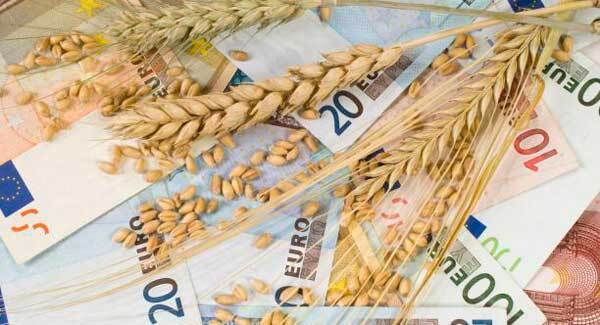
Would farmers prefer if EU support payments were paid to them monthly rather than annually?
Stephen Cadogan: After Brexit, EU farmers will realise how blessed they are

The advantage would be if a farmer misses the application deadline, he would lose only one month of payment, rather than a whole year of payments if he misses the application deadline in the current system.

The disadvantage would be a difficult monthly bureaucratic task applying for the vital payment.

And that disadvantage would probably be enough to put off most Irish farmers, and convince them to stick with an annual system, regardless of its faults — if they had the once-in-a-lifetime opportunity to create their own agricultural policy.

That’s what they have in the UK, but the silly monthly payments was the most striking idea which economists and government officials in the UK could manage between them, when they gathered to review the policy alternatives to the Common Agricultural Policy (CAP) that they will need when they leave the EU, expected in 2019.

Farmers will be disappointed with the lack of better ideas on how to improve on the CAP, especially in a country where the Rural Payment Agency’s problems over the years have left farmers facing lengthy payment delays and confusion, resulting in farm cash flow difficulties.

Maybe it is a sign that there is not so much wrong with the CAP as it stands.

Then again, maybe the economists and government officials didn’t waste much time on how to handle the payments which keep so many UK farmers in business — because they know these will be one of the first things to go when Westminster takes over British agricultural policy.

UK governments have frequently voiced their preference for more market-orientated agriculture policy, based on competitive farmers who don’t need income support.

Inevitably, that means bigger farms in the most productive land areas, and a phasing out of the EU’s basic payment system.

That is what is most striking in the discussions around the UK’s future agriculture policy — the market alone is king for decisions makers in the UK, in stark contrast to the EU’s Common Agricultural Policy, in which there is a strong element of income support for which there is no public benefit in return.

The explanation given for this contrast by British policy makers is that farm households as a group have been shown on numerous occasions to be a relatively high-income group in British society.

It is acknowledged that there are some low-income UK farm families, for example, by Professor Berkeley Hill, Emeritus Professor of Policy Analysis at the University of London, in a recent capreform.eu blog guest post.

But, he says, support to them via agricultural payments is a very inefficient way of providing assistance.

“Poor people who happen to be farmers should be the subject of national social welfare policy, not agricultural policy,” says Professor Hill.

Dr Jonathan Brooks from the OECD, also commenting in the context of Brexit, agrees income support for farmers should be a social policy, not an agricultural one.

In short, the UK’s post-Brexit agriculture policy will be much more about animal welfare than farmer welfare.

There is acknowledgement that farmers will sometimes fall on hard times due to extreme weather.

In the future UK policy, they won’t have the basic payment to fall back on; the argument is only about whether the government would step in with ad hoc aid basis after weather disasters, or support the costs of risk management premiums for pre-arranged insurance.

It is likely that only parts of the UK facing environmental or social problems, such as remote hill areas, can make a case for post-Brexit payments related to farm area, but it won’t be income support, there must be a return in the form of identifiable public benefits.

It’s one of the bright sides of Brexit, that perhaps EU farmers will realise how blessed they are, to have the Common Agricultural Policy supporting them.

x

More in this section

Farming

Newsletter

Stay ahead of the season. Sign up for insights, expert advice and stories shaping Irish agriculture.

Cookie Policy Privacy Policy Brand Safety FAQ Help Contact Us Terms and Conditions

© Examiner Echo Group Limited