Dutch dairy cull will affect 2017 markets
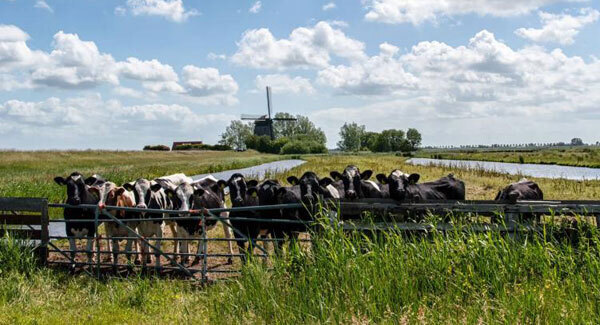
It has been estimated that the Dutch dairy herd will have to be cut by 100,000 cows, or 6% of the total herd, to meet environmental limits on phosphates.
Much of this is on course to take place in 2017, with immediate effect on the EU milk market — and on the beef market, due to dairy cow slaughtering.
If the European Commission accepts the latest Dutch plan, cow culling will get under way in March, and will continue throughout 2017, with the Dutch dairy farming sector changing to a phosphate rights system on January 1, 2018, in order to continue limits on phosphate production.
The aim is to preserve the EU nitrates derogation allowing Dutch dairy farmers apply extra nitrogen needed for intensive milk production.
The derogation is threatened by phosphate production on Dutch dairy farms exceeding the derogation limit (172.9m kg) in 2015, with overruns also imminent in 2016 and 2017.
Based on consultation with the European Commission, the Dutch dairy industry expects that implementation of a phosphate reduction plan can safeguard the derogation for 2017 and subsequent years.
A phosphate reduction of 8.2m kg per year is the aim in the plan put together by the country’s farmer organisations, dairy companies, animal feed businesses, banks, and Ministry of Economic Affairs.
A phosphate reduction of 1.7m kg in animal feed is targeted. The rest of the reduction is to come from those who stop farming or reduce their livestock (2.5m kg), and from the Phosphate Reduction Plan (4m kg) of ZuivelNL, which represents dairy farmers and milk processors.
For farms that give up milk production in the first half of 2017, a €50m incentive fund will be made available, funded from the EU support package of July, 2016; the Ministry of Economic Affairs; and by dairy farmers (€0.18 per 100 kg of milk in 2017).
From mid-2017 onwards, the retirement incentive per dairy cow will decrease.
The cows must be disposed of by export or slaughter (conversion to suckler cows will not suffice). Based on early results, it will be decided if incentives will be offered to dairy farmers who dispose of only part of their herds.
The ZuivelNL Phosphate Reduction Plan includes two schemes focused on dairy farms that continue in 2017.
Farmers in the Milk Money Scheme will see their monthly milk price cut if they produce more than 96% of their 2015 milk. A deduction of 90% of the basic milk price (excluding premiums) will be applied to the surplus supply.
Or farmers can opt for the LU reduction scheme, based on livestock units rather than milk production.
This complicated scheme basically requires farmers to decrease LUs, compared to October 1, 2016, or 96% of 2015 LUs.
If LUs exceed the reference level, a deduction will be applied to monthly milk payments.
Disposal of LUs can include newborn calves going to fattening farms
However, dairy farms with at least 4% fewer LUs in 2017 than at July 2, 2015, will be exempted from both schemes. They can receive a premium for further cutting LUs.
Farms that did not have a phosphate surplus in 2015 do not need to reduce their livestock.