Planning for future the wrong way
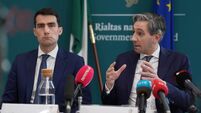
The meeting, organised by Fianna Fáil entitled, The Common Agriculture Policy — Towards 2020 Legal Proposals, was held in the Park Hotel, Dungarvan. Political allegiances aside, I’ve always maintained that the only crime in politics is not which side of the argument you’re on, rather you’re not in the argument.
I arrived a little late having spent most of the day at the mart in Kilkenny where I purchased 10 animals and upon arriving home spent overly long organising the yards for their arrival. Having missed the opening presentation by Michael Moynihan TD, FF spokesperson on Agriculture, Marine and Food, I settled into my chair just as a local IFA spokesman was putting a series of questions on the issue of how modulation money is spent and who benefits.
Further questions of a similar type would follow before I plucked up the courage to raise my hand. Over the last year or so I have on occasion discussed the possible complexion of the proposed CAP reforms in this column and it was these observations I now expressed.
I posed the idea that Ireland was going about planning the future road for its agriculture development the wrong way around this time. Our traditional approach has been to fit our farming practices into Europe’s vision in the hope of drawing down the maximum amount of money. This was all well and good when the system was designed to compensate farmers for market distortions by paying directly on production as was the case with the MacSharry proposals of the early nineties. That system would eventually evolve over time into the current decoupled arrangement as the EU moved its thinking on food production forward. However, by accepting decoupled payments farmers were acknowledging that the road for farm payments based on an argument for market compensation was nearing an end. Now in 2011 would it not be more beneficial for Ireland and its farmers to drive its own vision of what we believe would be in the best interest of the country?
Assume for a minute that there isn’t any EU money, what plan do you devise then? Surely the plan would be one that recognised due to our climate we are very good at some farming enterprises and less so at others. You can then begin planning a farming and food production model to take you into the future. It is at this point that any EU money available should be used to strengthen the plan.
There are other issues, like the environment and sustainable rural communities, but the main question is what should we farmers be producing so as to not only maintain ourselves but also best serve the economy as a whole? I cited the example of Scotland. They have identified through their own consultation and political system the need to protect the genetic purity of its beef sector and their proposals to Brussels on CAP reform clearly reflect this. Theirs is an attempt to make the money fit the farming.
While my suggestion last Thursday — that you begin a plan for future farm and food development in Ireland on a premise that you start by assuming there is no EU money — was purely theoretical, by Saturday tea time I was reading that despite an agreed 2% increase to the overall EU budget: “There is now a serious risk that the European Commission will run out of funds in the course of next year, and will therefore not be able to honour all its financial obligations towards beneficiaries of EU funds.”