New slurry deadline for pig farmers
Government officials have made it clear that their survival largely depends on finding the extra spreadlands.
This has been confirmed by Teagasc. "The economic analysis for the pig sector is very simple - if farmers stop taking slurry, they will go out of business", the Oireachtas Joint Committee on European Affairs debate on the Nitrates Directive was told by Dr Seamus Crosse, Director of Agricultural Research in Teagasc.
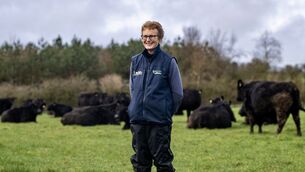
The extent of the challenge for pig producers was indicated by Tom Hanrahan, a south Tipperary pig farmer who worked for 25 years as a scientist with An Foras Talúntais, the farm research body predecessor of Teagasc.
He said he will lose more than 55% of the 82 farms which take manure from his pigs as a fertiliser, due to proposed Nitrate Directive requirements. He said he will not be able to submit a new manure plan for 2006 by his January 1 deadline, and is operating in a climate of fear of stringent action by anti-pollution enforcers and the Department of Agriculture and Food.
However, he and other large-scale pig farmers who operate under Integrated Pollution Prevention and Control (IPPC) licences from the Environmental Protection Agency have now been given a breathing space, following publication of the regulations agreed after four years of regulations.
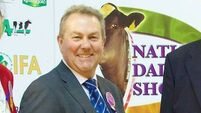
IFA President John Dillon had told the Oireachtas Committee debate that the Environment Department should try to delay implementation of the Nitrates Directive, but Department of Agriculture and Food inspector Michael O'Donovan warned that all Irish farm payments were under threat unless the Directive was quickly complied with.
"We have been forced to weigh up the daily fine, which is very substantial and primarily a matter for the Minister for the Environment, Heritage and Local Government, although we also play a role with regard to it. We have also been forced to weigh up the funding of the new single payment scheme, which is likely to be over e1.3 billion per year, and ongoing funding for rural development measures like the REPS scheme and compensatory allowances for forestry and the on-farm investment schemes, which will now be part of the next rural development strategy.
"We have had to weigh up all these factors and the Ministers for Agriculture and Food and the Environment, Heritage and Local Government have had to take a political decision based on the advice of their officials. We must get rid of the mistaken view that a farmer who takes in pig manure is at greater risk of getting into trouble vis-à-vis the single payment," said Mr O'Donovan. An information campaign to achieve this will be launched, and pig farmers will be grant aided for up to 70% of investments to meet the terms of the Directive, with €48 million already provided for next year to cover that, and more will be made available if required. Storage facilities and technologies such as centrifugal systems, dry feeding systems to help farmers produce less slurry or manage it better, will be grant aided. "The separation of slurry into dry and solid matter is a big consideration in terms of transporting slurry to distant spreadlands." Up to €1m each of grant aid will go for 10 research projects on technologies to mitigate the effects of the nitrates directive on the pig industry.
Pig farmers may also benefit from a new provision to allow for the certification of the nutrient content of livestock manure and other organic fertilisers. The certified content can be used (for example, in calculations for nutrient management, quantities to be landspread) as an alternative to fixed prescribed amounts.
The European Commission have accepted lower standard figures for the nitrogen and phosphorus content of pig manure, which correspond more closely to the norm in Ireland. Half of the 1,200 farms in Ireland with pigs must install storage capacity of six months; reduced storage exemptions apply to the remainder, who are small operators.
There may also be scope for greater use of pig slurry on tillage ground, because of phosphorous demand. "We have over 400,000 hectares of tillage land in Ireland and this will continue as an outlet for pig slurry. It should be exploited further", Tom Quinlivan of the Department of Agriculture and Food told the Oireachtas Committee.