Money-laundering fine a ‘stain’ for AIB
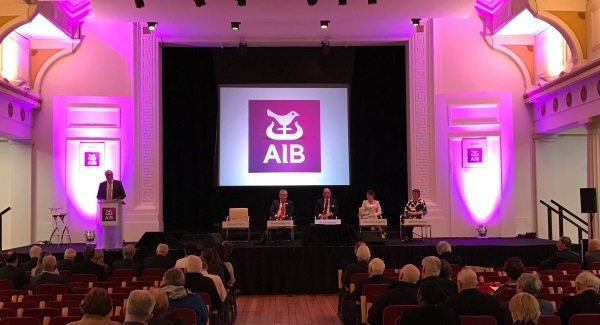
The Central Bank announced this week it had fined AIB €2.275m for its failures to comply with anti-money laundering and terrorist financing reporting procedures.
It was the second highest fine imposed by the Central Bank for money-laundering failures. The regulator said the breaches occurred after the enactment of the legislation in July 2010.
Shareholder Jonathan Sugarman, a former banker at UniCredit in Dublin, said that the fine showed that AIB’s risk controls were still failing. However, Mr Pym said that its controls followed best practice. Mr Sugarman had appeared at the Oireachtas finance committee earlier this month.
Mr Pym said a further stain for the bank was its involvement in the overcharging by the banking industry of its tracker mortgage customers.
He said the process of restoring customers to the correct mortgage rates and paying compensation was “incredibly difficult” but the bank had got a grip on the issue.
He said he had no reason to believe that the amount AIB had set aside to meet tracker claims would need to be increased. Mr Pym, however, said the current management team had not caused the mistakes.
Shareholders were told the bank had 1,100 staff, or 10% of its total workforce, dealing with customers who are in arrears.
In a trading update, the bank said it had generated a significant amount of capital in the first three months of the year. Its net interest margin — a key level of performance — increased to 2.46% from 2.42% at the end of 2016. Mr Pym said the stress test by the European authorities which was based on 2015 had not shown the lender in a good light but AIB was in a much better financial health.
It had taken a lot of time for the stress test to be published but the bank would not have been allowed to announce plans to pay a dividend if its financial health had not improved, he said.
Responding to a shareholder who said he was disappointed that directors had not bought shares in the bank, Mr Pym said the board was focused on trying to return the €20.8bn the state had injected into the lender during the crisis.
He said the bank had disciplined staff who had done wrong and that staff do leave the bank. It would not be the best use of time for directors to have its own investigation into how AIB got into trouble in 2008, he said.
It was delighted with the price it had received in its sale this month of a group of non-performing loans to Goldman Sachs.
The bank did not see any new bubble emerging in the economy, but that the board was alert to the danger of Brexit, Mr Pym told shareholders.

CONNECT WITH US TODAY



Be the first to know the latest news and updates