Greyhound racing regulator admits to not knowing cause of death of 3,000 dogs each year
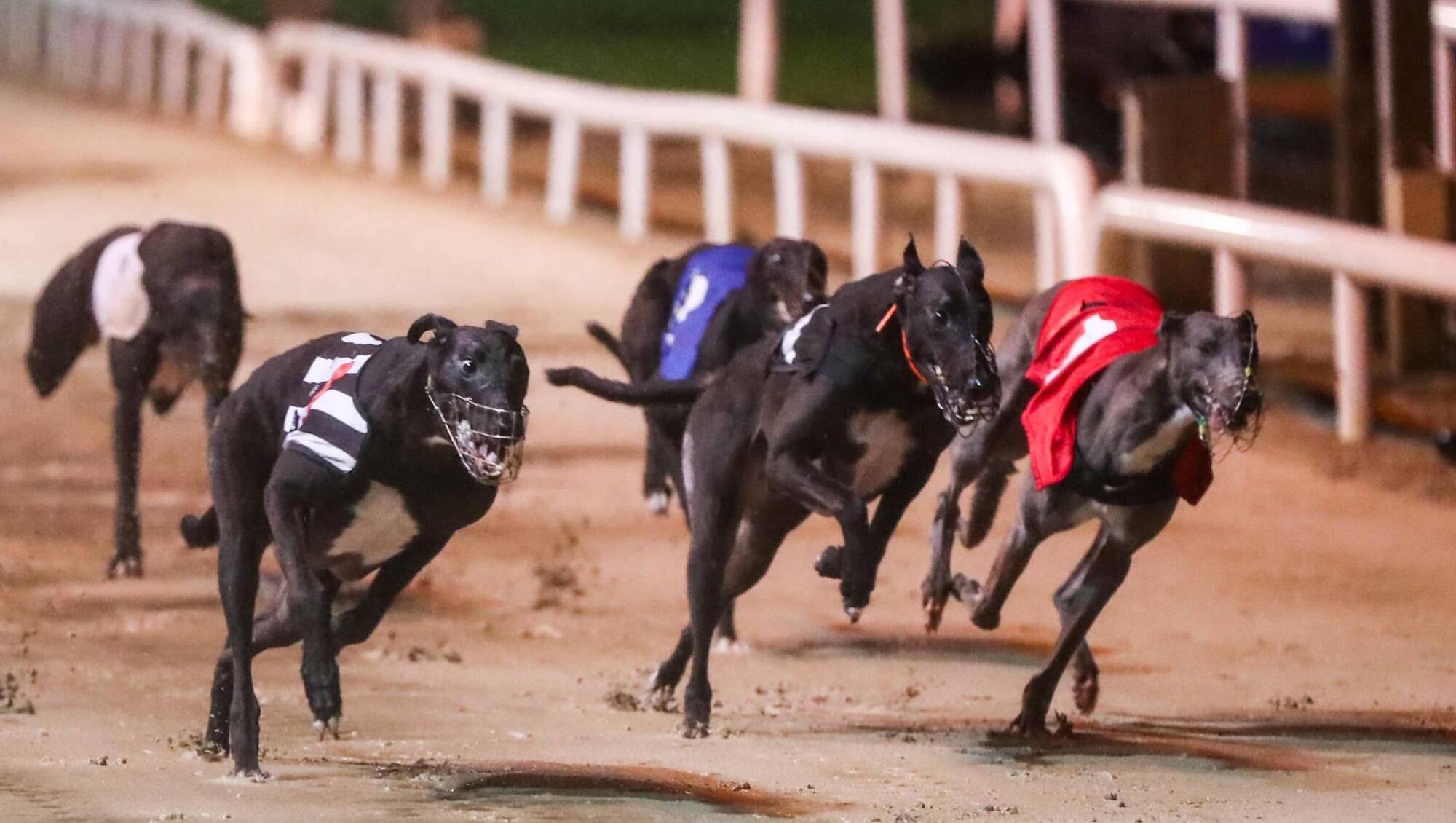
In the wake of the publication of a critical report by the Parliamentary Budget Office (PBO) last week, which suggested that a fresh economic appraisal of the importance of the greyhound industry to the Exchequer is required, Mr Lucey said he believes the sport is worth 'probably close to €250m or €260m' each year. File picture: INPHO/Nick Elliott
The body responsible for the regulation of greyhound racing in Ireland says it doesn't know the cause of death for the 3,000 dogs dying each year because the law says it does not need to be told.
Tim Lucey, chief executive of Greyhound Racing Ireland (GRI), told the Public Accounts Committee on Thursday that "we don't have a detailed breakdown of the reasons why greyhounds would be put to sleep".
He said the competent body for the notification of a greyhound death is a private entity, the Irish Coursing Club (ICC), and that any decision on legislation to require owners to tell GRI why an animal has died would be a matter "for our parent department" in agriculture.
Mr Lucey agreed that GRI's greyhound traceability system — introduced in the aftermath of a 2019 RTÉ documentary which alleged 6,000 dogs were culled per year for not being fast enough — can record a cause of death, but that this ability is not used, as "the notification to the ICC is the statutory notification of a death into the Irish Stud Book".
Asked again why the organisation would not seek to amend structures in order to see why each animal is dying, Mr Lucey replied that it is "not required" to notify.
He did acknowledge that at least 13,000 racing animals died over a five-year period from 2021 onwards.
Asked by People Before Profit TD Paul Murphy why three racing dogs die for every one that is rehomed, Mr Lucey said that "is a question that I'm not in a position to answer".
Further queried by Fine Gael's James Geoghegan if he could understand why dog-loving Irish people might consider the death rate among greyhounds to be "absolutely abhorrent", Mr Lucey replied: "I would understand, yes".
Despite this, Mr Lucey insisted that GRI's welfare programmes for greyhounds "while they're active is absolutely beyond reproach".
In the wake of the publication of a critical report by the Parliamentary Budget Office (PBO) last week, which suggested that a fresh economic appraisal of the importance of the greyhound industry to the Exchequer is required, Mr Lucey said he believes the sport is worth "probably close to €250m or €260m” each year.
He said that figure can be split between the €132m posited by a 2021 report by economist Jim Power and “a further €117m in terms of the economic spend into the economy in terms of rearing greyhounds and training them”.
As such, Mr Lucey said the annual funding of €20m delivered to the industry each year via the Horse and Greyhound Fund is “very justified in terms of the economic return". He said the person best placed to defend "the robustness of the Power analysis" would "perhaps be Jim Power".
He claimed there were inaccuracies contained in the PBO report — which had contrasted a drop in attendances at race meets of 45% against Exchequer funding comprising 46% of GRI's total revenue. Asked what those inaccuracies were, Mr Lucey said they relate to "the differentiation between paying and non-paying attendees" at greyhound tracks.
Official with the Department of Agriculture, Colm McKiernan, meanwhile, told the committee that a new economic analysis of the greyhound industry would be "timely" given the recent release of the PBO report.

CONNECT WITH US TODAY



Be the first to know the latest news and updates