ECB set to hold rates as eurozone slows down despite Irish lift
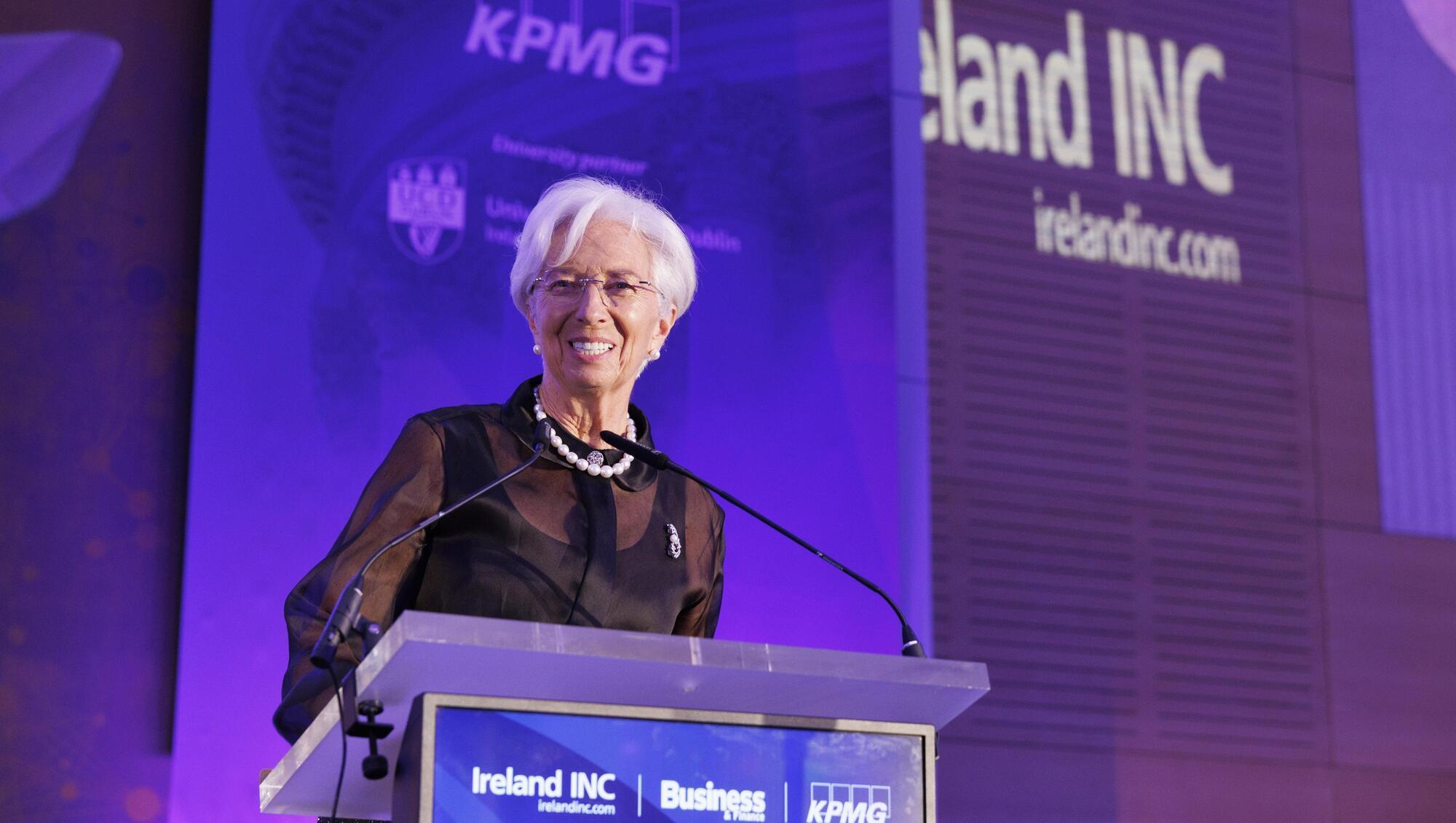
ECB president Christine Lagarde. The ECB is likely to hold rates amid fears of waning economic momentum. Picture: Andres Poveda
Waning economic momentum is one reason the European Central Bank will probably hold off from raising interest rates for the time being.
While much of the region’s attention is trained on France’s fiscal and bond-market woes, data due on Friday will also reveal a slowdown in euro-zone growth alongside a less pressing need for more action on inflation.
Read More
A Bloomberg poll suggests third-quarter expansion moderated to 0.2% from a blowout 0.6% jump in the second that was boosted by Ireland's bumper result. Separate surveys, meanwhile, show a clear upward inflation shift is lacking in October in the bloc’s four biggest members.
Looking ahead, the resilience that’s characterised Europe since the Iran war erupted may be wavering, with business activity starting to flag. While the continent is still holding up well, Simona Delle Chiaie, chief euro-area economist at Bloomberg Economics, sees reason for caution.
“The bigger question is what comes next,” she said. “With inflation remaining high and financial conditions tightening sharply, downside risks to growth are mounting.” Output between July and September was hit by factors like summer heatwaves, low levels in key waterways, and surging global bond yields. The backdrop has worsened since as France faces mass protests and doubts over its public finances.
With the country’s private sector shrinking in October, Carrefour warned that nationwide looting will weigh heavily on its performance. The supermarket operator’s shares registered their worst week since the global financial crisis.
Germany, the region’s No. 1 economy, is faring better after years of struggles thanks to huge government spending. Even so, the third quarter likely saw stagnation, according to the Bundesbank.
Inflation, which appears destined to reach 4% before the year is out, is more mixed this month. That’s partly down to a German fuel-tax rebate, though analysts also anticipate a moderation in Spain’s reading.
The upshot for economists is the ECB only lifting its deposit rate for a third and final time in December rather than this week, when it will be left at 2.5%.
Some remain upbeat on growth. BNP Paribas thinks Europe’s resilience continued in the third quarter, if volatile Irish data is excluded, thanks in part to low unemployment. Germany’s central bank envisages “noticeable” expansion to come.
But clouds are gathering, according to Jens Eisenschmidt, chief European economist at Morgan Stanley, who lists energy shortages among potential perils ahead.
“There doesn’t seem to be a quick solution to the energy crisis in the short term and, given the low gas-storage levels in Germany, we may even have to consider the risk of rationing if there’s a cold winter,” he said.
Bond markets are another factor to consider. In France alone, the premium investors demand to hold 10-year debt over Germany has reached levels last seen in Europe’s debt crisis.
ECB President Christine Lagarde said this month that yields have risen “notably” since September’s meeting, a shift that will slow growth and reduce pass-through of high energy costs to the economy.
Dismissing any talk of a debt crisis, Italian central-bank Governor Fabio Panetta on Thursday nevertheless agreed that the situation will result in a “drag on growth.” With all that in mind, policymakers in Frankfurt will want to sound less hawkish than they did at September’s meeting, according to Bank of America.
“Financial conditions remain tight and look likely to tighten more, spreads keep widening, and political developments in France are exacerbating these pressures,” economists led by Ruben Segura-Cayuela said. The ECB “will need to focus more on the growth consequences of current developments than it has in the recent past.”
Bloomberg

CONNECT WITH US TODAY



Be the first to know the latest news and updates