Government policy is pushing small Irish retailers to the brink
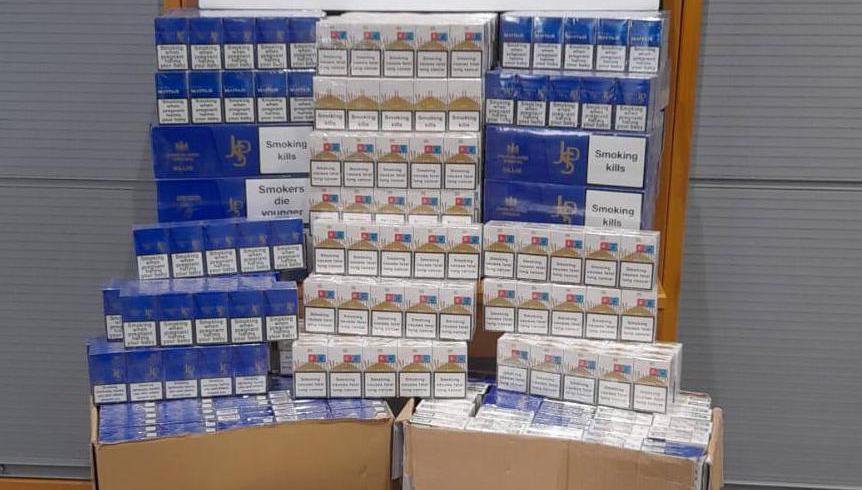
Revenue estimated the notional tax loss from illegal cigarettes at €648m in 2025, up from €550m the previous year.
I have been a retailer for 54 years, and I cannot remember a time when Government policy made it this difficult to run a small shop in Ireland.
Across Ireland, retailers are being squeezed by rising costs and falling footfall, difficulties that are compounded by a booming black market that is drawing customers away from local shops.
The Government’s decision to add another €1 in excise duty to a packet of 20 cigarettes is unfathomable. Higher prices do not mean people quit smoking. Instead, consumers find cheaper sources abroad or through illegal sellers, meaning criminal networks profit and legitimate businesses lose trade. With some packets now costing more than €20, is it any surprise that customers are being pushed into the arms of smugglers?
But the damage goes much further than the loss of a tobacco sale. The local shop is often part shop, part service centre and part meeting place. As well as groceries and everyday essentials, many provide services that people rely on, from parcels and bill payments to electricity and mobile top-ups, while some also provide postal services. They provide local jobs and a place where people meet their neighbours and remain connected to their community. When one of these shops disappears, services disappear with it and people can be left travelling further for basic things they once had on their doorstep. That is particularly hard on older people and those living in more isolated areas. Government talks about supporting rural Ireland, yet it continues to pursue policies that make it harder for the businesses helping to keep those communities functioning to survive.
And the Government cannot say it wasn't warned. Before Budget Day, polling commissioned by Retailers Against Smuggling found that 43% of consumers would look outside Ireland for tobacco if prices increased again, compared with just 19% who would continue buying from Irish retailers. We shared these findings with the Government, but it went ahead with the sharp €1 increase anyway.
All of this comes at a time when the economics of running a small shop are already getting harder. Newsagents, convenience stores and forecourts on main streets and in villages across Ireland face sustained increases in wages, energy bills, insurance and regulatory compliance costs. An annual €1,800 licence fee for selling tobacco and vaping products adds another burden for each premises, introduced without any meaningful consultation and dramatically increasing costs for retailers, a concern also raised by the Government’s own Cost of Business Advisory Forum.
When you run a shop, there is not a single bill you can ignore until business picks up. Wages, electricity, rent, insurance and supplier invoices all have to be paid, whether ten customers come through the door or a hundred. There is little room to absorb another hit to sales, and for some small shops the difference between staying viable and cutting hours or closing can be painfully small.
And when we lose a customer, we rarely lose just one sale. Someone coming in for tobacco may also pick up groceries, a newspaper, confectionery or other everyday essentials. If they stop coming through the door, all of that spending goes with them. Lose enough of that footfall and eventually the numbers simply stop adding up.
Meanwhile, the illegal market continues to grow. There was a striking coincidence on Budget Day itself. Revenue seized over ninem illegal cigarettes at Rosslare Europort, representing a potential Exchequer loss of almost €7m. Such seizures are welcome, and Revenue deserves credit for its enforcement work. But retailers see illegal products circulating widely and believe far more is entering the country than is being intercepted.
The taxpayer is losing out too. Revenue estimated the notional tax loss from illegal cigarettes at €648m in 2025, up from €550m the previous year. When illegal rolling tobacco is included, the loss is even more substantial.
I have never seen the playing field so uneven. Retailers pay their taxes, employ local people and follow the rules. Criminal sellers do not.
This increasingly looks like a bad deal for everyone except the criminals. Legitimate retailers lose customers, the Exchequer loses revenue and communities risk losing the local shops and services they depend on. Meanwhile, the illegal market is handed an ever-greater price advantage.
It is time for Government to rebalance its approach. Freeze further tobacco tax increases, strengthen enforcement at ports of entry and target the networks supplying illegal products. Small retailers are already fighting hard enough to remain viable. Government policy should not be making that fight harder.
Benny Gilsenan is a retailer in Dublin’s North Inner City and National Spokesperson for Retailers Against Smuggling

CONNECT WITH US TODAY



Be the first to know the latest news and updates