Traders on alert as contagion fears return to Europe's bond market
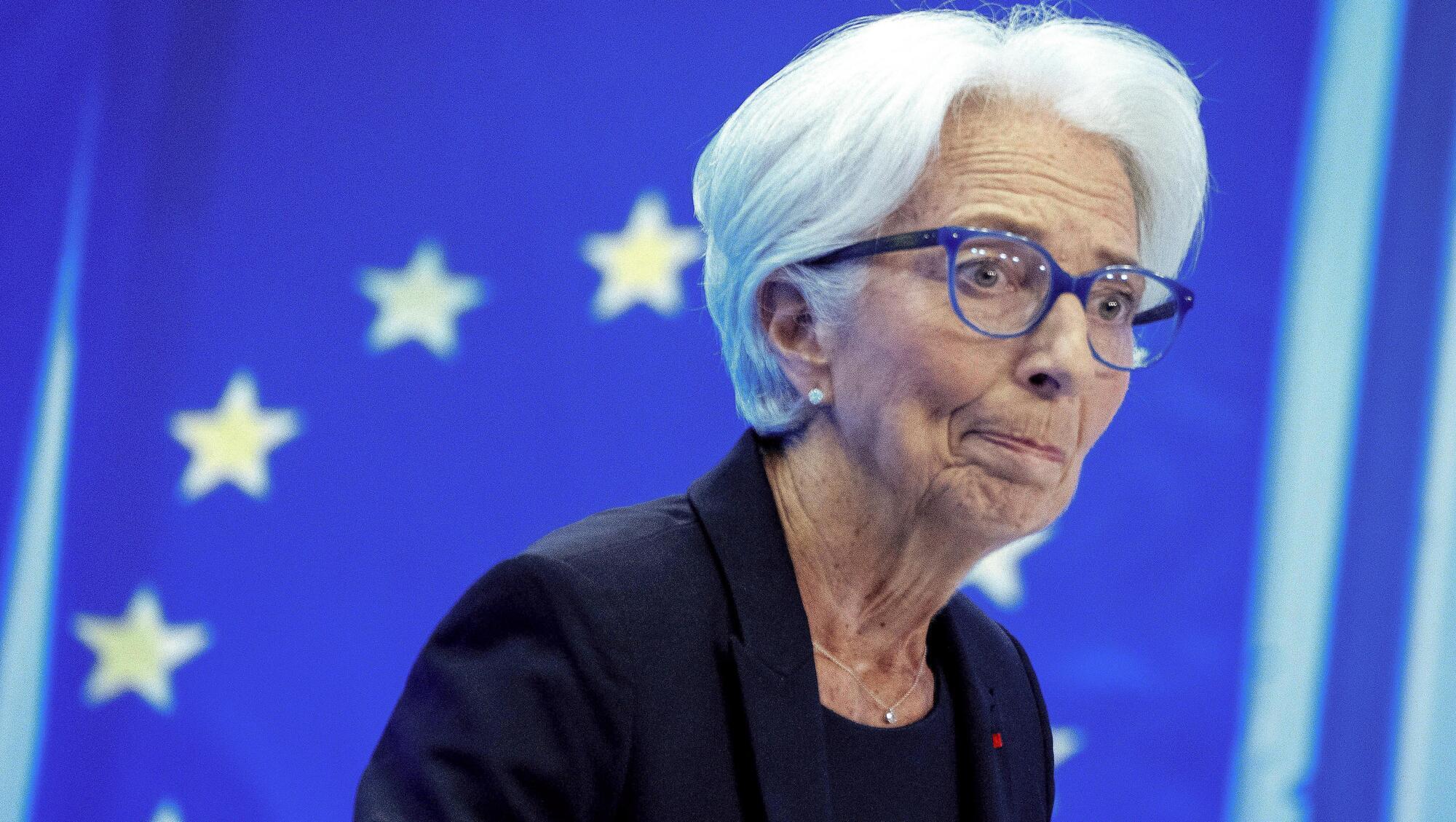
If the signs of contagion intensify, European Central Bank president Christine Lagarde may have to consider pausing its quantitative tightening programme.
Traders are on the alert for signs of contagion in Europe’s government bond market after a sell-off triggered memories of the region’s debt crisis 15 years ago.
Up until last week, the bonds of euro-area members had largely retreated in lockstep for much of the year — the result of an energy shock that fuelled inflation fears and forced the bloc’s central bank to hike interest rates. France was the clear underperformer as budget squabbling and a contentious election added to the global headwinds.
On Thursday, something snapped. French bonds tumbled further, along with the likes of Italy, Belgium, and Greece, recording some of their biggest spread moves in years. Germany, however, withstood the pain among big economies as investors piled into the traditional safe haven, a search that also boosted recently weak US Treasuries.
A scenario in which financial stress in one sovereign bond market infects others, even when it looks less warranted, generates the kind of chaotic price moves that worry central bankers, forcing them to step in during severe scenarios. It was a feature of the eurozone’s debt crisis of 2011-2012.
“We are starting to see first signs of contagion,” said Jeff Mueller, co-head of fixed income at Morgan Stanley Investment Management. “If the erratic price action observed on October 1 continues for some time, this may draw some attention from policymakers.”
France has plenty of company in the eurozone when it comes to excessive borrowing, large budget deficits, and fierce political opposition to economic reforms. The heavy debt load of countries such as Italy and Belgium makes them particularly vulnerable in a world of higher interest rates.
To be sure, spreads for the most part still remain relatively low across the continent and the route largely stabilised on Friday, with longer-dated bonds, in particular, recovering. But the pace and extent of the swings have left investors on edge and on the lookout for further signs of disorder.
Ahead of the weekend, market chatter focused on a possible response from the European Central Bank (ECB). One option would be for officials to send a stronger signal that they’ll be more cautious about lifting rates further. Traders have already started paring wagers on further hikes, with swaps pointing to three increases by the end of next year compared with four earlier in the week.
If the signs of contagion intensify, the ECB may consider pausing its quantitative tightening programme, which stops the reinvestment of proceeds from maturing bonds it holds, according to Jamie Searle, rates strategist at Citigroup Inc. That would effectively reduce the supply of bonds that must be absorbed by price-sensitive investors.
Most of the market’s focus has been on the ECB’s Transmission Protection Instrument (TPI), an unlimited bond-buying programme created in 2022 to “counter unwarranted, disorderly market dynamics”. It’s never been used, though its existence is considered a key reason why a full-blown bond crisis is much less likely now compared with 15 years ago.
For France, the TPI would almost certainly be out of reach given its problems are largely self-inflicted. Bank of France governor Emmanuel Moulin has warned his compatriots against expecting a “miracle solution” to come from the ECB. At the same time, it could be deployed if the sell-off starts to look increasingly untethered in other parts of the market.
“If the French election outcome results in contagion to other markets, the ECB may consider supporting them,” said Rohan Khanna, head of European rates strategy at Barclays. “There are no easy choices for the central bank.”
The week’s wild swings were attributed, in part, to the growing footprint of hedge funds in government bond markets. In particular, so-called carry trades, where investors harvest the higher yields available on Italian, Spanish, or French bonds have grown in popularity, particularly on short-dated debt. While those trades can prove profitable when volatility is low, market watchers said the ructions of the past week led to a broad washout of leveraged positions — exacerbating the sell-off.
“Trust me, the ECB is on top of this — they’re talking to market participants all the time, including hedge funds,” said Marion Le Morhedec, global chief investment officer of fixed income at Fidelity International.
“They really want to understand what’s happening and they are ready to do whatever it takes to avoid any big blow-ups.”
Bloomberg


CONNECT WITH US TODAY



Be the first to know the latest news and updates