Households come under pressure as grocery price inflation rises again after four months of declines
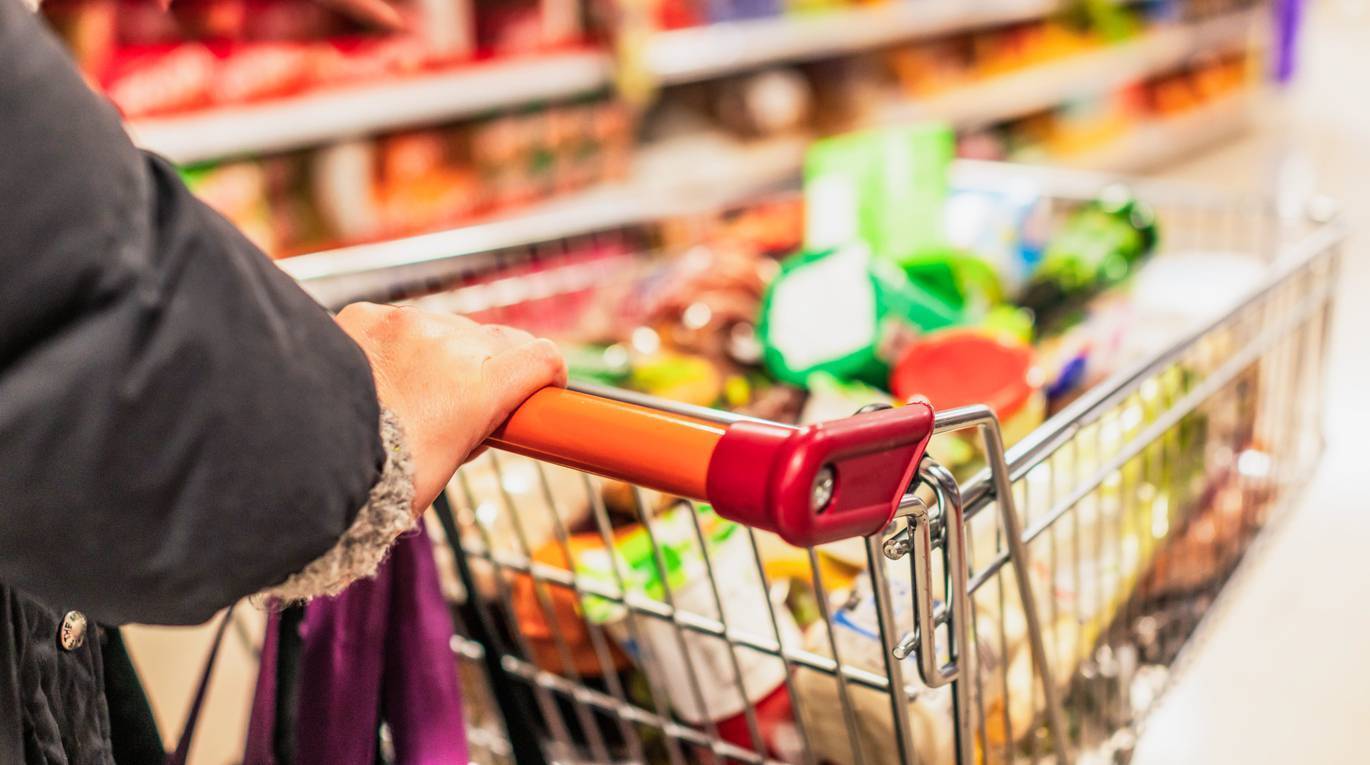
Close up of a woman's hand on a supermarket trolley, filling up with products during a weekly shop.
Households are facing renewed pressure on their finances this autumn as grocery price inflation rose for the first time in five months, adding to the rising energy bills and the prospect of higher mortgage repayments.
Like-for-like grocery prices rose 4.28% in the 12 weeks to September 6, up from 3.87% in August, according to Worldpanel by Numerator, ending four consecutive months of easing. Inflation had fallen steadily from 6.7% in April, having peaked at 6.82% in January, and August's rate had been the slowest in more than a year.
According to the analysis, shoppers are still spending, with take-home grocery sales up 5.5% on last year, but growth has slowed from 6.3% in July.
The rise in food costs comes as energy prices, driven higher by the war between the US and Iran, continue to climb. Energy prices rose 11.8% in the year to August, according to the Central Statistics Office, while overall consumer prices were up 3.4%.
A number of energy utilities have announced price increases. Around 296,000 SSE Airtricity customers face a price rise of about 10% from October 5, adding an estimated €310 a year to a typical dual-fuel bill. Increased network charges approved by the energy regulator will add a further €41.25 a year to the typical electricity bill from October 1.
Some 328,273 households were already in arrears on their electricity bills in May, according to the Commission for Regulation of Utilities. Health insurance is also going up, with VHI and Laya Healthcare raising premiums by an average of 2.75% and 2.7% respectively from October 1.
Mortgage holders are also feeling the effects. The European Central Bank raised interest rates for the second time this year earlier this month, lifting its key rate to 2.5% in a bid to curb energy-driven inflation.
Tracker mortgage holders face an immediate increase in repayments, while those on variable rates could follow. So far, only non-bank lenders have raised rates, with the main banks yet to move.
Consumer sentiment remains well below its long-term average, with 42% of consumers naming the cost of living as the biggest issue facing the economy, according to the Credit Union Consumer Sentiment Index.
According to the analysis by Worldpanel, back-to-school spending drove a 2.4% increase in supermarket visits. Irish shoppers seeking better value spent €820m on promotional lines over the last 12 weeks, giving promotional products a 21% share of the market.
"Shoppers have kept a keen eye on value throughout the summer, with promotional sales now accounting for nearly a quarter of spend, up 8.5%. It's clear that even amid the good weather and busier trolleys, Irish shoppers haven't lost sight of getting the best deal for their money," Emer Healy, Business Development Director at Worldpanel by Numerator, said.
Dunnes Stores maintains its position as the country's top supermarket with a 24.3% market share and year-on-year sales growth of 8.2%. It was followed by Tesco on 24.1%, SuperValu on 19.2%, Lidl on 14.7%, and Aldi on 10.8%.

CONNECT WITH US TODAY



Be the first to know the latest news and updates