Ireland’s nightlife is changing — but the laws governing it are stuck in the past
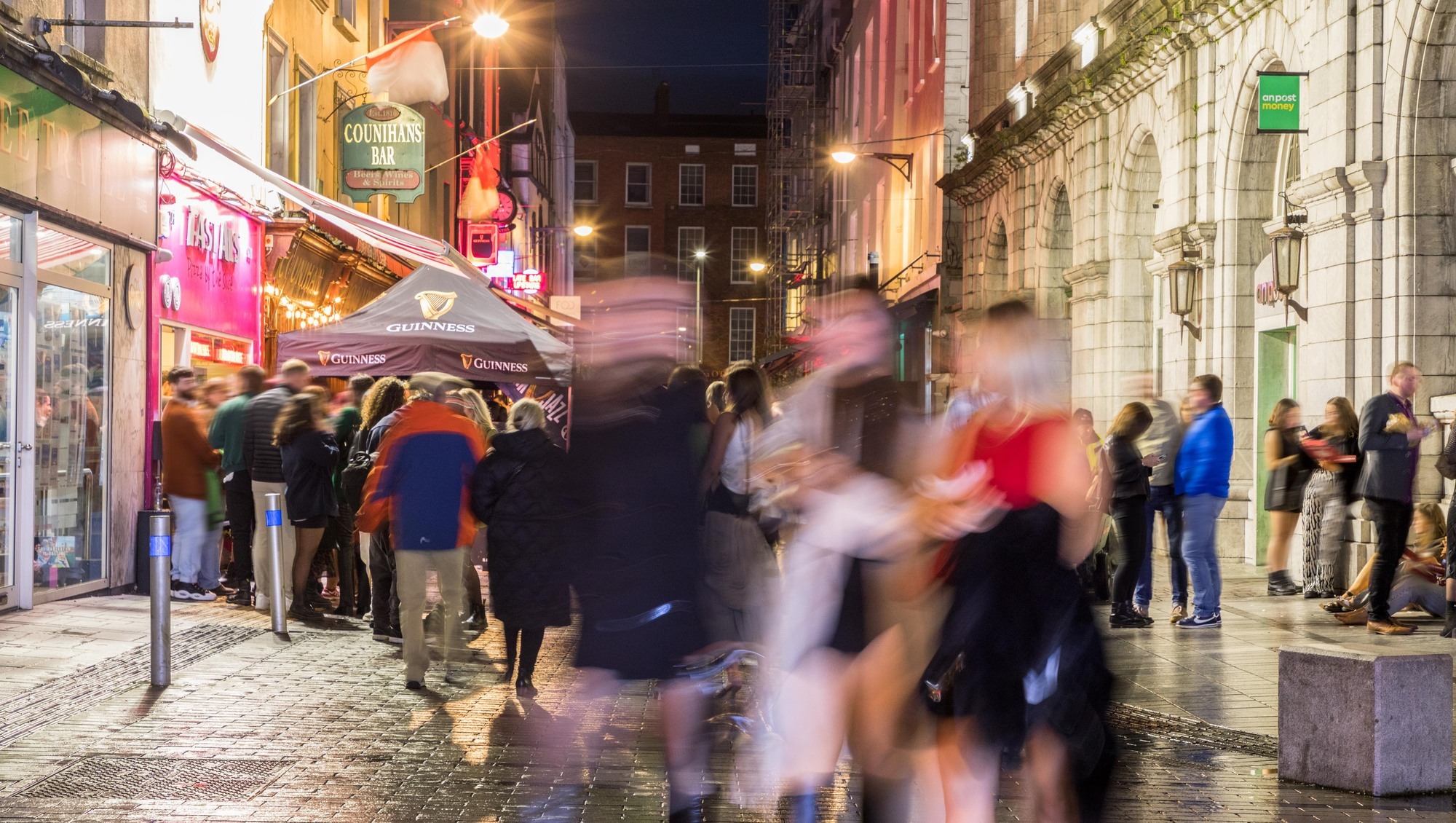
Even larger cities such as Cork, Galway and Limerick now have minimal venues for late-night socialising.
Culture Night took place across Ireland on Friday night. As the September nights close in, it is one of the first events in the autumn and winter calendar which encourages more people onto the streets of towns and cities outside of the normal daytime hours.
Other events over the coming months will include Halloween parades, Christmas markets and festivals like the Cork Jazz and the Dublin Fringe
However, the 25th annual Culture Night took place against the backdrop of a further decline in the traditional mainstay of the nighttime economy, Irish bars and nightclubs.
This week, it emerged late bars and nightclubs operated a combined 30,651 extended nights last year, compared to 31,601 in 2024. It is part of a larger decline: there were almost 23% more late-night openings in 2018, with 37,597 nights across the country.
A landmark report last year from the Give Us the Night campaign said just 83 nightclubs remained in Ireland, down from 522 in 2000. An 84% decline. Most regional towns in Ireland which previously had two or three late-night venues now have none.
Even larger cities such as Cork, Galway and Limerick now have minimal venues for late-night socialising.
Read More
The Licensed Vintners Association (LVA), which published the figures, said the trend was moving in one direction and the number of late bars and nightclubs providing late-night socialising continues to plunge in Ireland.
On behalf of its members, it has hit out at the bureaucracy involved in seeking late-night exemptions and delays in updating very old licensing laws, some of which date back almost 200 years. Despite having the youngest population in Europe, Ireland has some of the oldest nightlife laws in the world.
In 1935, even before the modern Irish constitution was adopted, the Public Dance Halls Act was passed, and it remains a dominant piece of legislation governing how venues operate almost a century later.
This was not a piece of legislation designed to simply regulate the opening hours of bars and dance halls. It was in response to a moral panic at the time in the early years of an Independent Ireland which sought to put control over social life in Ireland. It joined a suite of other laws at the time, such as the Censorship of Publications Act and the Illegitimate Children Act.
The specific trigger for the Dance Halls Act, ironically, was the anti-jazz campaign, spearheaded by the Gaelic League and enthusiastically supported by the Catholic Church. Jazz, arriving from Black America via Britain, was viewed as foreign, morally unserious, and wildly popular.
The act required a special dance licence for any public event involving dancing, with supervision transferred to An Garda Síochána. It has been used strategically ever since to restrict nighttime gatherings.
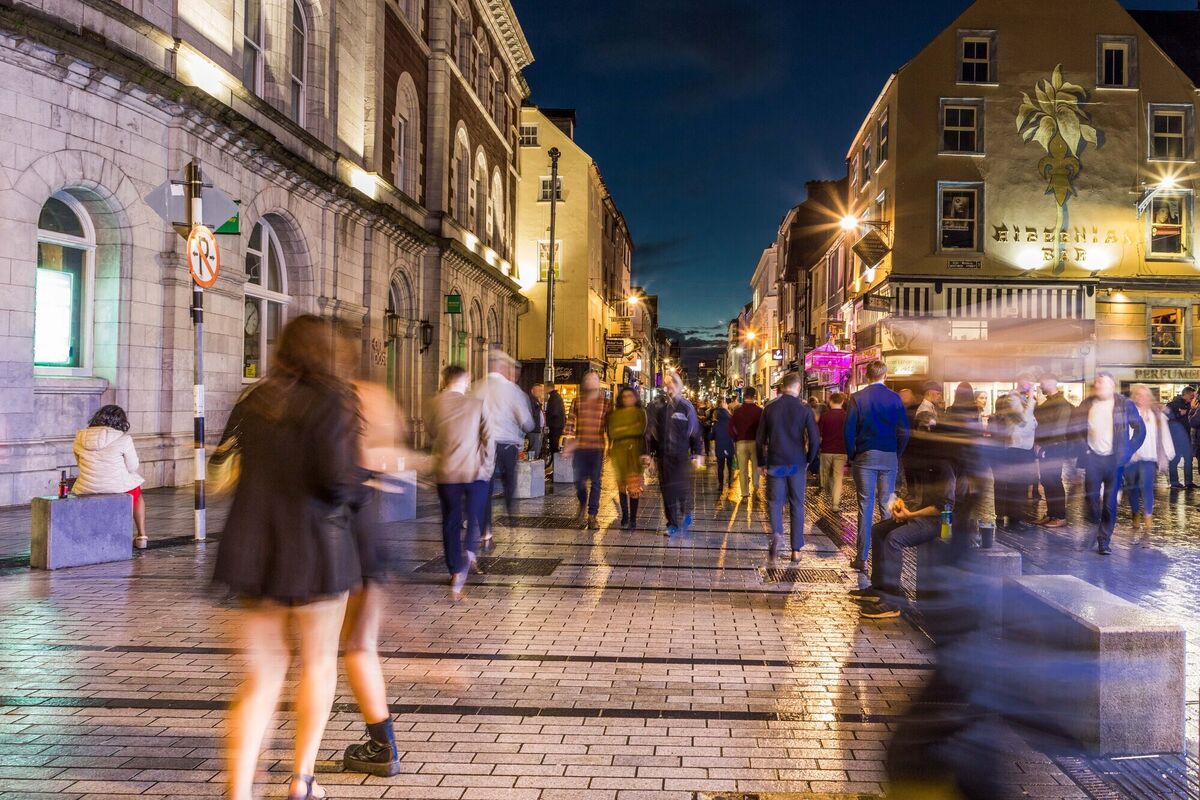
That act still governs Irish nightclubs today. More than 90 years after Éamon de Valera signed it into law, it remains on the statute book. The Government's own October 2024 progress report on the Night-Time Economy Taskforce lists its repeal as an intention within ongoing licensing reform. It has not yet been repealed.
While the law failed in its efforts to curtail the spread of jazz music, it continues to have a significant impact on how venues operate in Ireland today.
The LVA said that in 2026, a late bar or nightclub wishing to extend its licensing beyond regular licensing hours must seek a special exemption order (SEO) from the courts for each extended night.
The SEO then enables the late bar or nightclub to operate for an additional two hours on the specific night in question. This means they can serve up to 1.30am on Monday to Thursday, or up to 2.30am on Friday and Saturday. Sunday closing with a SEO in place is fixed for 1am.
These SEO's do not come cheap. For every single night they seek one, late bars and nightclubs must pay an additional €205, plus solicitor fees. This sum consists of €150 in court fees and €55 in excise.
So, an average late bar or nightclub that seeks to operate late three nights per week has to pay out just under €32,000 (plus legal fees) each year.
"These late-night options are declining year on year. A significant factor behind that is the extremely high cost of doing business," LVA chief executive Donall O’Keeffe said. "That, in turn, is driven by the cost associated with securing an SEO to keep doors open late."
Sunil Sharpe, DJ and spokesperson for Give Us The Night, said the SEO system was being used to fund the Courts Service, while also exercising unnecessary control over late-night venues in Ireland.
"There were 30,651 SEOs issued in 2025, compared with 93,247 in 2005. That is an extraordinary drop-off in activity over 20 years and shows just how dramatically the use of this system has declined. Alongside a reduction in venues nationwide, we’ve also seen a major hollowing-out of midweek activity and Sunday nights," he said.
None of what the LVA and Give us the Night have said is news to the Government. It has known for some time and has planned changes to licensing laws. The Sale of Alcohol Bill, first promised as a wholesale modernisation of Ireland's licensing laws, included the repeal of the 1935 act as one of its central commitments.
The bill was welcomed, consulted upon, drafted and then quietly reduced in scope, rebranded as the Night-Time Economy Bill, described by its own advocates as "a miniature version of the larger bill".
The Department of Justice's own progress report listed the repeal of the Public Dance Halls Act 1935 as an intention "in progress". Three years after a Government taskforce identified it as essential, the act de Valera introduced to stop people dancing remains the legal framework within which every nightclub in Ireland operates.
Give Us The Night has been campaigning on this since 2004, and put it plainly in its 2025 report: The Government's continued failure to act "highlights a persistent bias against the sector that must be addressed".
Meanwhile, the legislation drafted to replace the 1935 act has been, in the organisation's own words, "completed but quietly shelved by the new Government, with no clear explanation or timeline for action."
The LVA concurs. "The entire late-night opening process is meant to become much simpler, once the missing-in-action Sale of Alcohol Bill is put in place. With that legislation continuing to be put on the long finger by the Government, the least they can do is reduce some of the red tape costs they themselves are imposing," Mr O'Keeffe said.
"We were told almost four years ago by the Department of Justice that this system would be replaced by annual permits, yet we are still waiting. At this point, we have to ask whether the Department of Justice is the right department to oversee venue licensing,"
Mr Sharpe said. "In 2026, it now feels like the completely wrong fit for the department. Hand it over to Culture or Enterprise, who understand the nighttime economy, and let us get on with it."
In response to the LVA's concerns, the Department of Justice said the Programme for Government commits to updating the country's licensing laws. "The timeframe for progressing intoxicating liquor legislation will be determined by the Government in due course. The Minister will be meeting the LVA shortly to discuss their concerns."
They also pointed to the 50% reduction in the cost of obtaining a Special Exemption Order in 2022, and said the associated Excise Duty was reduced by 50% from €110 to €55.
The failure to update licensing laws comes against a backdrop of other efforts by the Government and local councils to improve their nighttime economies.
In September 2021, the government published the Night-Time Economy Taskforce Report and has allocated over €11m in current funding and €2m in capital funding to support what it describes as "a vibrant, inclusive and diverse nighttime economy".
Nine nighttime economy advisers were appointed across the country, in Cork City, Dublin, Galway, Kilkenny, Drogheda, Longford, Sligo, Limerick and Buncrana.
The Night-Time Economy Support Scheme, launched in 2022, distributed funding to 300 venues to run cultural events during off-peak hours. More than 2,000 events took place across the country, 252 of them outside cities entirely — live music, DJ nights, theatre, comedy, dance, literature, photography. The majority of venues that received funding reported they would continue running off-peak entertainment after the scheme ended.
In Cork, Fiona Collins was appointed as Cork City's Night-Time Economy Advisor working with the Council to deliver a series of initiatives diversifying what the city offers between 6pm and 6am. Coffee House Lates brought twelve independent cafés into the evening economy, designed explicitly to expand alcohol-free options after dark. First Fridays opened Elizabeth Fort, Blackrock Castle Observatory and the Butter Museum on the first Friday of each month from April to September, drawing people into the city centre through culture rather than consumption.
Cork has also developed a full Night-Time Economy Strategy, setting out almost 40 actions covering safety, culture, transport, accessibility and city animation. The Council is candid about what the pilot has shown: it has broadened the city's after-dark offer and demonstrated real appetite for a more diverse nighttime culture. It has also, the Council acknowledges, highlighted ongoing challenges around sustainable funding, late-night transport, and encouraging businesses to extend their hours.
However, it placed licensing reform, insurance costs, spaces for grassroots artists, transport and safety amongst the "key challenges which remain". Compared with the original 2021 taskforce report, the gulf between ambition and delivery is considerable.
Despite all the positive progress, it does not change the fact that at 2.30am, when Berlin is four hours from closing and Paris is five, the lights come on in every Irish nightclub from Donegal to Kerry, that's if they have such a venue.
The comparison with other European cities is notable. Most have full-time nighttime czars or mayors with specific mandates for improving the city's nightlife.
The concept of the night mayor emerged in Amsterdam in 2012, born of a specific crisis. The city's legendary club scene, which had sustained a global reputation for decades and contributed hundreds of millions to the local economy, was being slowly strangled by noise complaints, licensing disputes and the absence of any single voice capable of representing nighttime interests in planning and policy discussions.
The city appointed Mirik Milan as its first night mayor, who described the role as being "a diplomat between the day world and the night world". His office mediated disputes between clubs and residents, worked with urban planners to designate entertainment zones where noise standards were set differently from residential areas, and lobbied for licensing reform that reduced the bureaucratic burden on operators.
The results were measurable. Amsterdam's club scene stabilised. New venues opened. The city retained its position as one of Europe's premier nighttime destinations. The economic contribution of the nighttime economy, estimated at about €1bn annually for Amsterdam alone, was protected rather than eroded.
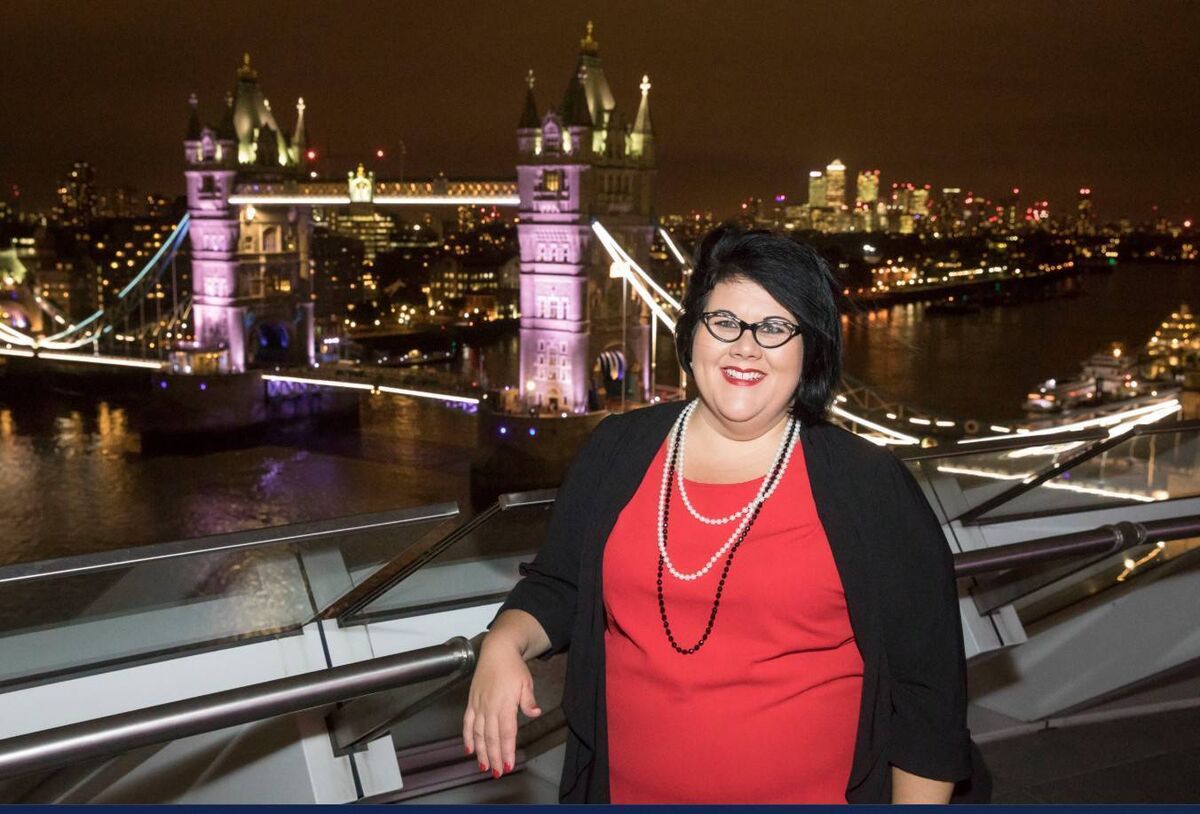
London followed in 2016, appointing Amy Lamé as its first night czar under mayor Sadiq Khan. Her brief was broader: not just clubs, but the entire ecosystem of late-night culture, including music venues, theatres, restaurants, cinemas, late-night transport.
The night czar's office worked directly with the Metropolitan Police, Transport for London, and planning authorities to ensure nighttime economy considerations were embedded in decisions that had previously ignored them entirely.
Paris, Zurich, Vienna and a growing number of smaller European cities have followed variants of the same model
Give Us The Night, which has been making this argument since 2004, is direct about where the failure lies. "The nighttime economy is a dynamic, creative industry that needs a particular focus on costs of doing business, infrastructure and regulation," the group says.
"As long as this Government lacks a joined-up approach that takes all of this seriously, venues will continue to struggle and investors will be few and far between."
The vicious circle they describe is visible in the data: venues pass on their regulatory costs, nights out become expensive, attendance falls, venues close.
"While the Government has done more on some things than previously," the group acknowledges, "it is still not tackling the big issues or delivering on the major commitments it made back in 2021."
Those commitments were made in 2021. The Sale of Alcohol Bill was promised for 2023, then spring 2024, then summer, then autumn. It was split, reduced in scope, and after the November 2024 election demoted to the legislative category from which bills rarely emerge quickly. The 1935 Public Dance Halls Act, introduced by de Valera to stop people dancing, has still not been repealed.
Ireland has the youngest population in Europe but they must go home at 2.30am. Amsterdam stays open until dawn. Berlin never closes, and Glasgow goes until 4am.

CONNECT WITH US TODAY



Be the first to know the latest news and updates