Alan Healy: When money is no object, policy gets sloppy
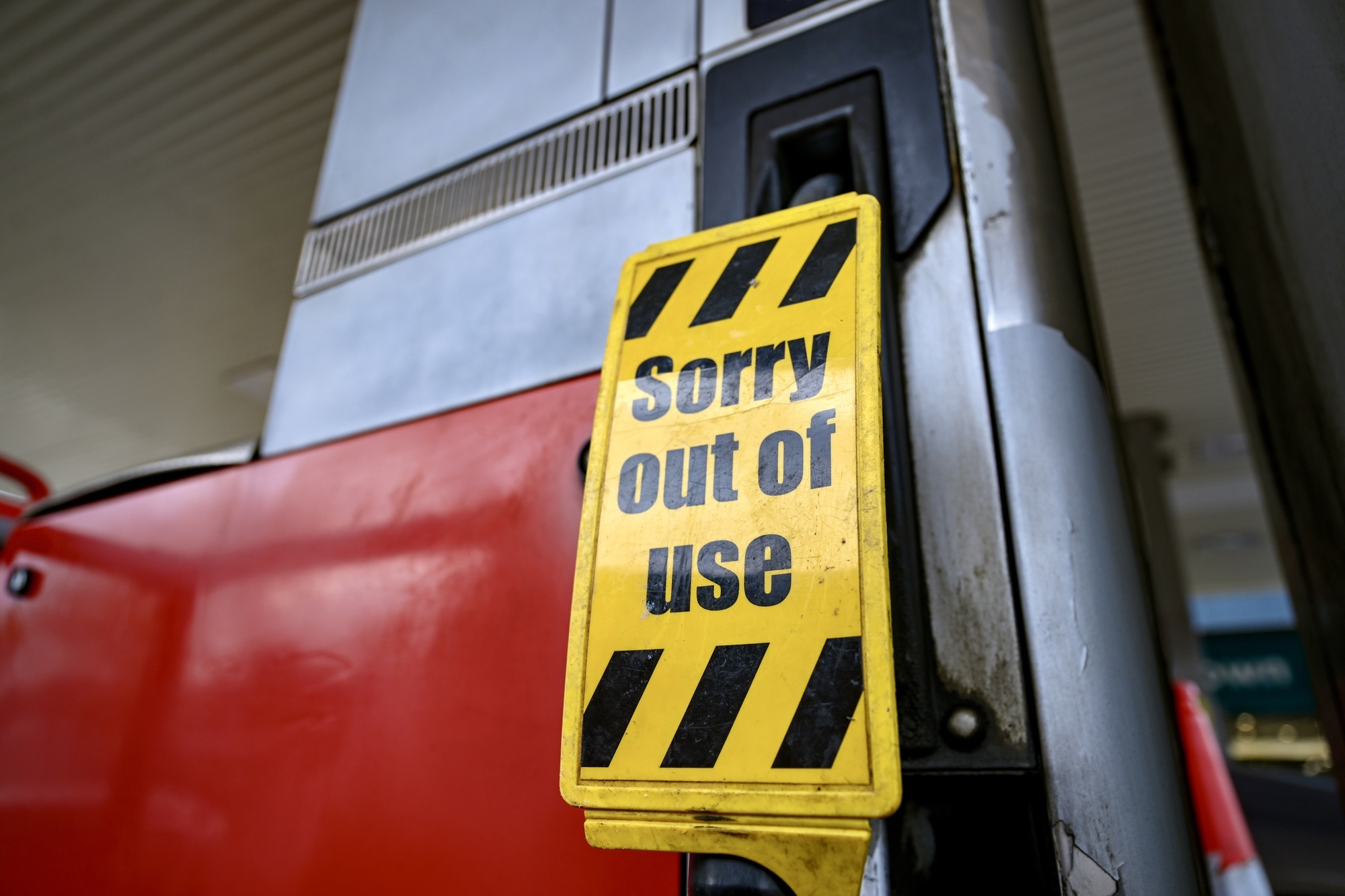
The Tanaiste has hinted that a decision to extend excise duty cuts on petrol and diesel could be taken by the Government to avoid a “cliff edge” for motorists. Picture Chani Anderson
The Tanaiste Simon Harris was in the Dáil this week, hinting that a decision to extend excise duty cuts on petrol and diesel could be taken by the Government to avoid a “cliff edge” for motorists when they expire on July 31.
Mr Harris said he accepts that “nobody can absorb a full 32c” increase in fuel prices, but said we “cannot ignore” that petrol and diesel prices have started to fall in recent days.
Despite the drop in fuel prices, as a sense of peace in the Middle East seems to have finally arrived, the government has fresh memories of the strength of the fuel protests earlier this year and the political fallout, which saw Michael Healy Rae resign his junior minister role.
If an extension of supports are confirmed, or a tapering of cuts introduced to ease any sharp price rise, it will add to the €750m across two packages which the Government put in place in quick succession
However, new analysis by the Economic and Social Research Institute (ESRI) has cast a critical eye over the support packages. It found that higher-income households gained almost twice as much from the package as lower-income ones. The bulk of a €440m intervention aimed at easing cost-of-living pressures on ordinary families flowed, disproportionately, to households that, arguably, needed it the least.
The ESRI did note that the package was progressive in the sense that the measures were more valuable to lower-income households as a proportion of income. However, the finding on the absolute value of the measures is "disappointing". If the objective was to protect vulnerable households from an energy price shock, there were better tools available.
The ESRI said so in the spring. The welfare system can be targeted. Universal energy credits, while imperfect, are at least more progressive than blanket cuts in fuel duty. An across-the-board excise reduction is the bluntest instrument in the box.
So why reach for it? The ESRI offers a diagnosis that raises much larger concerns for the Government and the Irish economy. They suggest the choice may not have been a deliberate political calculation so much as the product of weak fiscal discipline combined with external pressure. The fuel protests were loud. The money was there. The path of least resistance was taken.
It suggests that with State coffers filled through corporation tax receipts, the instinct, when any issue arises, is to reach for the chequebook quickly, broadly, without too much targeting. And that is becoming a habit that will cost Ireland later.
The Government did have an obligation to act and act quickly during the fuel crisis. Despite the widespread protests that led to a shortage and queues at filling stations, the surge in petrol, diesel and home heating oil placed a huge burden on households in a very short space of time. The public demanded and appreciated the rapid response, but the results, the ESRI points out, were not optimal.
Better-targeted intervention requires political courage and administrative will. And this will matter more and more. The headline public finances look healthy with a projected surplus of €9.2bn this year. But the numbers which sit below are concerning. The Department of Finance itself estimates that up to €20bn of this year's corporation tax, out of a total of €35.3bn, is windfall in nature. Without them, our surplus transforms into an almost €11bn deficit.
Just three companies, according to the Irish Fiscal Advisory Council, account for nearly half of all corporation tax revenue. The foundation on which Irish public finances currently rest is narrower and more precarious. In normal circumstances, a variety of factors act as a brake or caution on government spending. These include the bond markets, which act to constrain fiscal policy, with fiscal rules adding a further constraint.
In Ireland right now, these constraints are not operating with any real force, and the rules are not biting. The markets are not worried. So when Simon Harris weighs up whether to extend excise cuts that are flowing disproportionately to higher earners, against the political cost of a cliff edge on August 1, the scales are not balanced as they should be.
The ESRI points to the upcoming public sector pay talks as another example where discipline may be lacking. It does not prescribe an outcome for the talks but notes that a higher ability to afford pay rises on the part of employers raises the bargaining power of employees. They also warn that public sector pay norms have spillover effects. In a tight labour market, raising wages in one part of the economy bids them up everywhere else.
The overall warning is that when the constraints disappear, the discipline tends to follow.
Ireland has been here before. The last time the money felt inexhaustible, the lesson was very expensive indeed.

CONNECT WITH US TODAY



Be the first to know the latest news and updates