ECB increases interest rates by quarter-point as Iran war fuels European inflation

A euro symbol statue at the headquarters of the European Central Bank. Picture: Bloomberg
The European Central Bank (ECB) has decided it can no longer ignore the monetary bloc's upswing in inflation, hiking its key interest rates for the first time in almost three years.
Following more than three months of war in Iran and soaring oil prices, the ECB raised its interest rates by a quarter-point to 2.25%, making it the first major central bank to respond to the ongoing conflict.
Inflation across the 21-country eurozone has already surpassed 3% - well above the bank's 2% target - with economic growth across the bloc also weak.
Like their peers in the Federal Reserve, ECB President Christine Lagarde had been buying time along with her governing council members in hopes that inflation figures represented a temporary jump. However, with little progress arising from peace talks between Iran and the US, many believe policymakers will have to hike rates again by the end of this year.
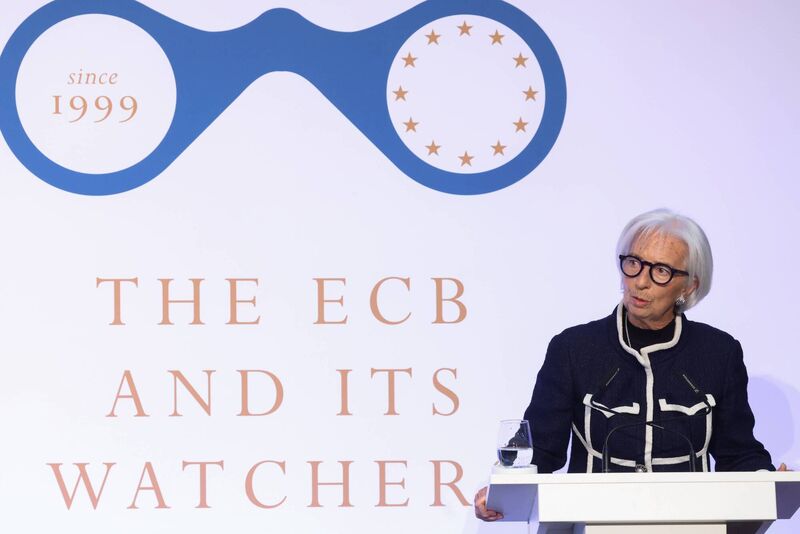
That would resemble the “measured adjustment” that the ECB president said may be necessary to respond to a large but not-too-persistent overshoot in inflation.
"The war in the Middle East is generating inflation pressures, and the decision to raise rates is robust across a range of scenarios mapping out how the shock might evolve and affect the medium-term outlook for the euro area," the ECB said on Thursday.
The bank now expects inflation to average 3% in 2026, 2.3% in 2027 and 2% in 2028.
The ECB said its outlook remains uncertain, with upside risks for inflation and downside risks for economic growth.
"The full implications of the war for medium-term inflation and growth will depend on the intensity and duration of the energy price shock, as well as the scale of its indirect and second-round effects."
Speaking on the decision, Michael Dowling of Irish Mortgage Brokers said: "Unfortunately, I expect rates to rise by another 0.25% in September and possibly a further increase of 0.25% in December."
"The impact of the rate increase is €13 per month extra per €100,000 owed. On an average mortgage of €300,000, the increase is €39 per month. Tracker mortgage holders, of which there are 100,000, will be immediately impacted," Mr Dowling told the Irish Examiner.
However, he said he did not expect any changes for the 100,000 variable rate customers in Ireland, adding that fixed rates will rise but not necessarily in line with the ECB.
"Banks will decide themselves what level of increase to pass on to their customers. Banks can also absorb some of these increases as they have significant levels of deposits where they pay little returns."
"40,000 customers are coming off fixed rates this year, so they need to review their options now," Mr Dowling noted.
Several economists have characterised the ECB's move as an "insurance hike," a precautionary step that could be reversed if price pressures fade. However, some have warned that the ECB risks tightening an economy that is already paying a high price for the Iran war.
"The current inflationary pressures are largely the result of a supply-side shock rather than excessive consumer demand," said Daragh Cassidy of Bonkers.ie
"So you could question how effective higher interest rates will be in bringing inflation back under control. But the ECB doesn't see it that way.
"In recent weeks, some of the smaller non-bank mortgage providers have already increased their rates. These lenders are more sensitive to changes in wholesale funding costs, as they rely more heavily on financial markets to fund their mortgage lending," Mr Cassidy told the Irish Examiner.
However, he said the main banks such as AIB, Bank of Ireland and PTSB, are less exposed because they fund a significant proportion of their lending through customer deposits.
"However, rate increases from these lenders later in the year can’t be ruled out, particularly if the ECB continues to tighten monetary policy."


CONNECT WITH US TODAY



Be the first to know the latest news and updates