ECB holds rates with Iran war’s impact still unfolding
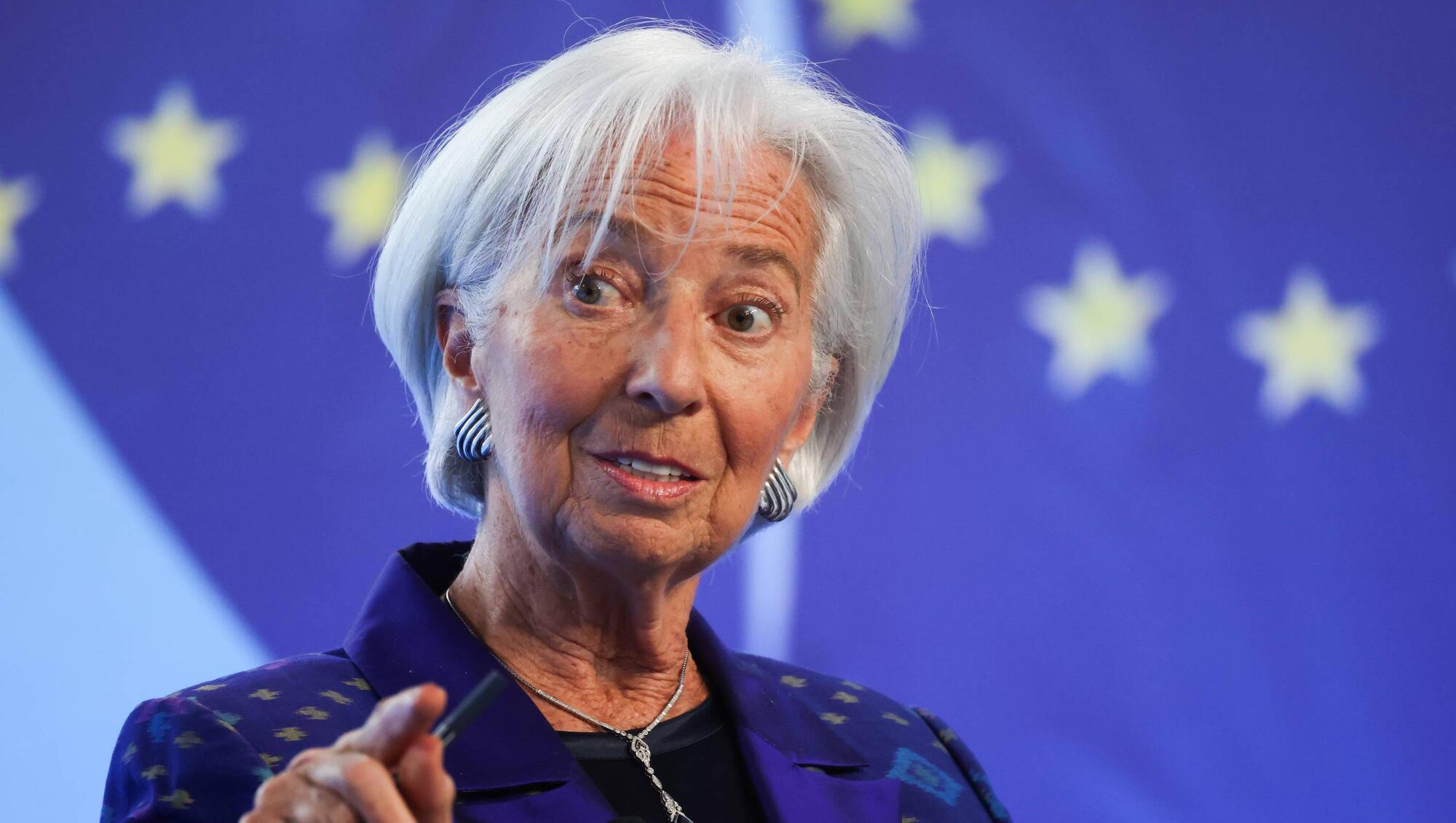
Christine Lagarde: 'The economic outlook is highly uncertain and will depend on how long the war in the Middle East will last, how strongly it affects energy and other commodity markets, as well as global supply chains.' Picture: Alex Kraus/Bloomberg
The European Central Bank kept interest rates unchanged, with officials signalling they need more time to assess the extent of the Iran war’s jolt to the economy.
The deposit rate was left at 2%, where it’s been since June 2025 and in line with the predictions of all analysts in a Bloomberg survey. The ECB offered no guidance on future decisions, reiterating it will act one meeting at a time based on information as it arrives.
“The upside risks to inflation and the downside risks to growth have intensified,” the Governing Council said on Thursday in a statement. “The Governing Council remains well-positioned to navigate the current uncertainty.”
While policymakers have stressed since the conflict broke out that they’ll act decisively if inflation shows signs of spiralling, data available so far haven’t convinced them. The ECB isn’t alone in holding fire: The Federal Reserve sat tight on Wednesday and the Bank of England decided against a move earlier on Thursday.
The ECB is also mindful of the blow to output, with data published shortly before its rate announcement showing first-quarter gross domestic product grew by a less-than-expected 0.1% in the euro zone — feeding stagflation fears.
“The economic outlook is highly uncertain and will depend on how long the war in the Middle East will last, how strongly it affects energy and other commodity markets, as well as global supply chains,” president Christine Lagarde said.
“Incoming information suggests that the conflict is weighing on economic activity, surveys point to slowing growth and consumers and businesses have become less confident about the future,” she told reporters.
Markets reckon officials will focus on the upswing in prices, which jumped by 3% in April — the quickest since the autumn of 2023 — due to the ramp-up in energy costs. Traders are pricing three quarter-point increases in borrowing costs by year-end.
Those bets were maintained after the ECB’s announcement, while bonds held earlier gains. The German two-year yield was nine basis points lower at 2.65% and the euro kept an advance against the dollar, trading 0.2% higher at 1.1694.
Heading into this week’s meeting, policymakers said two months of fighting in the Middle East and a continued blockade of the Strait of Hormuz have left the 21-nation eurozone somewhere between the ECB’s baseline and a more gloomy outcome presented in March.
The base case assumes oil costs averaging $81.3 a barrel in 2026 whereas the adverse scenario sees Brent crude coming close to $120 this quarter. Oil touched a four-year high of more than $126 earlier Thursday.
Officials will be handed fresh forecasts in June, when economists and investors reckon they’ll opt to hike. By then, some uncertainty over the duration and economic impact of the conflict may have dissipated.
For the moment, the US and Iran are at loggerheads over whether a reopening of the strait is a prerequisite — or an eventual consequence — of a peace deal.
CONNECT WITH US TODAY



Be the first to know the latest news and updates