US-Irish investment underpins regional firms in 2020, looking good for 2021
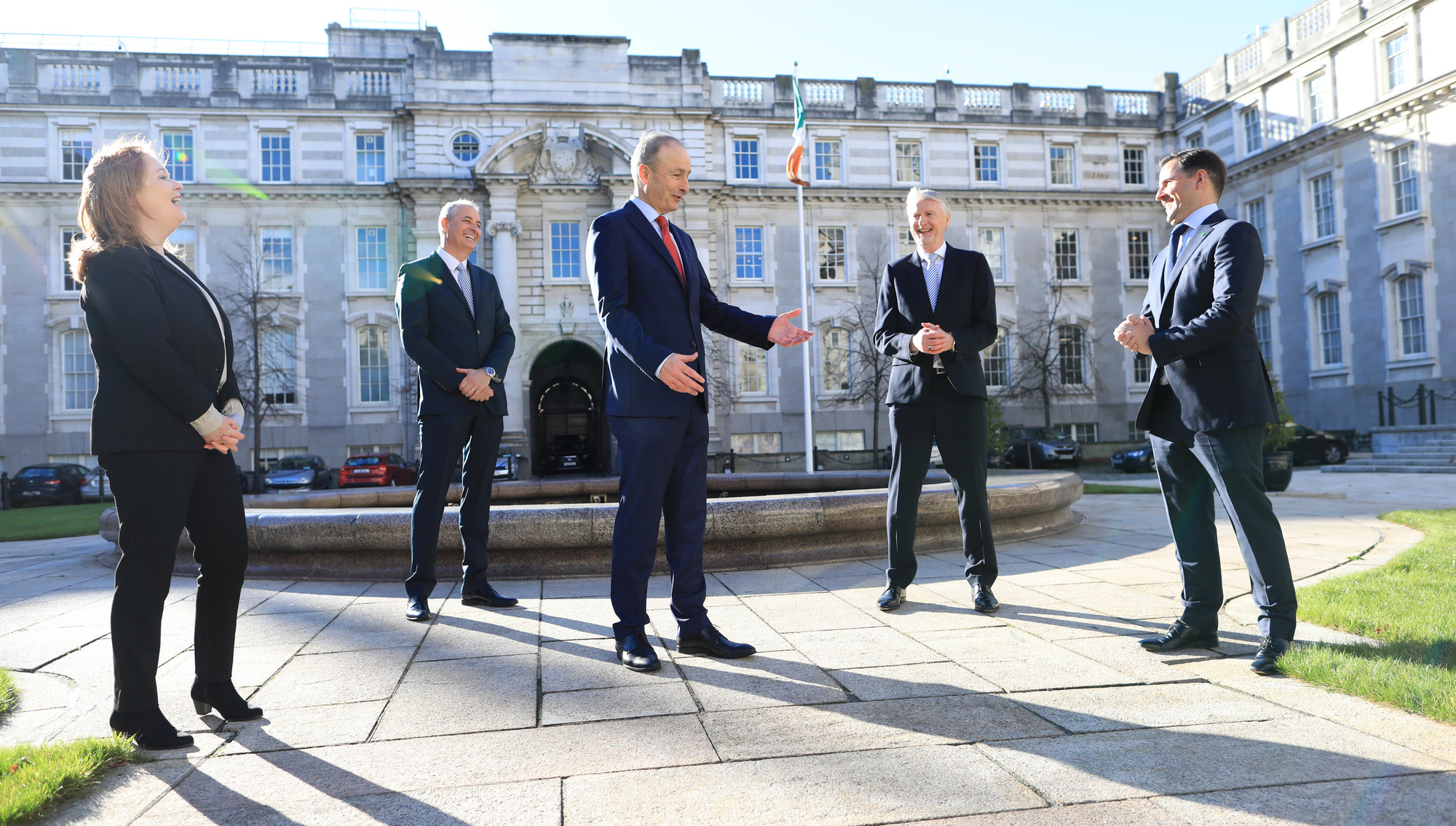
Announcing a €300m capital investment in Pfizer's Irish operations to develop existing manufacturing sites in Grange Castle, Newbridge and Ringaskiddy: Taoiseach Micheál Martin, Dr Paul Duffy, vice-president, Pfizer Global Supply, Paul Reid, country manager, Pfizer Healthcare Ireland, Karen O’Keeffe, director of corporate affairs, Pfizer Healthcare Ireland and Martin Shanahan, CEO IDA Ireland. Picture: Julien Behal
IDA Ireland is aiming to win at least half of new foreign direct investments (FDI) in regional locations over the next four years in support of the Government’s forthcoming National Economic Plan. The State FDI agency is targeting 800 new inward investments as part of its Strategy 2021-2024, with 400 of these to go to regional locations.
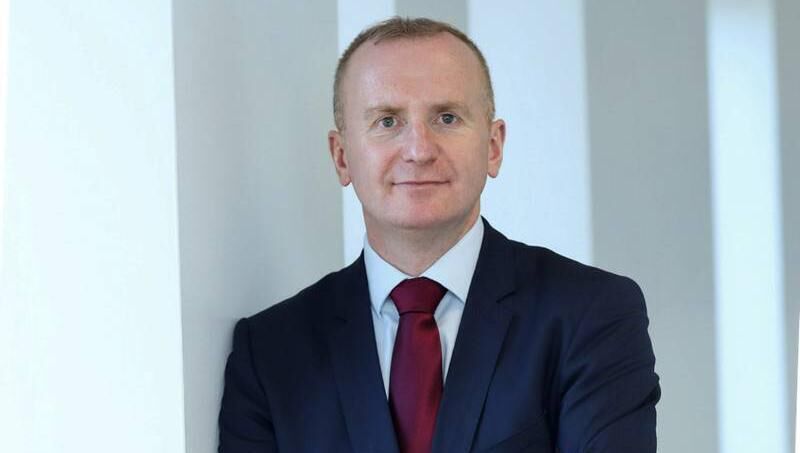
Divisional Head of Regional Development and Property with IDA Ireland, Denis Curran said these new investments would support 50,000 new jobs over the lifetime of the new strategy. He said 2020 had been a remarkable year for regional development with 128 or 52% of the 246 investments for Ireland in 2020 going to areas outside of Dublin. 20,123 jobs were created nationwide.
“It is most encouraging and remarkable really that this level of investment continued at this level in the regions in 2020 despite the uncertainty caused by the global pandemic”.
Regional development he said remains a core pillar of IDA Ireland’s new strategy Driving Recovery & Sustainable Growth 2021 – 2024 alongside Growth, Transformation, Sustainability and Impact.
“Under the new strategy we have set very ambitious targets of securing 800 investments – 400 of which are targeted for regional locations. Our starting point is from one of strength in that the number of people employed in IDA companies in the regions is at an all-time high.” 47% of IDA Ireland’s client base are now located in the regions employing 144,489 people which is 56% of overall FDI employment. The economic impact of these companies is significant. “We estimate that as many as eight additional jobs are created in the wider economy for every ten created by IDA Ireland client companies.” Curran said that expenditure by client companies located in the regions is worth approximately €14 billion annually.
Net FDI employment grew last year by nearly 9,000 jobs to 257,394 despite the negative impact of the pandemic on global investment flows and business activity. IDA client companies now employ 12.4% of COVID adjusted national employment up from 10.7% from the year before. The sectors which performed best in terms of employment in 2020 were the services sector with 145,154 employees, manufacturing with 112,240 and information & communication with 99,357 employees.
However 2021 he said will undoubtedly be a very challenging year for FDI.
“The OECD and UNCTAD are estimating a 30 to 40% fall on global FDI and in tandem with that we are seeing more countries look to FDI as part of their economic recovery plan post-Covid so the volume of FDI that is out there to compete for is reducing and the number of countries competing for it is increasing so 2021 will be a challenging year for us on the FDI front”.
As part of its four-year strategy IDA Ireland plans to deliver 19 Advanced Building Solutions (ABS) to regional locations in support of further regional investment.

Curran said: “we will be future proofing our landbanks with utility intensive strategic sites to ensure that we have a competitive strategic site offering to large capital intensive and employment intensive projects. We will also be carrying out substantial upgrades on a number of our business and technology parks throughout all our regions during the lifetime of our four-year strategy”.
IDA’s regional strategy he said was closely aligned with National Policy goals on compact, sustainable and balanced growth and with the National Planning Framework.
“We welcome the large infrastructure projects in the regions so for instance the investment at Munster Technological University, the deep-water terminal at the Port of Cork, the Dunkettle Interchange, the N22 from Cork to Killarney all of which will add to the competitiveness and attractiveness of the South West region”.
A robust property and infrastructure ecosystem can he said be the key differentiator in winning FDI projects.
“Our strategy aims to drive recovery and support development in each region. We will be partnering with clients to facilitate innovation and upskilling, developing clusters, working with clients to enable remote working opportunities and continuing the roll out of the Agency’s regional property programme.
“What we have seen with Covid is an acceleration of certain global business models and the adoption of disruptive technologies across our client portfolio so for example we are seeing acceleration in the adoption of artificial intelligence, robotics, automation and in response to that we are building a National Advanced Manufacturing Centre in Limerick. This national centre will work with all manufacturing companies in helping them onboard industry 4.0 technologies to ensure they are at the forefront of technology adoption in the manufacturing environment.

Curran said “we are seeing more companies open to remote working opportunities and we have had a number of positive announcements this year for example Medallia who announced they are going to create 100 remote positions in Ireland and also tech firm Genesys in Galway announced an expansion of their R&D capability. A number of these roles will also be available on a remote working basis.”
2021 he said is undoubtedly going to be a challenging year – “but I would say in terms of the sectors that we compete in and the capability that resides here within the life sciences, technology, and financial services sectors, we have a strong base of leading companies across all of these sectors and it is important we work with them now on the transformation agenda, the technology adoption agenda, on upskilling and reskilling requirements they may have so that when the global economic climate changes for the better that we are in a strong position to compete for and benefit from future growth opportunities.”