Michael O'Leary expects airlines to cut winter capacity due to fuel prices

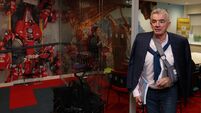
Ryanair CEO Michael O'Leary at the Ryanair AGM in Dublin today: 'If prices were to stay at $130-$140 a barrel next year, our profits would be meaningfully impacted, but I think we'd still be profitable.' Picture: Clodagh Kilcoyne/PA
If jet fuel prices continue to remain elevated you are likely to see “very significant capacity cuts” by airlines across Europe, Ryanair chief executive Michael O’Leary has said, after the budget airline has already reduced its own capacity by two million seats over the coming months.
This comes as the price of oil has surged again in recent days to over $100 (€86.06) a barrel. As of Thursday, Brent crude oil was trading at $104 a barrel.
However, the global price of jet fuel is significantly higher than that. According to the International Air Transport Association, the global average jet fuel price last week rose 9.0% compared to the week before to $171.01 per barrel.
Speaking after Ryanair’s annual general meeting (AGM) in Dublin on Thursday, Mr O’Leary said if the price of jet fuel stays around $149 a barrel “there will be very significant capacity cuts to the winter fleet” across Europe. He said Ryanair has already announced a reduction of two million seats for this coming winter period as a result.
Read More
Mr O’Leary added that if the high fuel prices continue into next summer, other airlines will start adding fuel surcharges to fares.
“If [jet fuel] prices rise materially from $80 a barrel to $140 a barrel, airfares are going to rise,” he said.
"There is no doubt. If prices were to stay at $130-$140 a barrel next year, our profits would be meaningfully impacted, but I think we'd still be profitable,” he said.
Ryanair said they are reasonably insulated from the rising cost of fuel prices as they have hedged 80% of their fuel requirements at $67 a barrel but that is expected to fall significantly next year.
“At the moment we're only hedged what 50% of the 12 months, 80% to March and about 15% from March to next September. This isn't a crisis. This is just normally the airline industry,” he said.
On the cost of fares, Mr O’Leary said they had been rising by 3% to 4% up to the end of January but once the war in the Middle East kicked off in February they started to trend down.
"Fares have stopped declining from about the end of July. They've now turned marginally positive through August and into the first half of September,” he said.
"We think there's a possibility towards the end of the year that fares will be flattish through the winter. A lot depends on what happens to oil prices for the next five or six months.”
"Taking out an extra two million seats this winter as well means we have less seats to sell. We're under less pressure to fill those seats,” he said.
At the airline’s AGM on Thursday, Mr O’Leary also secured shareholder approval for a new contract which will keep him in the top job until 2032. While the contract contains a salary bump as well as a capped annual bonus, the contract also includes a share option scheme which could be worth over €150m if Ryanair hits a number of targets.
Should Ryanair Group grow its profit after tax to over €4bn, or if its ordinary share price exceeds €42 for 28 consecutive days up until March 31, 2032, Mr O’Leary will be given the option to buy 10 million shares of the company at a price of €26.70.
The chief executive also provided an update on its long-awaited order of 300 new Boeing 737-MAX-10 aircrafts. The airline expects to take delivery of the first one from Boeing in January of next year and should get 15 in total by May.
The airline initially announced the deal valued at $40bn in May 2023.

CONNECT WITH US TODAY



Be the first to know the latest news and updates