Airline CEOs warn EU plan to expand carbon costs will raise fares
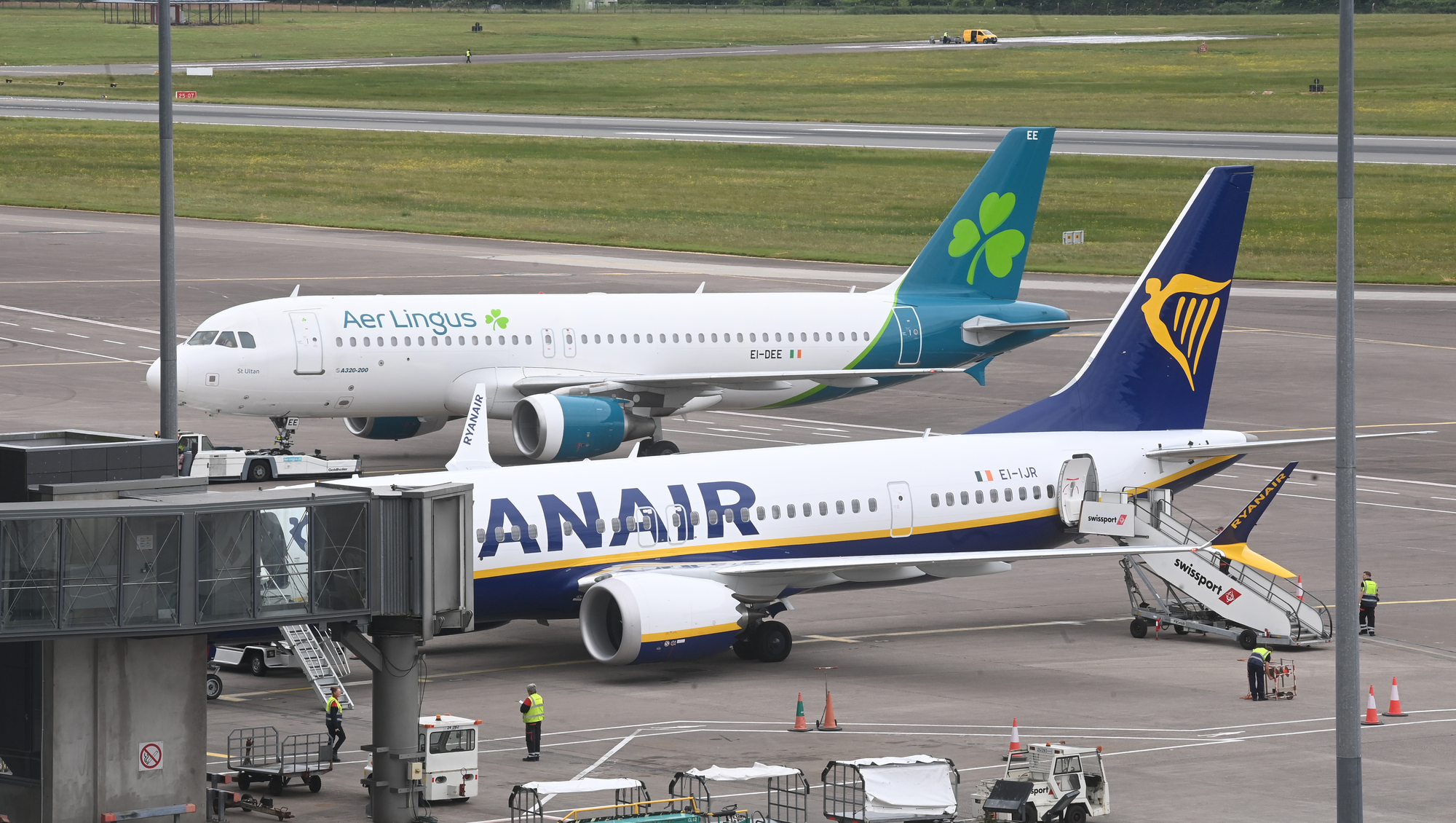
Airline bosses from Air France-KLM, Aer Lingus-owner IAG, Lufthansa and Ryanair opposed widening the scheme. File picture: Larry Cummins
Europe's biggest airlines have urged the European Union not to extend its Emissions Trading System to cover international flights, warning the move would raise ticket prices, a letter seen by Reuters showed.
The European Commission is considering expanding the scheme to emissions from flights departing the EU as part of a review due next month. At present, the ETS only covers flights within Europe.
The system requires airlines, along with factories and power plants and others, to buy permits for greenhouse gas emissions, while capping supply to drive reductions over time.
In a letter to Commission president Ursula von der Leyen, seen by Reuters, airline bosses from Air France-KLM, Aer Lingus-owner IAG, Lufthansa and Ryanair opposed widening the scheme.
"Expanding EU carbon pricing to extra-EEA (European Economic Area) flights will further penalise European passengers and businesses by increasing the cost of airfare and cargo," they said.
The letter was also signed by the heads of 15 companies, including AirBaltic, easyJet and TUI.
The letter said EU action would undermine global efforts to decarbonise aviation, notably the United Nations' CORSIA scheme, which requires airlines to buy CO2 offsets to cover growth in emissions from international flights, but does not mandate absolute cuts.
"Any extension of EU ETS will hamper the legitimacy of CORSIA," the letter said, urging Brussels to reduce ETS costs to CORSIA levels.
The commission says extending the ETS would ensure equal treatment across airlines and avoid disadvantaging short-haul carriers relative to those operating longer international routes.
Brussels is also sceptical that CORSIA alone can drive decarbonisation. A 2021 study for the commission warned the UN scheme was unlikely to cut emissions and could undermine Europe's climate goals.
It comes as airline leaders meet in Rio de Janeiro for the annual meeting of the International Air Transport Association (IATA) where leaders admitted the industry’s landmark pledges to be net zero by 2050 will probably not now be achieved.
The collective goal to eliminate net carbon emissions was declared by global airlines only five years ago in 2021. However, Willie Walsh, the director general of global airlines body IATA, said “hope was fading fast” and a new “realistic timeline” should be established.
Walsh — who was the chief executive of IAG until September 2020 — said fuel suppliers, governments and aircraft manufacturers were largely to blame for the likely failure to hit the target.
More than half of the planned decarbonisation of aviation was dependent on the development of sustainable aviation fuels (SAF), with much of the rest reliant on CORSIA, established under the aegis of the UN and its aviation body ICAO.
In a speech to delegates at the summit, Walsh said CORSIA was being “undermined” by government inaction, while annual production of SAF would only reach 2.4 million tonnes, or 0.8% of airline fuel needs, this year.
“The goal is 65% or 500 million tonnes by 2050. The gap is wide and not closing fast enough,” he said.
CLIMATE & SUSTAINABILITY HUB
CONNECT WITH US TODAY



Be the first to know the latest news and updates