John Whelan: Falling whiskey demand forcing more distillery closures

2026 whiskey brands and exporters will have to keep international trade policy at the forefront of their strategy
John Whelan: Falling whiskey demand forcing more distillery closures

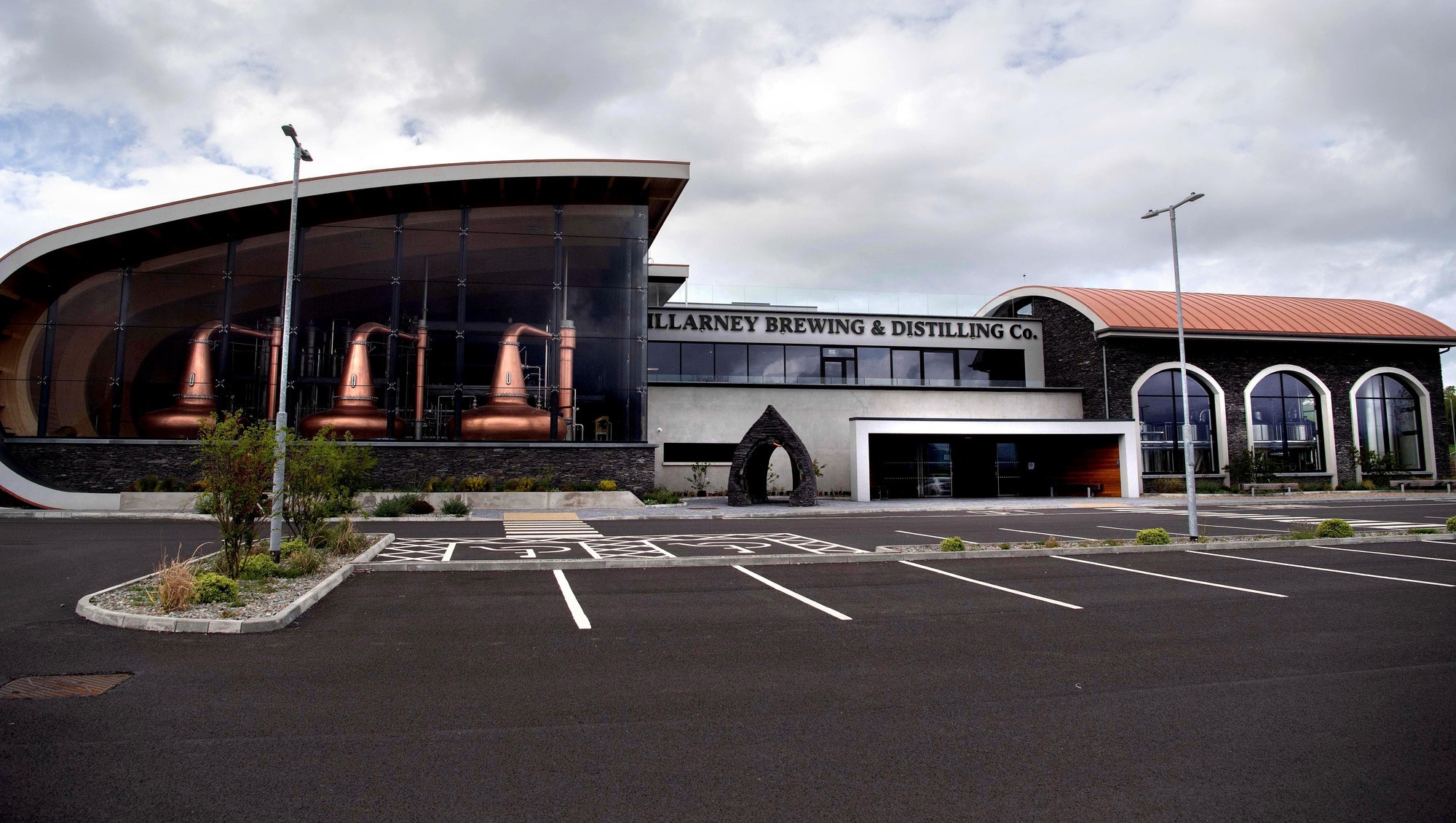
The Killarney Brewing and Distilling company in Fossa, Killarney, Kerry, announced it would be ceasing operations in 2025. File Picture: Don MacMonagle

The once-explosive growth of Irish whiskey, which came to an abrupt halt in 2025, continued its downward path in 2026. The tariff wars, the Iranian supply chain disruption, and the fall in demand in the US, which has traditionally purchased upwards of 40% of the whiskey output from Ireland, have all added to the falling demand as has the change in consumer tastes.

The number of Irish distilleries had expanded from five over a decade ago to 50 in recent years, rushing into the expanding market fuelled by home-drinking demand during the pandemic years.

In the process, many distilleries had built up massive inventories to meet the mandatory minimum three-year ageing process before selling. Many distilleries here, in Scotland, and the US, had built up unsustainable stocks and have had to pause production.

Slane Castle distillery is the latest to join the pause in production. The decision was confirmed last month by Brown-Forman, who acquired the distillery from the Mount Charles family in 2015 and subsequently invested €43m in developing the facility.

Brown-Forman, one of the largest whiskey producers in the US, confirmed that it had halted whiskey production at its Irish distillery at Slane Castle “for the next number of years” to align with market conditions.

Brown-Forman was not the only firm to announce production halts. Diageo-owned Irish brand Roe & Co, Pernod Richard’s Jameson distillery, William Grant’s Tullamore distillery, and Quintessential Brand’s Dublin Liberties distillery also introduced production pauses over the past year. There are likely more producers that have taken this action but have not disclosed the fact.

Many smaller Irish distilleries carrying large stocks and unable to sustain operations entered into various forms of examinership in the past year — including Waterford-based Blackwater distillery, Killarney Brewing and Distilling, and Mark Reynier’s Irish whiskey distillery in Waterford was placed into receivership. 

The likelihood of many more receiverships and eventual closure of the new Irish distilleries, established over the past decade, can be expected.

The change in consumer demand has been accelerated by the US department of health in its 2026 updated dietary guidelines explicitly stating that drinking less is better for health than drinking more. The guidelines maintain a strict standard of moderation.

US-EU Turnberry agreement

There is some measure of hope for the industry that it may benefit from the final sign-off by the European Commission on the US-EU Turnberry agreement, which imposes a 15% duty on most EU exports to the US with some “zero-for-zero” agriculture exceptions, but the treatment of spirits and wine is still under discussion.

The uncertainty has held back US investment in Irish and European distilleries, along with their shipments back to their US consumers. Major industry player Brown-Forman reported in June 2026 that while net revenue grew slightly due to higher prices, profits fell sharply due to persistent structural declines in whiskey demand and compressed consumer spending.

However, Diageo share prices rose after Donald Trump said he will remove tariffs on British-produced whiskey.

This move puts further pressure on whiskey producers in the Republic of Ireland, who will be at a competitive disadvantage as for now the 15% tariffs applies to all EU goods entering the US. It also brings a new twist to trade across the border, as Bushmills and other whiskeys produced in Northern Ireland will be exempt from the tariff.

In short, 2026 whiskey brands and exporters will have to keep international trade policy at the forefront of their strategy. Profitable survival for many will depend heavily on negotiations: a “free trade” outcome could spur recovery for exporters, whereas a breakdown in talks might bring back the very trade barriers that rocked the industry a few years ago.

More in this section

Cookie Policy Privacy Policy Brand Safety FAQ Help Contact Us Terms and Conditions

© Examiner Echo Group Limited