PTSB seeks court approval for €1.6bn sale process to Bawag
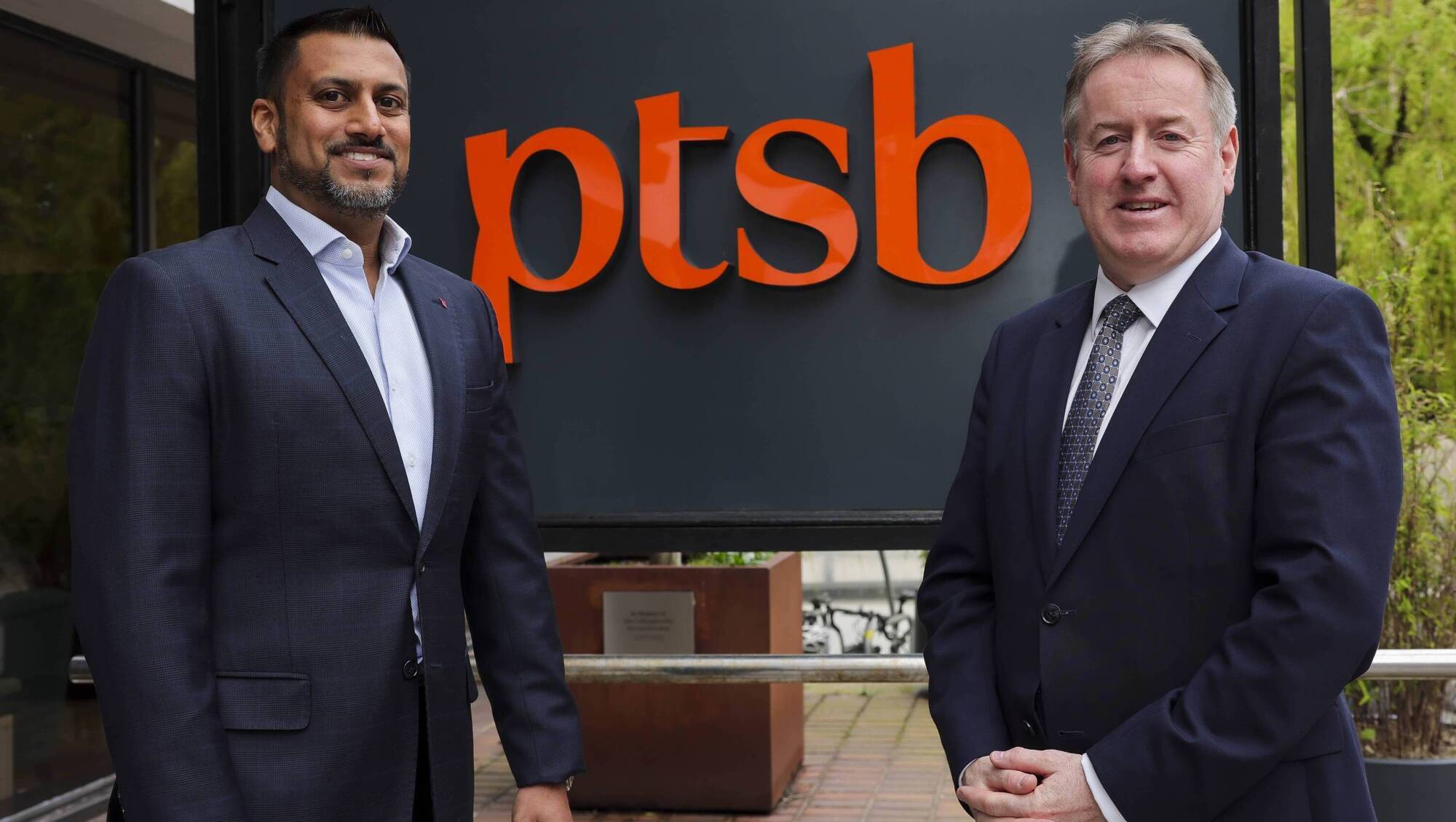
Sat Shah, deputy chief executive of Bawag Group and Eamonn Crowley, chief executive of PTSB.
Permanent TSB is seeking approval from the Commercial Court for the proposed €1.6bn sale of the bank to Austrian banking group Bawag.
However, PTSB shareholder Piotr Skoczylas, a director of Scotchstone Capital, which has a 1% share, along with two other minority shareholders, are opposing PTSB's process of approving the acquisition scheme.

They claim, among other things, that PTSB wants to make it pointless for minority shareholders to cast their votes on the scheme.
They want the court to restrain a meeting from taking place until the classification of shareholders has been decided.
On Monday, Kelley Smith SC, for PTSB, applied to Mr Justice Mark Sanfey for entry into the commercial list of her client's application for the convening and approval of the scheme of arrangement for the sale at a meeting of shareholders.
The court heard the minister for finance, who holds a 57.5% share in PTSB, the country's third largest bank, had recommended the cash offer of €1.6bn from Bawag. Brian Kennedy SC, for Bawag, told the court his client was supportive of the PTSB position.
PTSB, the court was told, was seeking approval of steps in advance of a sanctioning meeting of the scheme, which is scheduled to take place in the Conrad Hotel, Dublin, on July 30.
PTSB wants the court to approve a single classification of all shareholders, which will mean there will be one meeting at which all shareholders can attend.
Opponents want a class of shareholders comprising the minister and a second comprising the minority shareholders.
Ms Smith said Mr Skoczylas was mounting "a full frontal attack on the transaction", which would lead to the loss of the sanction date. The questions raised by the opponents could be dealt with at the sanction meeting, she said.
In reply, Mr Skoczylas said it was absurd to suggest the class composition could be decided at or after the sanction meeting.
He said if there is only one class of shareholder, the minority shareholders would not even turn up at the sanction meeting because they know there would be no point, as the minister holds 57.5% of the shares. If there were two meetings, the minority shareholders would not be prejudiced, he said.
If the court were to allow this to happen, "we are about to face one of the greatest travesties of the court system", he said.
He also told the judge he was "the only bulwark against the injustice being shoved down the throat of ordinary shareholders. I believe it is your sacred duty to allow due process."
While he accepted he may lose the argument, he said the judge must not allow the decision over shareholder composition "to be railroaded today against all the evidence".
He said the deadlines for the transaction had been set by PTSB itself, and he had been forced to bring the court application because PTSB did not call the meeting under another part of the Companies Act when they could have done so.
Mr Justice Sanfey said he would give his decision on Wednesday.