Rethink Ireland: Five-year plan for a €200m social innovation fund
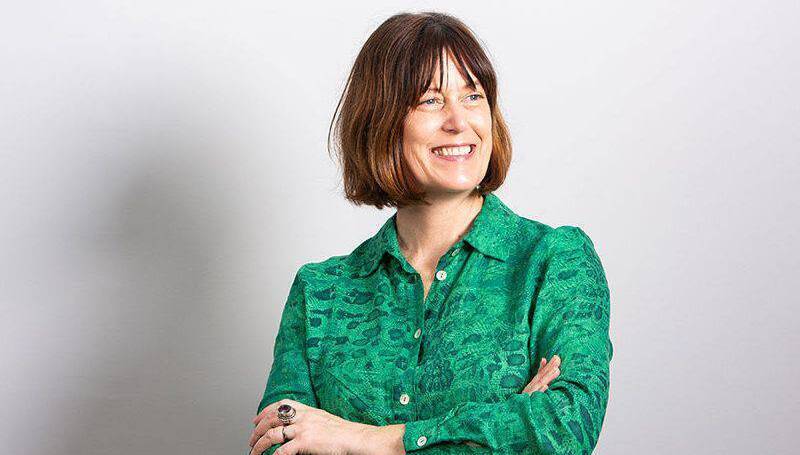
Deirdre Mortell, CEO of Rethink Ireland, whose aim is to develop a social innovation fund of up to €200m within the next five years.
Rethink Ireland is aiming to build its social innovation fund up to €200m within the next five years — music to the ears of those working to enhance people’s lives in communities all over Ireland.
This marks a significant acceleration for Rethink Ireland, having recently marked the milestone of transforming one million people’s lives, with a philanthropic funding total of €109m built up over the previous nine years.
“This funding is critically important to the groups we support,” said Deirdre Mortell, CEO of Rethink Ireland. “Everybody within Rethink Ireland realise what it means to have reached this milestone.
“Everybody knows very well what they contributed to make that happen. They know that it’s really a gift to work to help others. We also make sure that our donors get a chance to participate in the joy.
“Whether they’re donating €50 or several millions of euro, they can clearly see the impact their donations are having in communities across every county in Ireland.”
To date, the €109m raised by Rethink Ireland has helped over one million people in charities, educational and health groups for disadvantaged communities and others.
In the past nine years, Rethink has launched 58 funds, backed 448 innovative projects and supported 137,134 learners. Its funds have supported over 1,000 jobs created in the non-profit sector, with over 3,300 people supported into employment.
Big donors have included: IPB Insurance, donating €4.4m for social inclusion projects; Z Zurich Foundation investing €1.5m in youth mental health; Mason Hayes and Curran donating €900,000 towards educational projects in disadvantaged communities; and the Parkes family in Limerick making significant donations to a range of projects in Munster.
Rethink Ireland and its partners recently launched the Resilient Cork Fund 2024-25. This eight-month €570,000+ fund will support up to six projects, with a particular focus on enhancing the lives of migrants, refugees, asylum seekers, other ethnic minorities and other groups facing discrimination and social exclusion.
“There are so many inspirational organisations that we have invested in,” said Deirdre Mortell. “For example, we have invested €1.5m since 2017 in iScoil, which has allowed them to work with over 1,000 people aged 13 to 15 to provide them with an online education.
“Their online model is built around the student, giving them an individualised education and getting them a qualification they wouldn’t otherwise have attained. iScoil helped 315 young people in 2022 alone, scaling that up to 1,000 in the past year.
“Of course, we never just give out grants. Our work is also about the business supports to scale up their services. To scale up, you need access to data. You need a strategic plan and you need to be able to communicate your vision.”
Deirdre also cited mattress recycler Bounce Back Recycling as a project which is continuing to scale up. Backed by €827,000 of Rethink Ireland funding, the group began life in Galway, quickly grew to cover Connacht and is now nationwide.
“They are currently recycling 20,000 mattresses per year. They plan to recycle 800,000 mattresses per year by the end of 2025. The local council authorities are delighted with all the waste they are keeping out of landfill.”
More than 80% of those working for Bounce Back Recycling are members of the Galway traveller community. These were primarily men who were unemployed.
“They decided to create their own jobs. “The project now employs around 20 men,” said Deirdre Mortell. “Meanwhile, Bounce Back Upcycle is a group created by traveller women to upcycle furniture.”
For this group to continue to expand to 80,000 mattresses per annum, it has had to develop new machinery to take the mattresses apart. For this level of forward thinking, of course, the group needs to know that it can rely on multi-annual funding. Again, Rethink Ireland’s strategic role in this is critical.
Deirdre said that Rethink Ireland, with its own ambitions to expand, fully comprehends the vital role that reliable access to funding plays in being able to plan ahead.
“Without a three-year commitment from us, Bounce Back Recycling can’t invest in the machinery they need to expand,” she explained. “The same is true for Rethink Ireland. Without our donors, we cannot develop a strategic plan.”
Earlier this year, when the team at Rethink Ireland paused to measure what they had achieved to date, the data gave them all a huge lift. The numbers were an affirmation of all they had done to improve the lives of their fellow citizens.
Since 2016, Rethink Ireland has partnered with companies like Google.org, Bank of America, and IPB Insurance, as well as families, individuals and foundations to build a €109m social innovation fund.
While announcing the statistics on achievements, Rethink Ireland again turned the spotlight onto the people within the projects its funding was supporting.
They cited Sensational Kids, a group which has grown its presence from a base in Kildare to operate in every province, changing the lives of more than 10,000 children and saving their families over €2.5m in therapy fees.
Another organisation, Trinity Centre for People with Intellectual Disabilities (TCPID) demonstrates the importance of equality and systems change. The centre promotes the inclusion of people with intellectual disabilities in education and society, providing the opportunity to participate in a higher education programme designed to enhance their capacity to fully participate in society as independent adults.
The proven success of the TCPID model, as an exemplar of best practice, has persuaded the government to introduce a pathfinding pilot programme providing funding supports to ten higher education institutions in Ireland for expanded access to education for people with intellectual disabilities.
“Helium Arts in Mullingar, Co Westmeath, are doing great work with children in hospitals and clinics, many of whom have chronic illnesses,” said Deirdre. “These children are in and out of operations and they don’t have any children around them to play with.
“Helium Arts allows these children to take part in creative arts, often sending art therapists into the waiting room. They help calm the children, and they’re a very welcome support to a parent whose day may have started at 6am to get the child to the hospital for an appointment. The doctors are also delighted to see the children so calm before they arrive in for an operation.
“It is another powerful example of how the money from our donors is used to transform people’s lives. It is also a great example of a project scaling up to help more and more people.”
To date, Rethink Ireland has invested €2m in Helium Arts. In 2018, the group helped 300 children. It now stands at 1,500 children, with a goal to bring its services to up to 6,000 children by the end of 2025.
As Rethink Ireland develops its strategic plan to expand its supports for life-enhancing projects for communities all over Ireland, it is also looking into evolving areas within social innovation, including digital marketing and environmental innovations.
As this plan evolves, we can expect further expansions to its own team as it brings in new people with a range of new skills to its core team as well as at board level. Watch this space.
CONNECT WITH US TODAY



Be the first to know the latest news and updates